
Native Hedge Plants for Backyard Privacy
A backyard privacy hedge can do much more than block an unwanted view. The right planting can soften property boundaries, […]
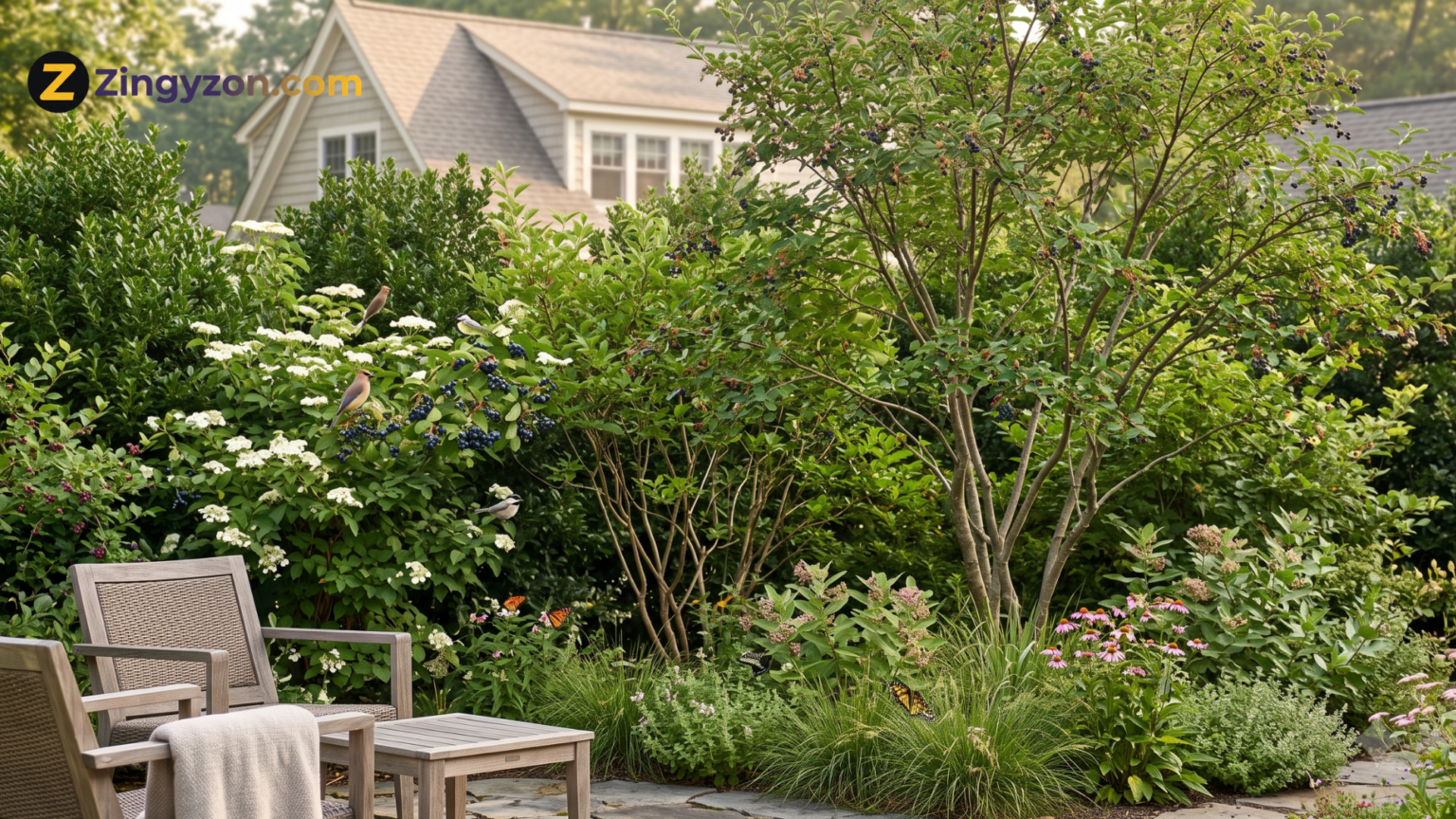
A backyard privacy hedge can do much more than block an unwanted view. The right planting can soften property boundaries, reduce exposure around a patio, create shelter for birds, supply flowers for pollinators, and make an outdoor space feel more natural.
Native hedge plants for backyard privacy are especially valuable because they have ecological relationships with wildlife in the regions where they naturally occur. However, the word “native” must be used carefully. A shrub native to Florida may not be native—or suitable—in Minnesota, Arizona, Oregon, or another part of the country.
For that reason, the best native privacy hedge is not based on one universal list. It begins with your location, climate, soil, sunlight, available width, and desired level of year-round screening.
This guide provides a practical selection framework and several strong North American examples. Always confirm a plant’s native range with your state extension service, regional native plant society, or the USDA Plants Database before purchasing it.
Why Choose Native Plants for a Privacy Hedge?
Native shrubs can provide the same screening function as conventional hedge plants while creating a more useful landscape for local wildlife.
Flowering native shrubs may supply nectar and pollen, while berries and seeds can feed birds. Dense branches offer shelter, resting places, and nesting opportunities. Native shrubs can also serve as host plants for the caterpillars of butterflies and moths.
Trees and shrubs are sometimes overlooked in pollinator gardens, but a mature flowering shrub can produce a substantial amount of nectar and pollen. Many native shrubs also flower earlier than common garden perennials, providing food when fewer other blooms are available.
When a native species is properly matched to its site, it may require less long-term intervention than a poorly adapted plant. This does not mean native shrubs never need water, pruning, or pest management. Newly planted shrubs still require careful establishment, and every plant has specific soil, moisture, and sunlight requirements.
Privacy Hedge or Mixed Privacy Screen?
A formal hedge usually consists of one plant species arranged in a straight line and clipped into a uniform shape. A mixed privacy screen combines several compatible shrubs or small trees in a looser, layered arrangement.
A single-species hedge can look neat, but it is vulnerable to uniform failure. If one serious disease, insect, or extreme weather event affects that species, the entire row may decline at the same time.
A mixed screen is generally more resilient because different plants respond differently to pests, diseases, drought, heat, cold, and changing conditions. The University of Maryland Extension recommends using a variety of plants rather than repeating one species throughout a privacy screen.
A mixed design also creates a longer season of interest. One shrub may provide evergreen foliage, another may flower in spring, and another may produce colorful fruit or stems in fall and winter.
For additional guidance on preparation, planting, and maintenance, read this complete guide on how to grow hedges.
Evaluate Your Backyard Before Selecting Plants
Do not select plants based only on a nursery photograph. Begin by measuring the area and observing its conditions.
Determine how tall the screen needs to be. Screening a ground-level seating area may require only a medium-height shrub, while blocking an upper-story window could require a small tree or taller layered planting.
Measure the planting strip from the property line to the lawn, path, patio, house, or utility area. A shrub advertised as compact may still become several feet wide. Choosing a plant that is too large creates years of unnecessary pruning.
Observe the sunlight during the growing season. Full sun generally means at least six hours of direct sunlight, while partial shade receives fewer hours or filtered light. A plant that tolerates shade may survive in a dark location but grow too thinly to provide useful privacy.
Check soil drainage after rain. Some native shrubs tolerate wet ground, while others require well-drained soil. Also consider wind, road salt, deer pressure, overhead wires, underground utilities, and local fire-safety requirements.
Best Native Hedge Plants for Backyard Privacy
The following plants are useful examples for different parts of North America. They are not native to every state, and some may be inappropriate outside their natural range.
1. Inkberry Holly
Inkberry holly is a broadleaf evergreen native to parts of eastern North America. Its dense foliage makes it a useful native alternative to non-native boxwood in suitable regions.
It works well for medium-height hedges, foundation plantings, and informal privacy screens. Inkberry generally performs best in acidic soil and can handle more moisture than many conventional hedge shrubs.
Older plants may become open near the base if they are repeatedly sheared only across the top. Light selective pruning and adequate sunlight help maintain a fuller form.
Named cultivars differ in mature size and shape, so check the label carefully rather than assuming all inkberries grow alike.
2. American Holly
American holly is a native evergreen tree that can provide substantial year-round screening in eastern and central parts of the United States.
Its dense branches, evergreen leaves, and red fruit make it suitable for large properties, tall screens, and wildlife-focused landscapes. NC State Extension identifies American holly as useful for barriers, privacy screens, and hedges, although its mature size makes it unsuitable for many small yards.
Male and female plants are separate. Female plants generally need a compatible male nearby for good fruit production. Give American holly enough space to develop naturally instead of planting it directly beside a narrow walkway or small patio.
3. Eastern Redcedar
Eastern redcedar is a native evergreen conifer found across a broad area of eastern and central North America.
Its year-round foliage, tolerance of exposed sites, and dense growth can make it useful for tall privacy screens and windbreaks. It performs best in full sun and requires enough room for its mature width.
Eastern redcedar is more appropriate for an informal screen than a tightly clipped, narrow hedge. It can be combined with deciduous flowering shrubs to provide evergreen structure behind a more colorful front layer.
Use locally sourced plants when possible because regional forms may be better adapted to local climate and soil conditions.
4. Northern Bayberry
Northern bayberry is a durable native shrub for portions of eastern North America, particularly coastal and northeastern regions.
It tolerates poor soil, salt exposure, and challenging locations better than many ornamental shrubs. Penn State Extension notes that bayberry can be used for privacy screening and that its fruit is eaten by songbirds.
Its growth is usually more natural and informal than a precisely clipped boxwood hedge. Bayberry can spread through suckers, which is helpful when developing a dense screen but may require management in a small planting strip.
Female plants need a male pollinator for fruit production.
5. Southern Wax Myrtle
Southern wax myrtle is a broadleaf evergreen native to the southeastern United States. It is commonly used as a large shrub or small tree in informal privacy screens.
Its fine-textured foliage creates a softer appearance than a solid wall of conifers. It can tolerate pruning, but its natural multi-stemmed form is attractive when given adequate space.
Wax myrtle is particularly useful in warm, humid, and coastal landscapes where it is locally native. It should not be treated as a nationwide hedge plant because cold tolerance varies.
A mixed screen can combine wax myrtle with native hollies, viburnums, or small flowering trees suited to the same conditions.
6. Yaupon Holly
Yaupon holly is a versatile evergreen native to the southeastern United States and parts of Texas.
Depending on the variety, it can grow as a compact shrub, formal hedge, large screen, or small tree. Its small leaves respond well to pruning, making it one of the better native choices for gardeners who prefer a traditional clipped appearance.
Female yaupon hollies can produce red berries when a compatible male plant is nearby. Birds may use the fruit as a winter food source.
Check the cultivar before purchasing. Dwarf varieties will not create a tall screen, while full-size forms can eventually become much larger than expected.
7. Arrowwood Viburnum
Arrowwood viburnum is a deciduous native shrub found in many parts of eastern North America.
It can form a broad, dense mass suitable for an informal hedge or mixed privacy border. White flower clusters appear in spring, followed by dark fruit where pollination is successful. Its foliage can also develop attractive fall color.
Because it loses its leaves in winter, arrowwood viburnum provides seasonal rather than complete year-round screening. Place it in front of native evergreens when winter privacy is important.
Several viburnum species and cultivated selections are sold under similar common names. Confirm the scientific name and native range before buying.
8. Serviceberry
Serviceberry species range from large shrubs to small multi-stemmed trees. They can be used as borders, backdrops, group plantings, and screens.
Serviceberries offer white spring flowers, edible fruit, fall color, and attractive bark. They are especially effective in layered privacy plantings where a light, small-tree canopy is desired above shorter shrubs.
They do not usually create a solid evergreen wall. Instead, they provide partial screening and seasonal beauty while helping a hedge blend naturally into the surrounding landscape.
Choose a serviceberry species native to your region because different species prefer different soils and climates.
9. Ninebark
Common ninebark is a deciduous native shrub with arching branches, clusters of flowers, peeling bark, and a naturally full shape.
It is useful for informal boundaries and mixed hedges, particularly in sunny locations. Straight native species may become quite large, while cultivated selections are available in different heights and foliage colors.
Ninebark is generally better for a broad planting bed than a very narrow strip. Avoid forcing it into a small geometric shape through constant shearing.
Its dense branching can provide summer privacy and useful cover, but the screen becomes more open after leaf drop.
10. Red-Osier Dogwood
Red-osier dogwood is a deciduous shrub native across large areas of northern and western North America.
It is well known for colorful red stems during the dormant season. It is particularly useful in rain gardens, low areas, and other sites with consistent moisture.
The plant can spread into colonies, making it suitable for naturalized screens and wide property boundaries. It may be too vigorous for a small formal bed.
Shrub dogwoods have significant wildlife value and can add flowers, fruit, colorful stems, and dense habitat to a mixed landscape.
11. Pacific Wax Myrtle
Pacific wax myrtle is an evergreen shrub or small tree native to coastal areas of the Pacific Northwest and California.
It can perform heavy-duty work as a hedge while offering aromatic foliage and fruit for birds. It can grow in sun or some shade, although density and water needs depend on the exact site.
This plant is a strong option for gardeners seeking a native West Coast alternative to conventional evergreen screening plants. Allow enough space for its natural width and prune selectively rather than repeatedly cutting into bare old wood.
12. Toyon
Toyon is a California native evergreen shrub or small tree valued for glossy foliage, white summer flowers, and red winter fruit.
It can be used as a hedge, screen, bank planting, or multi-trunked specimen. UC Integrated Pest Management describes toyon as useful for screens and hedges.
Toyon works particularly well in naturalistic California landscapes. It needs room to develop and should not be planted where a very narrow, constantly clipped hedge is required.
As with all fire-prone regions, follow current local defensible-space rules when positioning dense shrubs near structures.
13. Arizona Cypress
Arizona cypress is a southwestern native evergreen that may be used for a tall screen on appropriately sized properties.
Its blue-green foliage and upright growth can provide year-round privacy in dry climates. However, drought-tolerant does not mean that a newly planted tree can survive without establishment watering.
Extended drought stress can make Arizona cypress more vulnerable to bark beetles and other problems. The University of Arizona advises providing irrigation during dry periods to reduce severe water stress.
It is too large for many narrow urban yards, so verify its mature dimensions before planting.
Evergreen or Deciduous Privacy?
Choose evergreens when privacy is needed throughout winter. American holly, inkberry, yaupon holly, eastern redcedar, Pacific wax myrtle, southern wax myrtle, toyon, and Arizona cypress may provide year-round foliage within their appropriate native ranges.
Deciduous shrubs provide less winter screening but often offer more flowers, fruit, fall color, and structural variety. Arrowwood viburnum, serviceberry, ninebark, and red-osier dogwood are useful examples.
The strongest design often combines both. Place tall evergreens where the unwanted view is most direct, then add deciduous shrubs along the front and sides. This creates privacy without producing a rigid wall.
Native flowering shrubs can also support a larger habitat planting. For smaller properties, review this guide to creating a pollinator garden for small spaces.
How to Space Native Hedge Plants
Spacing depends on the plant’s expected mature width, not its size in the nursery container.
Read the label and verify the dimensions through a reliable regional source. If a shrub is expected to become 8 feet wide, planting it only 2 feet from the next shrub will create severe crowding.
For a formal hedge, plants may be positioned closely enough that their canopies eventually meet. For a mixed screen, use staggered groups and leave room for each species to develop its natural form.
Do not plant directly on the property line. Keep enough space to prune, inspect, and maintain the hedge from your own side. Confirm local setback, height, fence, and utility regulations before digging.
How to Plant a Native Privacy Hedge
The best planting time depends on local climate. Fall is often suitable where roots can establish before summer heat, while spring may be safer in regions with severe winters.
Dig a hole no deeper than the root ball and approximately two to three times as wide. The root flare should remain visible at or slightly above the surrounding soil level.
Remove circling roots from container-grown shrubs before planting. Backfill primarily with the existing soil rather than creating a small pocket of heavily amended material.
Water thoroughly after planting and apply a layer of organic mulch over the root zone. Keep mulch several inches away from stems and trunks.
New native shrubs need regular watering during establishment. Water deeply rather than applying small amounts every day. Adjust the schedule for rainfall, soil type, season, and plant needs.
Pruning a Native Hedge Correctly
Allow newly planted shrubs to establish before beginning heavy shaping.
For a formal hedge, maintain a slightly wider base and narrower top. This allows light to reach lower branches and reduces the risk of a thin, bare base.
For a mixed native screen, use selective pruning. Remove dead, damaged, crossing, or badly placed branches while preserving the plant’s natural form.
Avoid cutting every shrub into the same rectangular shape. Many native flowering shrubs bloom on older wood, and pruning at the wrong time can remove developing flower buds.
Never remove more than necessary in one season. If a hedge has become severely overgrown, rejuvenation should be planned according to the specific plant’s ability to regrow from older stems.
Common Mistakes to Avoid
The most common mistake is selecting a plant because it grows quickly. Fast growth can also mean frequent pruning, weak structure, aggressive spreading, or an oversized plant within a few years.
Avoid planting a single row of identical shrubs unless you understand the risk of uniform pest or disease loss.
Do not assume that every plant labeled “native” is native to your county or ecoregion. Some labels use “North American native” even when the natural range is thousands of miles away.
Avoid invasive screening plants such as running bamboo, Japanese barberry, and invasive privets where they are restricted or environmentally harmful. The University of Maryland Extension specifically recommends prioritizing native plants and avoiding invasive choices in privacy screens.
Do not place large shrubs beneath power lines, against foundations, over septic systems, or where their roots and branches will interfere with structures.
Frequently Asked Questions
What are the best native hedge plants for backyard privacy?
The best choice depends on your region and site. Common options include native hollies, bayberries, wax myrtles, viburnums, serviceberries, ninebark, shrub dogwoods, eastern redcedar, Pacific wax myrtle, and toyon.
Which native hedge plants stay green all year?
Possible evergreen choices include inkberry holly, American holly, yaupon holly, eastern redcedar, wax myrtle, Pacific wax myrtle, toyon, and Arizona cypress. Their native ranges and climate requirements differ.
How fast does a native privacy hedge grow?
Growth rates vary by species, climate, soil, water, and plant age. Fast-growing plants may provide screening sooner but can require more pruning and space.
Is a mixed hedge better than one plant species?
A mixed hedge is generally more resilient because one pest, disease, or weather event is less likely to damage every plant. It also offers greater seasonal and wildlife value.
How close should privacy shrubs be planted?
Base spacing on each plant’s mature width. Shrubs should eventually overlap enough to screen the view without becoming severely crowded.
Can native shrubs grow in shade?
Some native shrubs tolerate partial shade, but fewer plants create dense screening in deep shade. Assess the actual light level and choose a locally native shade-adapted species.
Do native hedges need watering?
Yes. Newly planted shrubs require regular establishment watering. Mature plants may need less supplemental water when properly matched to the site, but drought and extreme heat can still create stress.
When should a native hedge be pruned?
Pruning time depends on the species and whether it flowers on old or new wood. Remove damaged branches when needed, but schedule major shaping according to the plant’s flowering cycle.
Are native privacy plants deer-resistant?
No plant is completely deer-proof. Deer preferences change with population pressure, season, and available food. Use local recommendations and protect young shrubs where browsing is severe.
Can native hedge plants replace a fence?
They can provide an attractive visual screen, but they do not create immediate privacy, security, or pet containment. A temporary fence may be used while the hedge matures.
Can I create a native hedge in a small backyard?
Yes. Select naturally narrow or compact shrubs and avoid large trees. Screen only the most important view instead of surrounding the entire property.
Where can I find native plants for my exact location?
Check your state extension service, regional native plant society, conservation district, local botanical garden, and native plant nursery. The USDA Plants Database can also help confirm natural distribution.
Final Thoughts
Native hedge plants for backyard privacy can create a comfortable outdoor retreat without relying on a row of invasive or poorly adapted shrubs.
Begin by identifying how much privacy you need and during which seasons. Measure the available width, evaluate sunlight and drainage, and confirm the native range of every plant.
Whenever space allows, use a mixed screen containing evergreen structure, flowering shrubs, fruiting plants, and different mature heights. This arrangement is visually softer and more resilient than a single-species wall.
Give each plant room to mature, provide establishment water, mulch the root zone, and use selective pruning. A native privacy hedge may take time to fill in, but it can eventually provide screening, seasonal beauty, and valuable habitat in the same planting.
Explore more landscaping, gardening, and outdoor-living ideas on Zingyzon.com.
Keep Exploring Zingyzon.com
Read more Zingyzon SEO, digital marketing, online earning, business, and technology guides for Australia, USA, and global readers.