
When to Consider a Filtration System for Your Home
Clean-looking water is not always free from unwanted contaminants, but unusual taste or odor does not automatically mean that the […]
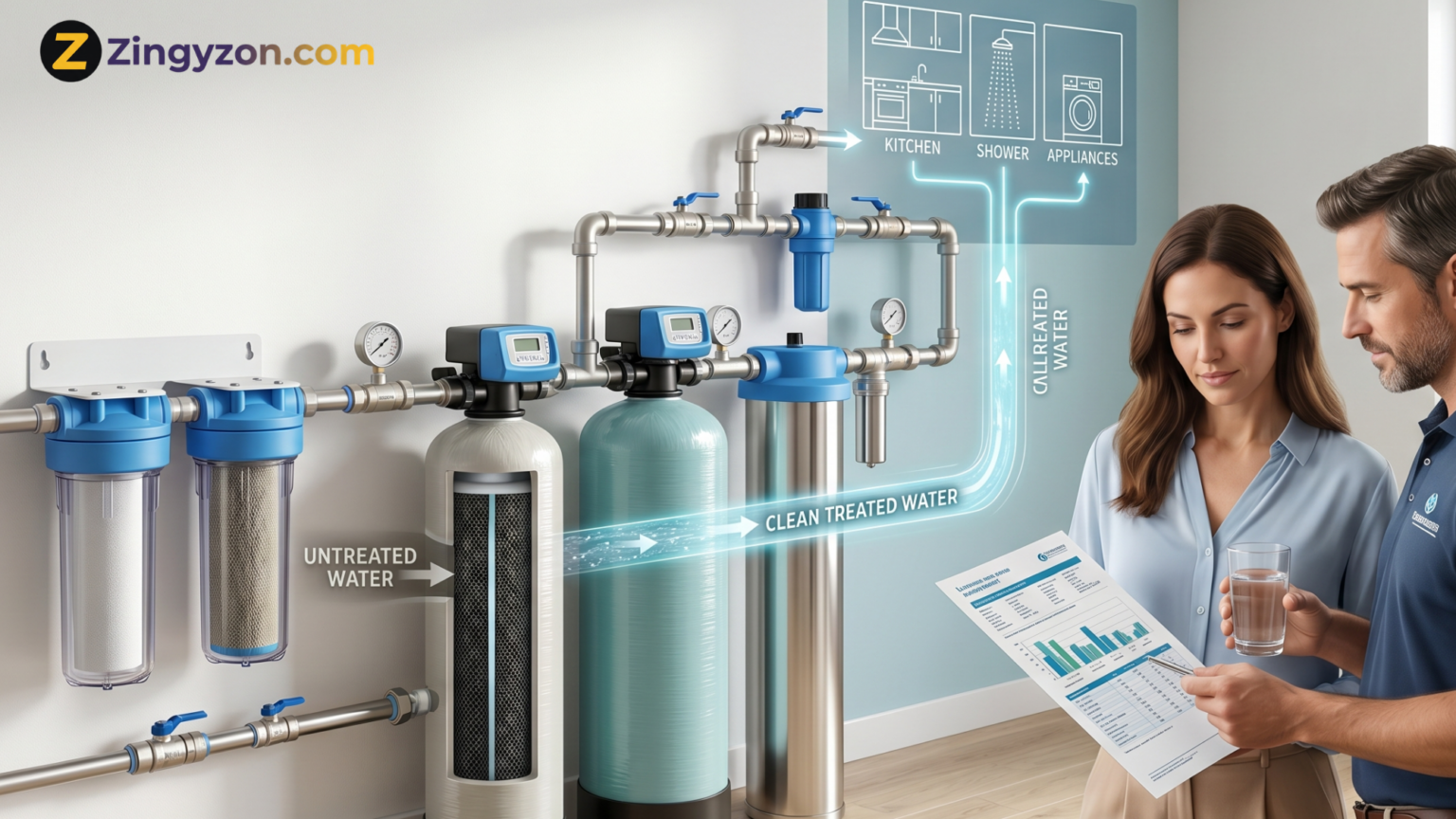
Clean-looking water is not always free from unwanted contaminants, but unusual taste or odor does not automatically mean that the water is unsafe. This uncertainty often leads homeowners to purchase a filter before they understand the actual problem.
A better approach begins with evidence.
The right home water filtration system should be selected according to the water source, laboratory results, household needs, plumbing condition, flow requirements, and specific contaminants that need to be reduced. A basic carbon filter may improve chlorine taste, while lead, arsenic, nitrates, bacteria, hardness, iron, or PFAS may require entirely different treatment technologies.
No single filter removes every possible contaminant. An expensive system can therefore provide little value when it targets the wrong problem. It may also create maintenance demands, pressure loss, water waste, or hygiene concerns when cartridges are not replaced properly.
This guide explains when filtration deserves serious consideration, when testing should come first, which treatment types are available, and how to compare systems without relying only on sales claims.
Health and safety note: This article provides general information. If your water utility or health authority issues a drinking-water advisory, follow its instructions rather than relying on a household filter unless officials specifically confirm that your treatment system is suitable.
Start by Understanding Where Your Water Comes From
The first question is not which filter to buy. It is whether your home receives water from a public utility or a private source.
Public Water Systems
Public water systems in the United States must meet applicable federal and state drinking-water requirements. Community systems also provide customers with an annual Consumer Confidence Report, commonly called a CCR or water-quality report.
A CCR typically explains:
- Where the water comes from
- Which regulated contaminants were detected
- How detected levels compare with legal limits
- Whether the utility had any violations
- Which groups may face greater sensitivity to certain contaminants
- How customers can obtain additional information
A compliant municipal report does not guarantee that water quality is identical at every faucet. Water can still interact with service lines, household plumbing, fixtures, solder, and building storage systems after leaving the treatment plant.
If you live in an older property or suspect a plumbing-related problem, tap-specific testing may provide information that the utility-wide report cannot.
Private Wells
Private wells are generally not regulated or routinely monitored in the same way as public water systems. The owner is responsible for testing, maintaining, and protecting the supply.
The Centers for Disease Control and Prevention recommends testing private well water at least annually for total coliform bacteria, nitrates, total dissolved solids, and pH. Additional tests may be needed according to local geology, agriculture, industry, flooding, septic systems, mining activity, or previous contamination.
Well water should also be tested after:
- Flooding
- Repairs to the well
- A change in taste, color, or odor
- Nearby land disturbance
- A chemical spill
- Changes in surrounding agricultural activity
- Unexplained gastrointestinal illness in the household
- Long periods during which the well was not used
Testing allows the treatment system to be designed around the actual water rather than assumptions.
When Should You Consider Home Water Filtration?
A filter may be useful for aesthetic preferences, equipment protection, or health-related contaminant reduction. The following situations deserve closer investigation.
1. Your Water Has an Unpleasant Taste or Odor
Chlorine-like taste is common in some treated municipal supplies because disinfectants are used to control harmful microorganisms. Activated carbon can often improve chlorine-related taste and odor.
Other odors may have different causes.
A rotten-egg smell can be associated with hydrogen sulfide, certain bacteria, the water heater, or well conditions. Earthy or musty odors may relate to naturally occurring compounds or biological activity.
A metallic taste may be linked to iron, copper, plumbing corrosion, or other dissolved substances.
Do not choose a filter solely from the odor description. Determine whether the issue occurs:
- At every faucet
- Only in hot water
- Only after water remains unused
- At a single fixture
- Seasonally
- Following plumbing work
When the smell appears only in hot water, the water heater may require investigation rather than whole-house filtration.
2. Sediment Appears in Sinks, Tubs, or Appliances
Visible sand, grit, rust-colored particles, or cloudiness may indicate sediment in the supply, deteriorating pipes, disturbed utility lines, corrosion, or well-related problems.
A sediment prefilter can protect downstream equipment by capturing larger suspended particles. However, the filter should not be used to hide an active plumbing failure or a damaged well.
Before installing treatment, determine:
- Whether the particles come from the public supply or the home
- Their approximate size
- Whether they appear in hot and cold water
- How quickly a sample settles
- Whether the problem began after construction or utility work
- Whether pipes or a water heater are corroding
Sediment cartridges require replacement. A filter that blocks repeatedly may indicate that the underlying source needs repair.
3. Testing Finds a Specific Contaminant
Laboratory results provide the strongest reason to select a targeted treatment system.
Potential concerns may include:
- Lead
- Arsenic
- Nitrates
- PFAS
- Volatile organic compounds
- Pesticides
- Iron or manganese
- Bacteria or parasites
- Fluoride
- Radium
- Excess total dissolved solids
Different technologies reduce different substances. A product should be certified for the precise contaminant—not simply advertised as “advanced,” “pure,” or “multi-stage.”
For example, a carbon filter certified for chlorine taste may not be certified for lead. A sediment filter may make the water look clearer without reducing dissolved chemicals.
Testing should ideally be performed by a certified or appropriately accredited laboratory. Home test strips can provide preliminary information for certain properties but may not offer enough accuracy for important health decisions.
4. Your Home Has Older Plumbing or a Lead Service Line
Lead does not normally enter water at the treatment plant. It can enter after treated water contacts lead service lines, older fixtures, solder, or certain plumbing components.
Lead cannot be identified reliably by taste, appearance, or smell. Testing is necessary.
A filter intended to reduce lead should carry certification for lead reduction under an appropriate standard, such as NSF/ANSI 53 or NSF/ANSI 58, and the exact model should list lead among its certified claims.
Filtration can reduce exposure while plumbing is being assessed or replaced, but it does not remove the source. When a lead service line or unsafe plumbing component is identified, permanent replacement should remain part of the long-term plan.
Follow local public-health instructions regarding flushing, filter use, cartridge replacement, and water used for cooking or infant formula.
5. You Depend on a Private Well
Well owners may need a combination of treatment methods rather than one universal filter.
A typical system could involve:
- Sediment filtration
- Iron or manganese treatment
- Water softening
- Activated carbon
- Acid neutralization
- Ultraviolet disinfection
- Reverse osmosis at a drinking-water tap
The correct order matters. Turbid water, for example, can interfere with ultraviolet disinfection. Hardness or iron may damage membranes and shorten equipment life.
A water-treatment professional should base the design on comprehensive test results, flow rate, well yield, household demand, pressure, pH, and water chemistry.
A filtration system does not remove the need to inspect the wellhead, maintain safe separation from septic systems, protect the area from runoff, and test the water regularly.
6. Hard Water Is Damaging Fixtures and Appliances
Hard water contains elevated levels of dissolved calcium and magnesium. It can create scale on taps, shower screens, water heaters, kettles, dishwashers, and plumbing surfaces.
Hardness is generally an aesthetic and operational issue rather than something removed by an ordinary particulate or carbon filter.
A water softener uses ion exchange to replace hardness minerals with sodium or potassium ions. A softener is therefore different from a filter.
Signs of hard water may include:
- White mineral deposits
- Soap that does not lather easily
- Spots on dishes
- Scale inside appliances
- Stiff laundry
- Reduced water-heater efficiency
- Clogged showerheads
Before installing a softener, obtain a hardness measurement and consider sodium discharge, regeneration water, maintenance, local restrictions, and whether every household tap needs softened water.
Some homeowners keep a separate unsoftened or filtered tap for drinking and cooking.
7. Chlorine Is Affecting Taste, Skin Comfort, or Household Use
Some households consider whole-house carbon treatment because they dislike the smell or taste of chlorine at multiple taps.
Treating water at the point of entry may improve water used for drinking, cooking, bathing, and laundry. It can also remove the disinfectant residual that helps control microbial growth inside plumbing.
This makes maintenance especially important.
The CDC notes that some whole-home filters remove chemicals such as chlorine that suppress germs. Poorly maintained filters may also provide places where microorganisms can grow.
Cartridges and media must therefore be replaced on schedule. Plumbing should not be allowed to sit stagnant for long periods, and the system must be sized properly for household flow.
Taste improvement is a valid preference, but homeowners should understand the trade-off before removing disinfectant from every tap.
8. You Are Concerned About PFAS
PFAS are a large family of persistent chemicals that have been detected in some drinking-water supplies.
If PFAS are a local concern, begin with the public utility’s reports, state environmental information, or accredited water testing. Do not assume that every carbon or reverse-osmosis product has been verified for PFAS reduction.
Look for a specific, independently certified PFAS reduction claim on the exact model. Granular activated carbon, certain ion-exchange systems, and reverse osmosis may reduce selected PFAS compounds under appropriate conditions.
Performance depends on:
- The specific PFAS compounds
- Starting concentrations
- Water chemistry
- Flow rate
- Media capacity
- Cartridge replacement
- System design
Spent media must also be handled according to applicable instructions and local requirements. A filter becomes less effective once its rated capacity is exceeded.
9. Bottled Water Has Become Your Household’s Default
A home treatment system may be worth considering when the household regularly buys bottled water because tap water tastes unpleasant or causes concern.
Before comparing equipment, calculate the real annual cost of bottled water, including:
- Purchase price
- Delivery or travel
- Storage
- Disposal or recycling
- Time spent replacing supplies
A certified point-of-use filter may solve a drinking-water concern more economically than treating every gallon entering the house.
A whole-house system is more appropriate when the problem affects bathing, laundry, plumbing, or appliances as well as drinking.
Avoid buying a larger system than the problem requires.
Point-of-Use or Whole-House Treatment?
Home treatment systems are commonly divided into two categories.
Point-of-Use Systems
Point-of-use systems treat water at a specific location, such as a kitchen tap.
Examples include:
- Pitcher filters
- Faucet-mounted filters
- Countertop units
- Under-sink filters
- Point-of-use reverse osmosis
They are often appropriate when the main concern involves water used for drinking and cooking.
Advantages can include lower initial cost, easier installation, and targeted contaminant reduction. Their limitations include lower flow and treatment at only selected taps.
Point-of-Entry Systems
Point-of-entry treatment is installed where the main water line enters the home. It treats most or all water before distribution to taps, showers, appliances, and water heaters.
A whole home water filtration system may be useful when sediment, chlorine, iron, odor, or another confirmed problem affects the entire property.
Whole-house systems require careful sizing. An undersized unit may reduce pressure or fail to provide adequate contact time, while unnecessary treatment increases cost and maintenance.
The right choice depends on whether the concern affects one drinking tap or the entire plumbing system.
Understanding Common Treatment Technologies
Activated Carbon
Carbon filters can reduce chlorine taste and odor and may reduce selected organic chemicals. Performance depends on carbon type, contact time, flow, and certification.
Carbon does not reliably solve hardness, nitrates, dissolved minerals, or every microbial problem.
Reverse Osmosis
Reverse osmosis forces water through a semipermeable membrane. Certified systems may reduce dissolved solids and selected contaminants such as lead, arsenic, nitrates, PFAS, and other substances.
RO produces treated water and a reject-water stream. Buyers should compare water efficiency, storage capacity, flow, membrane replacement, and certified contaminant claims.
EPA WaterSense-labeled point-of-use RO systems must meet efficiency and performance criteria and verify contaminant-reduction claims through testing.
Ultraviolet Treatment
UV systems use ultraviolet light to inactivate certain microorganisms. They do not remove sediment, chemicals, hardness, or dissolved metals.
Water often requires prefiltration because suspended particles can reduce UV effectiveness. Lamps and sleeves need scheduled maintenance.
Distillation
Distillation heats water and collects condensed vapor. It may reduce many dissolved substances and microorganisms but usually treats water slowly and consumes energy.
Some volatile compounds require additional control because they may travel with steam.
Water Softeners
Water softeners reduce hardness through ion exchange. They are not general-purpose drinking-water filters.
They require salt or another regenerant and periodically discharge water during regeneration.
Sediment Filters
Sediment filters remove suspended particles according to their micron rating. They can protect valves, appliances, carbon media, UV systems, and RO membranes.
They do not remove most dissolved contaminants.
Look Beyond the Certification Logo
Certification matters, but the standard number and listed claim matter just as much.
Common standards include:
- NSF/ANSI 42: Aesthetic effects, including chlorine taste and odor
- NSF/ANSI 53: Contaminants with health effects, depending on the listed claim
- NSF/ANSI 58: Point-of-use reverse-osmosis systems
- NSF/ANSI 401: Selected emerging or incidental compounds
- NSF/ANSI 44: Residential water softeners
- NSF/ANSI/CAN 372: Lead-content requirements for materials and components
Certification to a standard does not mean that the system reduces every substance covered by that standard.
Check the manufacturer, exact model, replacement cartridge, rated capacity, flow, and individual contaminant claims in an independent certification database.
A vague statement such as “tested to NSF standards” is not the same as certification by an accredited third party.
Factors to Compare Before Buying
Laboratory Results
Choose treatment according to confirmed contaminants or clearly identified aesthetic problems.
Flow Rate
The system must support showers, laundry, appliances, and simultaneous tap use without creating unacceptable pressure loss.
Capacity
Capacity may be stated in gallons, months, or both. Actual life can change with contaminant levels and household use.
Replacement Cost
Calculate the price of cartridges, media, membranes, UV lamps, salt, testing, sanitation, and professional service.
Space and Drainage
Some systems require tanks, electrical power, a drain, bypass valves, or sufficient room for cartridge replacement.
Water Waste
RO and regenerating systems can discharge water. Compare efficiency ratings and system recovery.
Installation
Whole-house equipment often requires plumbing modifications. Use qualified professionals and obtain required permits.
Maintenance
A filter is not a permanent installation that can be forgotten. Neglected treatment can lose effectiveness, reduce flow, leak, or create hygiene concerns.
Warranty and Parts
Confirm whether replacement cartridges and components will remain available. Proprietary parts can create long-term costs.
When a Filter Is Not the Right Solution
Filtration should not replace repair, public-health instructions, or professional diagnosis.
A filter may be the wrong response when:
- A pipe is actively corroding or leaking.
- Sewage is entering a well.
- A damaged well casing needs repair.
- A utility has issued a boil-water advisory.
- A chemical advisory instructs residents not to use tap water.
- The water heater is causing the odor.
- The problem is hardness but the proposed unit is only a carbon filter.
- Lead plumbing should be replaced.
- Mold or staining comes from a building leak rather than the water supply.
During a boil-water advisory, CDC guidance may require boiling water even when it has passed through an ordinary home filter. Always follow the instructions issued for the specific incident.
A Practical Decision Process
Use the following sequence before signing a contract:
- Identify whether the water comes from a utility or private well.
- Read the current water-quality report when available.
- Record the specific taste, odor, staining, scale, or health concern.
- Test the tap water through a suitable laboratory.
- Identify whether the source is water supply, plumbing, fixture, or water heater.
- Decide whether treatment is needed at one tap or throughout the home.
- Match the technology to the confirmed contaminant.
- Verify independent certification for the exact reduction claim.
- Compare flow, capacity, wastewater, maintenance, and lifetime cost.
- Obtain a written installation and service proposal.
- Retest treated water when appropriate.
- Keep a calendar for cartridge and media replacement.
For more practical home, property, and household buying guides, visit zingyzon.com.
Frequently Asked Questions
Does every home need a water filtration system?
No. Many households receiving compliant public water may not need additional treatment. Filtration should address a confirmed contaminant or a clearly defined taste, odor, sediment, or equipment concern.
Is filtered water always safer?
Only when the system is appropriate for the problem, properly installed, certified for the relevant claim, and maintained correctly. The wrong or neglected filter may provide little protection.
Does a whole-house filter remove hard water?
A standard sediment or carbon filter does not remove hardness minerals. Hard water generally requires a water softener or another technology specifically designed for hardness.
Can a filter remove lead?
Certain systems certified to NSF/ANSI 53 or NSF/ANSI 58 can reduce lead. Check that the exact model lists lead reduction.
Is reverse osmosis the best option?
RO can reduce many dissolved contaminants, but it may be unnecessary when the issue is only chlorine taste or sediment. It also requires maintenance and produces a reject-water stream.
How often should filters be replaced?
Replacement timing depends on the manufacturer’s rated capacity, water quality, household use, and pressure changes. Follow the instructions and replace filters earlier when testing or performance indicates it is necessary.
Should well owners install UV treatment?
UV may be appropriate when microbial contamination is a concern, but it should be selected after testing. Water clarity, pretreatment, flow, lamp maintenance, and well repairs all matter.
Final Thoughts
A home filtration system is worth considering when testing identifies a contaminant, when water has persistent taste or odor problems, when sediment affects the plumbing, or when a private well requires targeted treatment.
The most important principle is to test first and treat second.
Do not assume that more stages, a larger tank, or a higher price means better protection. Each technology has a defined purpose, and no single treatment removes everything.
Public-water customers should begin with their Consumer Confidence Report. Private-well owners should arrange regular laboratory testing and maintain the well itself.
Once the problem is understood, compare certified performance, household flow, installation needs, water efficiency, maintenance, and lifetime cost.
The best filtration system is not the one with the most dramatic marketing. It is the simplest reliable system that reduces the specific substances found in your water and continues to perform when maintained correctly.

Keep Exploring Zingyzon.com
Read more Zingyzon SEO, digital marketing, online earning, business, and technology guides for Australia, USA, and global readers.