
Replace or Refinish? Hidden Risks in Your Kitchen Countertop Project
By a kitchen and bath industry contributor. The decision often feels like a simple style choice. You look at your […]
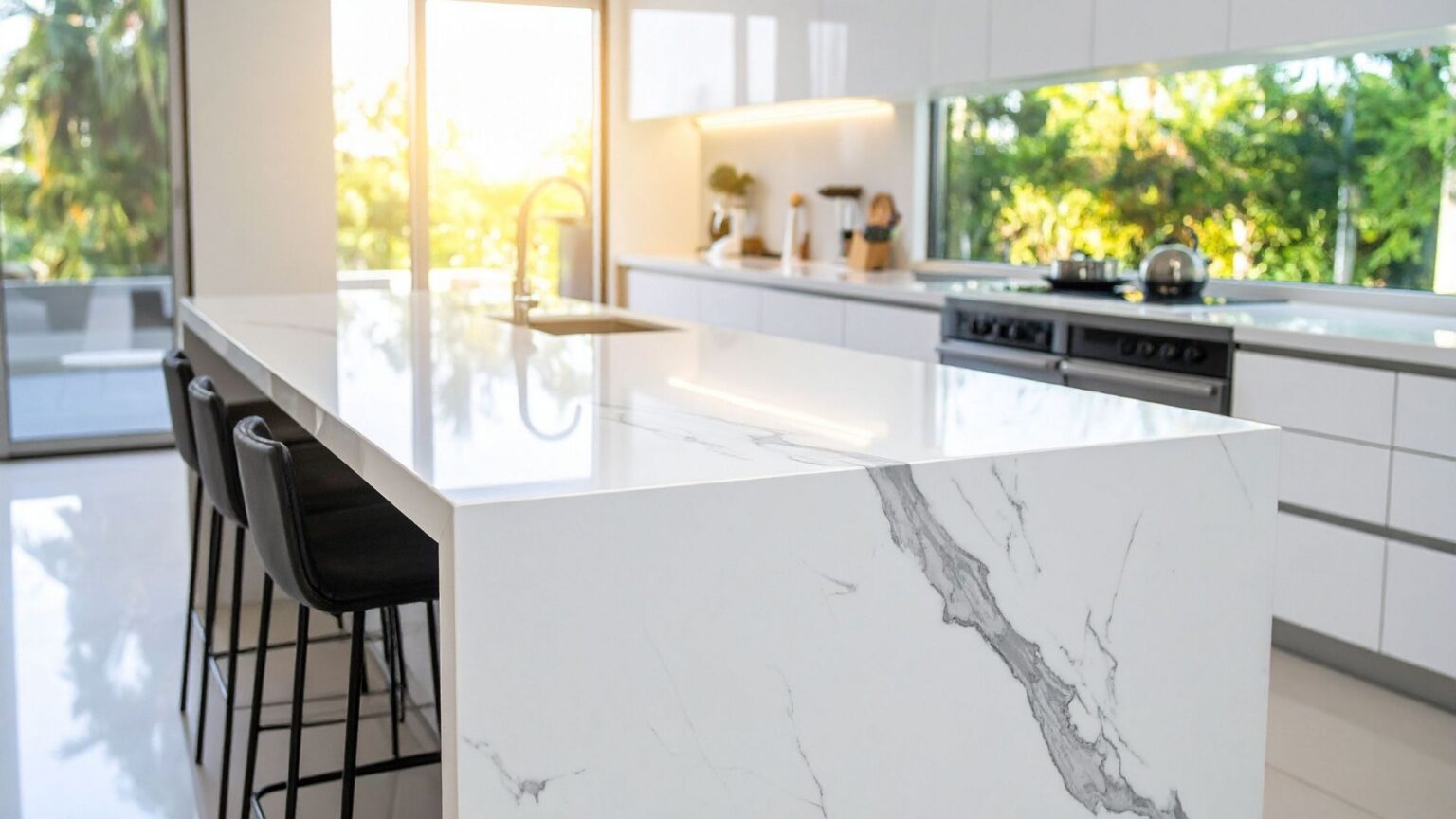
By a kitchen and bath industry contributor.
The decision often feels like a simple style choice. You look at your dated laminate or chipped tile and weigh the cost of a modern replacement against the effort of a short-term fix. But the most significant factor might not be the surface you see, but the structure and history of the kitchen itself. The real costs and complexities are often hidden.
For homes built before the 1980s, a simple countertop replacement can trigger serious safety protocols. According to the US EPA, approximately three-quarters of homes built before 1978 still contain lead-based paint. Removing a countertop often means disturbing painted walls, backsplashes, or old cabinet surfaces. This can turn a straightforward installation into a regulated construction project requiring certified professionals and specific containment measures.
Failing to account for these possibilities can derail your budget and timeline. Before you can even compare quartz to granite, you need a clear-eyed assessment of your existing conditions. Understanding the full scope of what it takes to remove and replace old kitchen countertops is the first step toward a project that finishes on time, on budget, and without unexpected hazards.
Quick answer: The best choice depends on your current countertop’s material and condition, your home’s age, and your long-term goals. Refinishing is a temporary fix for surfaces in good structural shape, while replacement is a permanent solution that often involves addressing hidden issues like rot, outdated plumbing, or hazardous materials.
What’s inside
· What are the real costs of a countertop replacement?
· How do I choose a new material that lasts?
· Can I put a new countertop on old cabinets?
· Frequently Asked Questions
· Thinking Beyond the Slab
What are the real costs of a countertop replacement?
The final bill for a countertop replacement almost always exceeds the price of the material itself. The total cost includes demolition, disposal of the old surface, potential plumbing and electrical adjustments, sink and faucet installation, and often a new backsplash. These ancillary tasks can add significantly to the project budget and timeline.
The age of your home is a major cost variable. For homes built before 1978, there is a high probability of encountering lead-based paint. Disturbing painted surfaces during demolition, even something as simple as removing a backsplash attached to drywall, can trigger federal regulations. According to the National Association of Home Builders, any project that disturbs more than six square feet of a painted surface in these older homes requires the work to be done by an EPA-certified firm following specific safety protocols.
These protocols are not trivial. They involve sealing off the work area with plastic, using specialized vacuums with HEPA filters, and following strict procedures for cleanup and disposal. This necessary safety work adds labor and material costs that are absent from projects in newer homes. Ignoring these rules creates a significant health hazard for your family and exposes you to legal liability.
❝ A good rule of thumb is to hold back 15 to 20 percent of your total project budget as a contingency fund. This covers unforeseen issues like hidden water damage under the old sink, necessary plumbing upgrades, or the discovery of hazardous materials that require professional remediation.
Finally, consider the physical risks of the work itself. Removing a granite slab or a cast iron sink is heavy, awkward work that can lead to serious injury. In fact, data from the National Institute for Occupational Safety and Health (NIOSH) shows that 18% of nonfatal work injuries resulting in days away from work in 2020 were related to slips, trips, and falls. This highlights the importance of ensuring any contractor on your property is fully insured, as the demolition phase carries inherent risks.
How do I choose a new material that lasts?
The best material balances your budget, maintenance tolerance, and daily use patterns, so evaluating your options on a consistent set of criteria is the most effective approach. While aesthetics are important, the long-term performance of your countertop depends on its physical properties. Focus on how a material handles heat, stains, scratches, and impact in the context of how you actually use your kitchen.
A material that works for a meticulous baker who never sets a hot pan down might be a disaster for a busy family with young children. Comparing the top three contenders, quartz, granite, and solid surface, can clarify these tradeoffs.
| Feature | Engineered Quartz | Granite | Solid Surface (e.g., Corian) |
| Maintenance | Low. Non-porous, no sealing needed. | Medium. Requires periodic sealing to prevent stains. | Low. Non-porous, no sealing needed. |
| Heat Resistance | Good. Can be damaged by sudden high heat (thermal shock). | Excellent. Can handle hot pans directly from the stove. | Poor. Can scorch or melt from direct heat. |
| Scratch Resistance | Excellent. Very hard and durable. | Excellent. Difficult to scratch. | Fair. Scratches easily but can be sanded out. |
| Stain Resistance | Excellent. Resists stains from wine, oil, and coffee. | Good, if sealed properly. Porous and can stain otherwise. | Excellent. Stains do not penetrate the surface. |
Beyond the material itself, the quality of the fabricator and installer is paramount. A high-end slab can be ruined by a poor installation. When vetting a company, ask specific questions about their process. A professional fabricator will create a precise physical template of your cabinets on-site. They will not rely solely on measurements taken with a tape measure, as walls are rarely perfectly straight.
❝ Ask for a digital layout showing where seams will be placed on your chosen slab before you approve fabrication. This allows you to see how the stone’s veining will flow across the seam and gives you a chance to object to a conspicuous placement, like in the middle of a long island.
When you evaluate materials, also look for independent certifications. For any surface that will be used for food preparation, you can check if it is certified to NSF/ANSI 51 standards, which confirms the material is non-toxic and safe for contact with food. Finally, always verify that the installer carries current liability and workers’ compensation insurance. Request a certificate of insurance directly from their provider to ensure it is valid. This protects you from liability if a worker is injured in your home.
Can I put a new countertop on old cabinets?
Yes, you can often install new countertops on existing cabinets, but it is not a guaranteed option. The success of this approach depends entirely on the condition, levelness, and structural integrity of your current cabinet boxes. A heavy new surface on weak cabinets is a recipe for failure.
First, the cabinets must be structurally sound. Materials like granite and quartz are incredibly heavy, and the cabinets must support that weight without shifting or sagging. Before committing, inspect your cabinet boxes thoroughly. Pay close attention to the area under the sink, looking for any signs of water damage like swelling, dark stains, or particleboard that feels soft or crumbles. Check that the joints are tight and that the cabinet faces are not separating from the boxes. Cabinets from the 1970s and 80s, often built with lower-grade particleboard, are especially vulnerable to moisture damage over time.
Second, the cabinets must be perfectly level across their entire run. A stone or quartz slab installed on an uneven surface is put under constant tension. This stress can eventually cause the countertop to crack, a failure that most often occurs at the weakest points, like the narrow strips in front of a sink or cooktop cutout. A professional installer will use a long level to check the tops of all base cabinets. Minor variations can be corrected with shims, but significant unlevelness might indicate deeper issues with the cabinets or the floor itself that must be resolved first.
The removal of the old top also carries risk. Old laminate countertops are frequently attached with a strong adhesive in addition to screws. Prying one off with brute force can easily splinter the top edges of the cabinet boxes or damage the cabinet faces.
❝ Before signing a contract, ask the installer a direct question: “What is your specific process for removing the old top to protect my cabinet boxes and faces?” A careful professional will describe methods for cutting the old top into sections and using solvents or heat to release adhesives, not just relying on a pry bar.
Finally, consider how a new top will interact with your existing kitchen’s geometry. Cabinet height standards have changed. Your older cabinets may be shorter than the modern 34.5-inch standard, which can create issues fitting a new dishwasher. The thickness of the new material also matters. A 3cm (about 1.25 inch) slab will sit at a different height than an old laminate top with a thick 1.5-inch built-up edge. This can affect alignment with existing window sills and change the amount of space available for a tile backsplash.
Frequently Asked Questions
How long does the countertop replacement process take? The entire process, from measurement to final installation, typically takes 7 to 10 business days. This timeline includes a site visit for making a precise template, the fabrication of the slab at the shop, the removal of your old countertop, and the installation of the new one. The actual on-site work in your home is usually completed in just one or two days.
Can I save money by keeping my old backsplash? While it is sometimes possible, it is generally not recommended. The old countertop may be bonded to the bottom row of tiles, making a clean removal difficult and risking damage to the backsplash. Furthermore, a new countertop may have a different thickness, which can create an awkward gap that is difficult to fill attractively.
What actually happens if lead paint is found? If your home was built before 1978, your contractor is required to follow the EPA’s Renovation, Repair, and Painting (RRP) Rule. This means the work area will be completely sealed off with plastic sheeting to contain dust, and workers will use specialized HEPA vacuums for cleanup. Since the U.S. Environmental Protection Agency notes that about 75% of pre-1978 homes have lead paint, this is a common and necessary safety procedure.
Are countertop remnants a good way to save money? Yes, for smaller projects. Remnants are the leftover pieces from larger countertop jobs and are sold at a discount. They are an excellent, cost-effective choice for bathroom vanities, small kitchen islands, laundry room counters, or bars, but they are rarely large enough for a full-size kitchen.
Do I need to hire a separate plumber for the sink? In most cases, yes. Countertop installers are specialists in fabrication and setting the stone or quartz. A licensed plumber is required to properly disconnect your existing sink and faucet before the old top is removed and then return after the new top is in place to install the new sink, faucet, and garbage disposal.
Thinking Beyond the Slab
Replacing a countertop is rarely a simple swap. The decision extends far beneath the visible surface, touching on the structural integrity of your cabinets, the potential for hazardous materials in older homes, and the critical details of fabrication. The initial focus on choosing between granite and quartz often obscures these more important factors. A successful project depends less on the material you select and more on a clear-eyed assessment of the entire system, from the floor joists up.
The most critical choice you will make is not about color or pattern, but about process and craftsmanship. A beautiful, expensive slab can be ruined by imprecise templating, poorly placed seams, or careless demolition that damages your cabinets. The questions you ask a potential installer about their specific methods for measurement, seam layout, and removal of the old top are the best indicators of a quality outcome.
Ultimately, you are not just buying a slab of stone; you are commissioning a custom-fit installation. The final look and longevity of your investment are determined by the skill of the team that measures, cuts, and sets it. By shifting your evaluation from the material itself to the expertise of the fabricator, you ensure the project’s success long after the initial appeal of a new surface has become part of your daily life.
About the author
Kitchen Bath By Design is a family-owned remodeling contractor specializing in kitchen and bathroom renovations for the Denver metro area. With its own in-house fabrication shop, the company manages countertop and custom cabinetry projects for both residential and commercial clients from its locations in Arvada and Littleton. The team at Kitchen Bath By Design focuses on a complete project management approach, from initial design consultation and material selection through the final installation process.

Keep Exploring Zingyzon.com
Read more Zingyzon SEO, digital marketing, online earning, business, and technology guides for Australia, USA, and global readers.