
5 Creative Ways People Are Getting Closer to Their Dream Home in 2026
For many people, the dream home has not disappeared—it has simply become more difficult to reach through the traditional route. […]

For many people, the dream home has not disappeared—it has simply become more difficult to reach through the traditional route.
Higher property prices, mortgage costs, insurance premiums, taxes, rents, and everyday living expenses have changed the homebuying journey. Saving a deposit from one salary while waiting for the perfect house to appear may no longer feel realistic.
In the United States, the National Association of Home Builders reported in February 2026 that home prices had increased much faster than household income since 2019. It also noted that first-time buyers represented a smaller share of the market in 2025, while their median age reached 40.
Yet buyers are not necessarily abandoning homeownership. They are adapting their plans. Some are developing second income streams, while others are gaining career skills, purchasing with relatives, renovating an affordable property gradually, or choosing a smaller and more flexible type of home.
A 2026 homebuying survey reported that more than half of prospective buyers were taking on additional work or a side hustle, while over one-third were considering buying with someone other than a spouse or romantic partner.
These strategies are not shortcuts, and none of them removes the need for careful budgeting. However, they show that there are several creative ways to afford a dream home without depending entirely on one large salary increase or a sudden fall in property prices.
Financial note: This article provides general information rather than personal financial, mortgage, tax, or legal advice. Lending rules, housing programmes, taxes, and ownership laws differ by country and region. Consult appropriately qualified professionals before making a major property decision.
The Meaning of a “Dream Home” Is Changing
A dream home was once imagined as the final property: a large detached house, generous garden, ideal neighbourhood, and enough space for every possible future need.
In 2026, more buyers are thinking in stages.
Their first purchase may be a compact apartment, a modest house needing improvement, a multigenerational property, or a home outside their original search area. It may not include every desirable feature on completion day.
This does not necessarily mean settling permanently. It means identifying which parts of the dream matter most and which can be added later.
For one person, the priority may be a safe neighbourhood and a dedicated workspace. Another may care more about a garden, natural light, energy efficiency, or access to family. When buyers stop treating every preference as equally essential, more realistic options begin to appear.
The following five strategies reflect that flexible approach.
1. Turning Existing Skills Into a Dedicated Home Fund
A side income is one of the most direct ways to close the gap between current savings and a home deposit. The key is to treat it as a structured financial project rather than an endless second job.
Freelance opportunities now cover far more than graphic design and writing. People earn additional income through bookkeeping, programming, translation, video editing, customer support, digital marketing, tutoring, data analysis, virtual assistance, consulting, and administrative services.
Platforms such as Freelancer allow professionals to browse projects, present their skills, and connect with potential clients. A platform is only one route; some people find clients through professional networks, local businesses, referrals, or industry communities.
Start With a Clear, Sellable Service
“Making money online” is too broad to be a useful plan. A stronger approach is to define one service for one type of customer.
Examples include:
- Editing short videos for estate agents
- Writing product descriptions for ecommerce businesses
- Managing appointments for local service providers
- Designing presentation slides for consultants
- Tutoring students in a specific subject
- Building simple websites for small companies
- Translating business documents between two languages
A specific offer is easier to explain, price, and improve than a long list of unrelated abilities.
Give the Extra Income a Defined Purpose
Instead of mixing side income with everyday spending, buyers can create a separate home fund. Payments entering that account can be divided among:
- Deposit savings
- Closing or purchase costs
- Emergency reserves
- Taxes related to freelance income
- Surveys, inspections, and professional fees
- Initial repairs or essential furniture
This makes progress visible and prevents every additional payment from disappearing into routine expenses.
Keep Proper Financial Records
A new freelance income stream may strengthen savings, but mortgage lenders do not always treat recently earned or inconsistent income in the same way as a stable salary.
Depending on the lender and jurisdiction, applicants may need to demonstrate income history, continuity, tax reporting, contracts, invoices, bank statements, or business performance.
Keep personal and business finances organised from the beginning. Record income and legitimate expenses, submit required taxes, save contracts, and avoid making untraceable cash arrangements.
Do not assume that earning more for three months will immediately increase mortgage eligibility. Ask a regulated mortgage professional how self-employment or freelance income would be evaluated before building a purchase plan around it.
Protect Your Health and Main Career
A side hustle should move you closer to a home without damaging the job that provides your main income.
Choose hours you can sustain, set boundaries with clients, and increase prices as your experience improves. The objective is not to work every available hour indefinitely. It is to create a controlled income stream with a measurable target.
2. Increasing Core Income Through Strategic Upskilling
Side work can help build a deposit, but improving the income from a main career may have a greater long-term effect. Higher reliable earnings can increase monthly savings, strengthen mortgage affordability, and provide more financial resilience after the purchase.
The mistake is collecting random certificates without a career plan.
Effective upskilling begins with three questions:
- Which skills are employers or clients paying more for?
- Which of those skills connect with my existing experience?
- Can I demonstrate the skill through real work, not only a certificate?
Focus on Skills With a Clear Economic Use
Depending on the profession, valuable areas may include:
- Data analysis and reporting
- Cybersecurity
- Project management
- Artificial intelligence tools
- Digital marketing
- Financial modelling
- Healthcare specialisation
- Compliance and risk management
- Sales and negotiation
- Construction or sustainability standards
- Leadership and people management
The best choice is not necessarily the most fashionable subject. It is the skill that improves access to better-paying roles, promotion, contract work, or stronger job security.
Check the Quality of Training
Courses vary significantly in depth and credibility. Before paying, examine the learning outcomes, instructor experience, assessment method, student feedback, and relevance to your industry.
Training reviewed or accredited through organisations such as The CPD Certification Service, may provide clearer evidence that a course has been assessed against professional-development standards.
However, accreditation should not be confused with a guaranteed job or salary increase. Employers still consider practical ability, experience, communication, and results.
Turn Learning Into Evidence
After completing a course, create something that demonstrates the new skill:
- A portfolio project
- A case study
- A process improvement at work
- A professional presentation
- A small freelance assignment
- A measurable business result
- A documented analysis or report
This evidence can be used during salary negotiations, promotion discussions, job applications, and client proposals.
Use a 12-Month Income Plan
A practical career plan may look like this:
- Months 1–2: Research higher-value skills and roles.
- Months 3–5: Complete focused training.
- Months 5–7: Build a project or portfolio.
- Months 7–9: Request expanded responsibilities or apply for stronger positions.
- Months 9–12: Direct part of the increased income into the home fund.
Upskilling is rarely an instant solution, but it can improve both the ability to buy and the ability to manage ownership costs over time.
3. Buying With Family, Friends, or a Multigenerational Household
The traditional image of two romantic partners buying a home together does not reflect every modern household.
Siblings, close friends, parents and adult children, or extended family members are increasingly considering co-buying. Combining deposits and incomes may improve purchasing power and make ownership possible sooner.
A larger shared property may also provide better value than several smaller homes, particularly when it includes private bedrooms, separate bathrooms, multiple living spaces, or the potential for an independent unit.
Why Co-Buying Can Work
Potential benefits include:
- A larger combined deposit
- Shared mortgage payments
- Divided utility and maintenance costs
- Access to a better location
- Support with childcare or elder care
- More efficient use of kitchens, gardens, and common spaces
- Reduced loneliness and stronger family support
However, a successful personal relationship does not automatically create a successful property partnership.
Put Every Important Decision in Writing
Before purchasing, co-buyers should obtain independent legal and financial advice and agree on issues such as:
- Each person’s ownership percentage
- Deposit contributions
- Monthly mortgage payments
- Responsibility for taxes, insurance, utilities, and repairs
- Allocation of rooms and shared spaces
- Rules for partners, tenants, guests, or pets
- Renovation decisions
- What happens if someone loses income
- How one owner can sell their share
- How a buyout price will be calculated
- What happens after death, disability, separation, or disagreement
- How disputes will be resolved
A written co-ownership agreement protects the relationship by reducing assumptions.
Check the Mortgage Structure Carefully
All owners may be responsible for the full mortgage obligation, even when they have agreed privately to pay different amounts. A missed payment by one person could affect the others.
Buyers also need to understand how ownership will be registered and what rights each structure creates. Legal terminology and consequences differ between countries.
Co-buying can be powerful, but it should be treated like a serious long-term partnership rather than an informal arrangement between people who trust each other.
4. Buying an Affordable “First Version” and Renovating Gradually
Many buyers search only for move-in-ready homes with modern kitchens, perfect bathrooms, fresh flooring, and fashionable finishes. These properties often attract more competition and include the seller’s renovation costs in the price.
An alternative is purchasing a structurally sound but dated home and improving it over several years.
This strategy changes the question from “Can I afford my finished dream home today?” to “Can I safely buy the right structure and create the desired home in stages?”
Separate Cosmetic Problems From Expensive Defects
A dated kitchen, old wallpaper, unattractive light fittings, and worn carpets may be inconvenient but manageable.
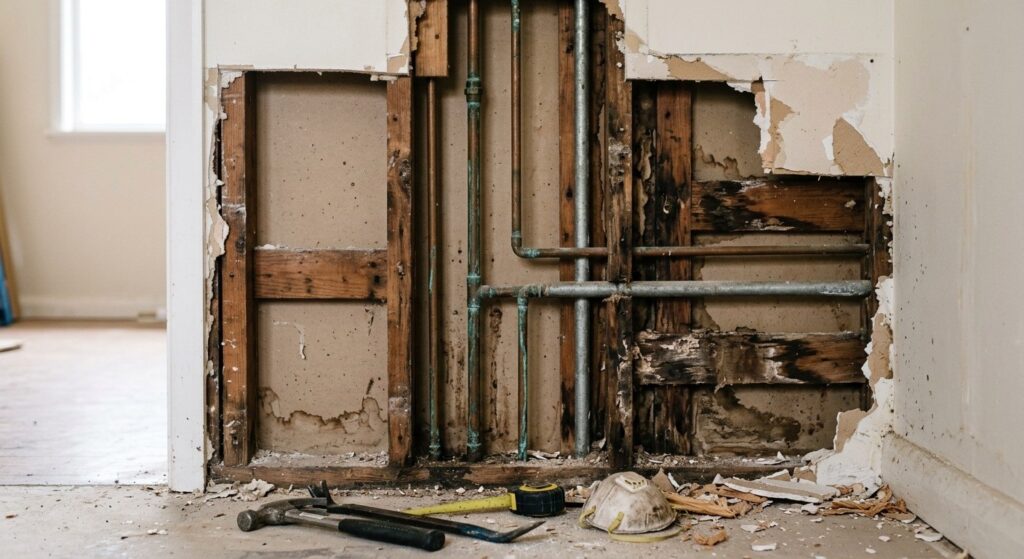
Structural movement, roof failure, unsafe wiring, plumbing defects, water intrusion, hazardous materials, foundation problems, and unauthorised alterations may require substantial professional work.
Never assume that an unattractive property is automatically a bargain. Arrange appropriate surveys and inspections before committing.
Renovate in the Right Order
A sensible phased plan usually prioritises:
- Safety and legal compliance
- Water, drainage, roof, and structural protection
- Electrical, plumbing, heating, and ventilation systems
- Insulation and energy efficiency
- Functional kitchens and bathrooms
- Storage and layout improvements
- Decorative finishes
Painting a room before repairing a recurring leak wastes money. Attractive finishes should come after the systems protecting the home are reliable.
Investigate Renovation Financing
Some markets offer loans that combine property purchase and approved renovation costs. In the United States, for example, HUD’s FHA 203(k) programme can support eligible home purchases or refinancing alongside qualifying rehabilitation work.
Requirements, limits, contractor rules, property eligibility, and approval procedures apply. Similar products may be available through banks or government programmes in other countries.
Compare the interest rate, fees, inspection requirements, release schedule, and total cost against using savings or renovating gradually after purchase.
Be Realistic About DIY Savings
Completing suitable cosmetic tasks yourself can reduce labour costs. Painting, basic landscaping, removing simple fittings, and assembling furniture may be manageable for some homeowners.
Electrical, structural, gas, roofing, major plumbing, and hazardous-material work should be completed by appropriately qualified professionals where required.
Unsafe DIY can create injury, invalid insurance, reduce resale value, and cost more to correct than the original professional work.
5. Redefining the Property, Location, and Construction Method
Some people are moving closer to their dream home by changing what the property looks like or where it is located.
The ideal solution may not be a large conventional house in the most expensive part of a city. It could be:
- A smaller, well-designed home
- A townhouse or apartment with lower maintenance
- A modular or prefabricated property
- A home in a nearby town with transport connections
- A property with an accessory dwelling unit
- A multigenerational layout
- A smaller house on a larger piece of land
- A live-work property
- A home in a lower-cost region made possible by remote or hybrid employment
Prioritise Function Over Floor Area
A smaller home with efficient storage, natural light, flexible rooms, and lower running costs may feel more comfortable than a larger house with unused or poorly designed space.
Buyers can identify functions rather than demanding particular room labels. A guest room that also serves as an office, for example, may provide more value than two rarely used rooms.
Lower purchase and maintenance costs may also leave money available for travel, retirement, education, or future improvements.
Evaluate Modular and Prefabricated Options Properly
Factory-built components can provide more predictable production conditions and potentially reduce certain construction delays. However, the advertised house price may not include:
- Land
- Planning permission
- Foundation work
- Surveys
- Utility connections
- Delivery and crane costs
- Site access preparation
- Taxes and professional fees
- Landscaping
- Insurance
- Financing expenses
Compare the total completed cost rather than the basic factory price. Confirm local building approval, warranty coverage, lender acceptance, resale considerations, and responsibility for every stage.
Test a New Location Before Moving
A more affordable area may bring a desired home within reach, but lower price alone does not guarantee a better life.
Consider employment, transport, healthcare, schools, internet quality, family support, local services, climate risks, taxes, insurance, and the time and cost of commuting.
Spend time in the area on weekdays and weekends. Where possible, rent temporarily before making a permanent purchase.
A beautiful home can lose its appeal when it creates an exhausting commute or isolates the household from everything it values.
How to Choose the Right Strategy
The five approaches can work individually or together. Someone may upskill, earn freelance income, and then purchase a smaller fixer-upper. Another buyer may co-purchase a multigenerational property in a more affordable location.
Start with four calculations:
1. The Total Cash Target
Include the deposit, closing costs, taxes, inspections, moving, immediate repairs, and emergency savings.
2. The Comfortable Monthly Cost
Include mortgage principal and interest, property taxes, insurance, service charges or association fees, utilities, maintenance, transport, and ongoing repairs.
Do not use the largest mortgage a lender is willing to offer as your personal spending target.
3. The Current Gap
Calculate how much additional cash and monthly income are required to make the purchase sustainable.
4. The Most Realistic Levers
Choose one income strategy and one cost strategy. For example:
- Freelancing plus a smaller property
- Upskilling plus relocation
- Co-buying plus phased renovation
- A promotion plus modular construction
Focusing on two practical levers is often more effective than trying ten small ideas without consistency.
Mistakes That Can Move the Dream Further Away
Creativity should not become financial recklessness. Avoid:
- Using the entire emergency fund for a deposit
- Taking expensive consumer debt to appear mortgage-ready
- Hiding debts or income information from a lender
- Depending on unstable income for essential payments
- Co-buying without a legal agreement
- Skipping inspections to make an offer more attractive
- Underestimating taxes, insurance, repairs, and closing costs
- Assuming every renovation increases the property’s value
- Buying in an unfamiliar location without proper research
- Treating online property content as personal financial advice
A dream home should improve stability and quality of life. It should not require a household to live in permanent financial anxiety.
A Practical 90-Day Starting Plan
Days 1–15: Define the five features that matter most in your future home.
Days 16–30: Review income, expenses, debt, savings, and credit records.
Days 31–45: Speak with regulated mortgage professionals or housing advisers to understand realistic options.
Days 46–60: Select one income-growth strategy, such as freelancing or professional training.
Days 61–75: Research alternative locations, co-buying possibilities, renovation properties, or smaller homes.
Days 76–90: Set a monthly savings target, create a separate home fund, and document a 12-month action plan.
Progress may initially appear slow. However, a clear system can produce better results than waiting for the market, salary, or perfect property to change on its own.
Frequently Asked Questions
Is a side hustle useful for getting a mortgage?
It can help build savings, but a lender may require evidence that the income is stable, documented, and likely to continue. Ask how freelance or self-employed income will be assessed.
Is buying with a friend a good idea?
It may increase purchasing power, but all parties need independent advice and a detailed written agreement covering payments, ownership, occupancy, repairs, and exit arrangements.
Is a fixer-upper always cheaper?
No. Major structural or mechanical defects can make a low-priced home extremely expensive. A professional inspection and realistic renovation budget are essential.
Are modular homes less expensive?
They can be cost-effective in some situations, but the factory price may exclude land, foundations, delivery, permits, utilities, and site work. Compare the total finished cost.
Should I wait for mortgage rates to fall?
Future rates and prices are uncertain. Base the decision on current affordability, long-term plans, emergency savings, and a payment you can manage comfortably.
Final Thoughts
People are getting closer to their dream homes in 2026 by becoming more flexible about income, ownership, property condition, size, and location.
Freelancing can accelerate savings. Strategic upskilling can increase reliable earnings. Co-buying can divide costs, while phased renovation can turn an affordable property into a personalised home. Alternative locations and construction methods can also create possibilities that a conventional search might miss.
The strongest strategy is not the most creative idea on social media. It is the one supported by accurate numbers, documented income, legal protection, professional inspections, and a realistic long-term budget.
A dream home does not have to arrive fully completed. It can be created gradually through better decisions, useful skills, shared resources, and a clear understanding of what genuinely makes a property feel like home.
For more practical property, finance, career, and lifestyle guides, explore zingyzon.com.


Keep Exploring Zingyzon.com
Read more Zingyzon SEO, digital marketing, online earning, business, and technology guides for Australia, USA, and global readers.