
Best Home Appliances for Small Apartments
Living in a small apartment does not mean giving up comfort, convenient cooking, clean clothes, or an organized home. The […]
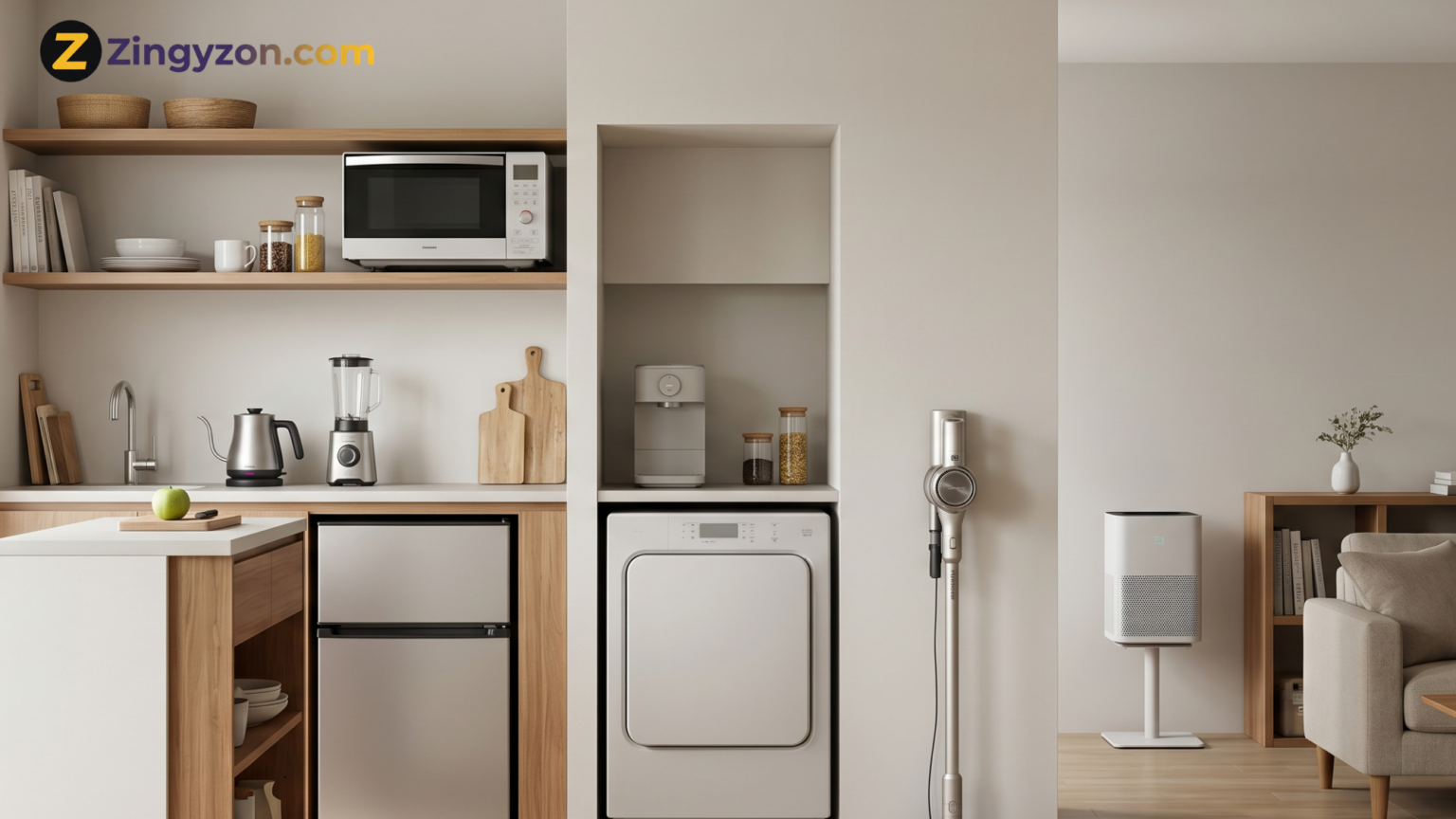
Living in a small apartment does not mean giving up comfort, convenient cooking, clean clothes, or an organized home. The real challenge is selecting appliances that perform useful daily tasks without overwhelming limited floor space, storage, electrical capacity, or counter area.
The best home appliances for small apartments are usually compact, multifunctional, energy-conscious, quiet, and easy to store. A well-chosen appliance can replace several separate tools, reduce manual work, and make a studio or one-bedroom apartment feel more practical.
However, buying too many appliances can create the opposite result. Crowded counters, overloaded cabinets, tangled cords, and noisy machines can make a small home feel even smaller. This guide explains which appliances offer the greatest value and what to consider before bringing them into your apartment.
Quick List: Best Appliances for Small Apartments
The most useful appliance setup will depend on your cooking habits, building facilities, climate, and household size. However, the following options suit many compact homes:
- Compact or apartment-size refrigerator
- Combination microwave, air fryer, and convection oven
- Portable induction cooktop
- Compact electric kettle
- Personal or compact blender
- Countertop dishwasher
- Washer-dryer combination
- Cordless stick vacuum
- Compact air purifier
- Portable fan or room air conditioner
- Handheld garment steamer
- Smart plugs or compact power controls
You do not necessarily need every item on this list. Start with appliances that solve recurring problems and add optional devices only when you have a clear place to store them.
Measure Your Apartment Before Buying Appliances
Product photographs can make an appliance appear smaller than it actually is. Measure the available width, depth, and height before ordering anything.
Include clearance for doors, drawers, lids, ventilation, hoses, and electrical connections. A microwave may fit on a shelf but still require open space around its vents. A countertop dishwasher may need room for a water connection and drainage hose. A refrigerator door needs enough clearance to open fully.
Measure hallways, elevators, staircases, and apartment entrances for larger purchases. Also check whether the appliance can be removed easily when your lease ends.
Create a simple appliance map showing where each item will operate and where it will be stored. This step helps prevent impulse purchases that later occupy valuable counter space.
For a broader overview of selecting practical appliances, read ZingyZon’s guide to the best home appliances for modern homes.
1. Compact or Apartment-Size Refrigerator
A refrigerator is essential, but an oversized model can dominate a small kitchen. Choose capacity according to the number of residents, shopping frequency, freezer needs, and available space.
A compact under-counter refrigerator may suit a studio resident who shops frequently and stores limited frozen food. Couples or people who cook regularly may need a taller apartment-size model with separate refrigerator and freezer compartments.
Look for adjustable shelves, removable door bins, clear drawers, and reversible doors. These features make a small interior more flexible. A top-freezer design may offer practical storage without requiring wide door clearance.
Check operating noise because the refrigerator may sit close to a bed, desk, or living area. Also review annual energy use, ventilation requirements, warranty coverage, and replacement-part availability.
Avoid choosing an extremely small model only to save floor space. A refrigerator that cannot hold your normal groceries may lead to food waste, extra shopping trips, or the purchase of a second appliance.
2. Multifunction Microwave or Toaster Oven
A combination appliance can provide significant value in a compact kitchen. Some models combine microwave heating with convection baking, grilling, air frying, or toaster-oven functions.
This setup may replace a separate microwave, toaster, and air fryer. It can reheat leftovers, toast bread, prepare frozen foods, roast vegetables, and handle small baking tasks.
Before purchasing, compare internal cooking dimensions rather than relying only on the appliance’s exterior size. Make sure your plates, mugs, pans, or food containers fit inside.
Check how easily grease and crumbs can be removed. Combination appliances often require more cleaning than a basic microwave. Controls should also remain simple enough for everyday use.
Do not assume every combination model performs all functions equally well. Prioritize the tasks you use most often. A strong microwave with acceptable air-frying performance may be more useful than a complicated machine with numerous weak presets.
3. Portable Induction Cooktop
A portable induction cooktop can provide an additional cooking surface or serve as the main burner in a micro-apartment with limited kitchen facilities.
Induction cooking heats compatible cookware through a magnetic field. The surface around the pan generally remains easier to clean than traditional exposed heating elements.
Single-burner models occupy little counter space and can often be stored vertically. Look for adjustable power levels, temperature settings, automatic shutoff, pan detection, and a stable nonslip base.
You will need induction-compatible cookware. A simple magnet test can help determine whether the bottom of an existing pan is suitable.
Check your lease and electrical setup before using a high-wattage cooking appliance. Place it on a stable, heat-resistant surface with appropriate clearance, and follow all ventilation and safety instructions.
4. Compact Electric Kettle
An electric kettle is useful for tea, coffee, oatmeal, instant meals, and quick recipe preparation. It heats only the water you need and can be easier to store than many cooking devices.
A smaller-capacity model is often sufficient for one or two people. Useful features include automatic shutoff, boil-dry protection, a clear water-level indicator, and a comfortable handle.
A cordless serving design with a separate power base can make pouring easier. Models with adjustable temperature settings are helpful for specialty tea or pour-over coffee, but they may not be necessary for basic daily use.
Choose a kettle with an opening wide enough for cleaning. Mineral deposits can develop inside, so regular descaling remains important.
5. Personal Blender or Compact Food Processor
A large blender may be unnecessary when you normally prepare one smoothie, sauce, or small batch at a time. A personal blender uses smaller cups that may also function as drinking containers.
Look for a stable motor base, secure lid, easy-to-clean blade assembly, and cups that fit your storage area. Check whether replacement cups and seals are available.
A compact food processor may be more useful if you regularly chop vegetables, prepare dips, grate ingredients, or make dough. Some hand blenders include whisk and mini-chopper attachments, allowing one motor to perform several tasks.
Choose the device that reflects your actual cooking habits. Buying a blender, food processor, hand mixer, and chopper separately can quickly fill a small cabinet.
You can compare additional compact cooking tools in ZingyZon’s guide to small kitchen appliances for everyday cooking.
6. Countertop Dishwasher
A countertop dishwasher can help renters who lack a built-in unit. It is smaller than a full-size dishwasher and sits on a counter, rolling cart, or stable shelf.
Some models connect directly to a faucet, while others include a refillable water tank. Check the installation method, drainage requirements, hose length, and faucet compatibility before buying.
Measure your plates and cookware because countertop models have limited internal height. A unit may handle daily cups, bowls, plates, and utensils but still require large pots to be washed by hand.
Look for an accessible filter, clear controls, suitable wash cycles, and a drying system. Consider where the appliance will remain between uses because moving it repeatedly may become inconvenient.
A countertop dishwasher provides the most value when you cook frequently and have enough counter or cart space to keep it accessible.
7. Washer-Dryer Combination
A washer-dryer combination performs washing and drying inside one drum. It can save floor space compared with two separate machines and may fit beneath a counter or inside a laundry closet.
However, combination units often have different washing and drying capacities. A full washing load may need to be divided before drying. Complete wash-and-dry programs can also take longer than separate-machine cycles.
Check whether the unit is vented or ventless, what type of electrical outlet it requires, and whether your apartment provides suitable water and drainage connections.
Renters should obtain permission before installing any machine that connects to plumbing. Confirm whether your building already provides shared laundry facilities, since a personal combination unit may not justify its price or space requirements.
8. Portable or Compact Washing Machine
A portable washer can be useful when a full-size installation is impossible. These machines may connect temporarily to a sink and drain through a hose.
Choose capacity according to realistic laundry loads. Compact washers work best for everyday clothing, towels, and smaller items rather than bulky bedding.
Check the machine’s filled weight, water-connection requirements, vibration, drainage method, and storage location. It should stand on a level surface and should never block an exit or walkway.
Some leases or building rules prohibit portable washers because of plumbing, leakage, or drainage concerns. Always confirm permission before purchasing.
9. Cordless Stick Vacuum
A cordless stick vacuum is one of the most practical cleaning appliances for small apartments. It occupies less storage space than a full-size upright vacuum and is convenient for quick daily cleaning.
Look for a model that can convert into a handheld vacuum. This allows you to clean furniture, shelves, stairs, cars, and narrow corners with the same device.
Compare real operating time, charging time, dust-bin capacity, filter maintenance, floor-head width, and replacement battery availability. Apartments with rugs or pets may require stronger suction and a brush designed for hair removal.
A wall-mounted charging dock can save floor space, but renters may need permission before drilling. A freestanding charging base or compact closet hook offers a less permanent alternative.
10. Robot Vacuum for Open Layouts
A robot vacuum can maintain floors between deeper cleaning sessions. It is most useful in apartments with open layouts, low thresholds, and limited clutter.
Before buying, measure the height beneath beds and sofas. Check whether the robot can cross rugs, avoid stairs, return to its dock, and map multiple rooms.
A self-emptying station adds convenience but consumes more floor space. In a very small apartment, a standard robot with a compact dock may be more appropriate.
Robot vacuums do not eliminate the need for occasional edge, furniture, and deep cleaning. They offer the best value when floor maintenance is a recurring problem and the layout allows reliable navigation.
11. Compact Air Purifier
A compact air purifier may be helpful in bedrooms, living areas, or apartments affected by outdoor pollution, smoke, dust, or pet hair.
Choose a unit according to the recommended room size rather than selecting the smallest physical model available. A purifier that is too weak may need to operate continuously at its loudest setting.
Check filter type, replacement frequency, annual filter cost, operating noise, and energy use. A sleep mode or dimmable display can be valuable when the purifier sits near a bed.
Place the appliance where air can circulate around it. Do not hide it behind furniture or press its intake against a wall unless the manufacturer allows that arrangement.
An air purifier should support good ventilation and cleaning habits rather than replace them.
12. Portable Fan or Room Air Conditioner
A compact fan can improve comfort without occupying much space. Tower fans use limited floor area, while circulator fans can sit on a table or shelf.
Choose a stable design with accessible controls, several speed settings, and manageable noise. Oscillation can help distribute air across a studio or shared living area.
Where stronger cooling is required, a window or portable room air conditioner may be appropriate. Match cooling capacity to the room rather than automatically choosing the most powerful model.
Portable air conditioners require an exhaust hose and window installation kit. They also occupy floor space and may need condensate drainage. Window units can preserve floor area but require a compatible window and building approval.
Confirm lease restrictions, installation requirements, electrical capacity, and window security before purchasing either type.
13. Compact Dehumidifier
A dehumidifier may help in apartments with persistent excess moisture, condensation, or damp storage areas. However, it should not be used to hide an unresolved leak or structural moisture problem.
Choose capacity according to the room size and moisture level. Small desktop devices may not handle a significantly damp apartment.
Check tank capacity, automatic shutoff, continuous-drain options, filter access, operating noise, and energy use. The water tank should be easy to carry without spilling.
Position the machine according to the manual and keep doors and windows appropriately managed while it operates. Report leaks, visible mold, or building defects to the property owner or manager.
14. Handheld Garment Steamer
A compact garment steamer can reduce the need for a full ironing board. It is useful for shirts, dresses, curtains, and light fabric refreshing.
Look for fast heating, a secure water tank, automatic shutoff, and a comfortable grip. A travel-size model is easy to store, although its smaller tank may require frequent refilling.
Check fabric-care labels before steaming. Keep the hot head and steam away from skin, electrical outlets, children, pets, and heat-sensitive surfaces.
A steamer is most valuable for residents who regularly wear clothing that wrinkles but do not have space for a permanent ironing setup.
15. Smart Plugs and Compact Controls
Smart plugs can add schedules, remote controls, or energy monitoring to compatible devices. They may be helpful for lamps, fans, coffee makers, and selected low-risk appliances.
Not every appliance should be controlled through a smart plug. Check the plug’s electrical rating and the appliance manufacturer’s instructions. Heating and high-power appliances require particular caution.
Choose compact plugs that do not block the second outlet. Also consider whether the device needs Wi-Fi, a mobile application, an account, or a particular smart-home platform.
Smart features should simplify your routine. A traditional timer may be a better option when you only need a basic daily schedule.
How to Choose Apartment-Friendly Appliances
Prioritize Multifunctionality
An appliance deserves space when it performs one important task extremely well or several regular tasks competently. Combination cooking devices, convertible vacuums, and hand blenders with attachments can reduce duplication.
Check Noise Levels
In a small home, there is little distance between an appliance and your bed, desk, sofa, or neighbors. Read noise specifications and reviews for refrigerators, washers, air purifiers, fans, vacuums, and dishwashers.
Review Energy Use
Appliances that operate continuously or frequently can affect utility costs. Compare annual energy consumption, estimated operating costs, appliance capacity, and energy-efficiency labels. Monitoring your energy usage alongside your national fuel pay bill can also help you identify opportunities to reduce overall household utility expenses.
ZingyZon’s guide to energy-efficient home appliances explains how to use appliance labels and compare long-term running costs.
Think About Storage
Decide where the appliance will go when it is not operating. Folding handles, detachable parts, nesting accessories, vertical storage, and cord management can make a significant difference.
Consider Maintenance
Compact does not always mean easy to clean. Check filter access, water tanks, crumb trays, washable components, descaling instructions, and replacement-part availability.
Confirm Building Rules
Before installing washers, dishwashers, air conditioners, wall-mounted docks, or externally vented devices, review your lease and obtain any necessary approval.
Appliances You May Not Need
A small apartment can become cluttered when every kitchen or cleaning task has a separate machine.
You may not need a full-size food processor when a hand blender with a chopper performs your usual tasks. A combination microwave may replace a separate toaster and air fryer. Shared building laundry can make a personal washer unnecessary.
Avoid buying an appliance because it is popular or heavily discounted. Ask how often it will be used, where it will be stored, what it will replace, and how much cleaning it requires.
The best space-saving strategy is not purchasing miniature versions of everything. It is owning fewer appliances that match your actual routine.
Small Apartment Appliance Buying Checklist
Before making a purchase, confirm the following:
- The appliance solves a regular household problem.
- Its full dimensions fit the intended space.
- Doors, lids, filters, and drawers can open properly.
- Ventilation and installation requirements are manageable.
- Its noise level suits a compact living environment.
- Power, plumbing, or drainage connections are available.
- Your lease or building rules allow its use.
- Replacement filters, parts, or accessories are available.
- It can be cleaned without excessive effort.
- You have a safe storage location when it is not in use.
Frequently Asked Questions
What are the most essential appliances for a small apartment?
A refrigerator, cooking appliance, vacuum, and suitable heating or cooling equipment are the main essentials for many apartments. Additional needs depend on building facilities, climate, cooking habits, and household size.
Which kitchen appliance saves the most space?
A combination microwave, convection oven, toaster, and air fryer can save considerable space by replacing several individual appliances. The best option depends on the cooking functions you actually use.
Are mini appliances good for apartments?
Mini appliances can be useful, but the smallest model is not always the best choice. It must still have enough capacity and power for your normal routine.
Is a washer-dryer combination worth buying?
A washer-dryer combination can be worthwhile when you have suitable plumbing, building permission, and no convenient shared laundry. Consider its drying capacity, cycle duration, installation needs, and purchase cost.
What is the best vacuum for a studio apartment?
A cordless stick vacuum that converts into a handheld unit is a practical choice for many studios. It is easy to store and can clean floors, furniture, corners, and other small surfaces.
How can I reduce appliance clutter?
Keep only daily-use appliances on the counter. Store occasional tools in cabinets, use vertical storage, combine compatible functions, and avoid buying multiple machines that perform the same job.
Should I buy smart appliances for a small apartment?
Smart appliances can be useful when they provide meaningful scheduling, alerts, or energy controls. They are unnecessary when a simpler product already meets your needs.


Keep Exploring Zingyzon.com
Read more Zingyzon SEO, digital marketing, online earning, business, and technology guides for Australia, USA, and global readers.