
Why Brands Are Turning to AI Music Tools for Social Media Marketing
Brands are turning to AI music tools because social media demands more video content, faster production, and platform-specific audio than […]
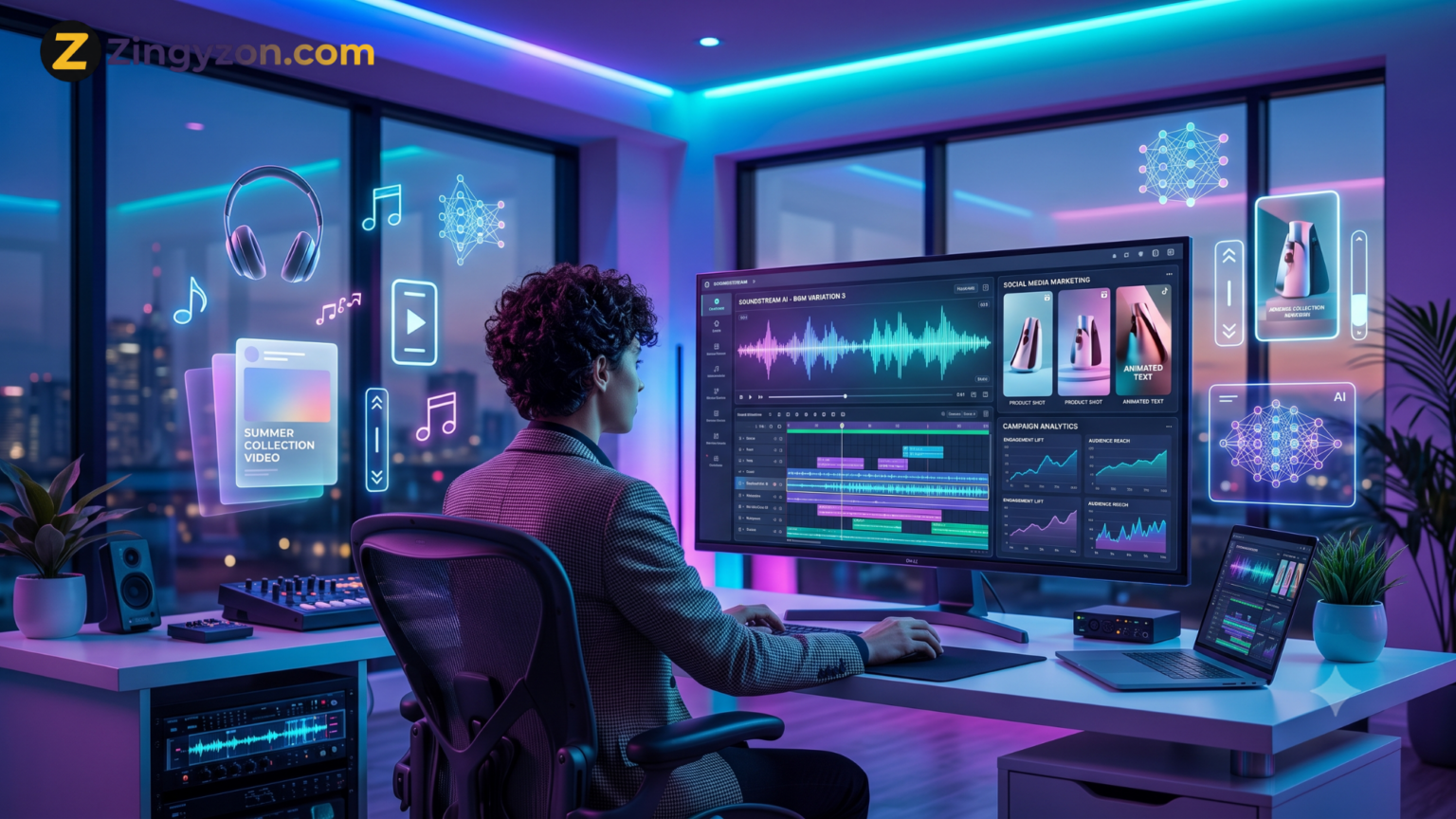
Brands are turning to AI music tools because social media demands more video content, faster production, and platform-specific audio than traditional music workflows can always provide. With an AI music generator, marketing teams can create custom soundtracks based on a desired mood, genre, tempo, duration, and campaign style—often within minutes.
This does not mean AI is replacing musicians, composers, or sound designers. Instead, brands are using it to speed up early concepts, create background tracks for frequent posts, test different creative directions, and adapt music for multiple video formats.
Audio plays an important role in how people experience short-form videos. It can establish a mood before viewers fully understand the visuals, make edits feel more energetic, support a product demonstration, and help a campaign become more recognizable.
For brands publishing regularly on Instagram Reels, TikTok, YouTube Shorts, Facebook, and other visual platforms, AI music provides a flexible way to create sound that fits the content rather than forcing every video to fit an existing track.
What Are AI Music Tools?
AI music tools are software platforms that use generative artificial intelligence to create, modify, arrange, or transform audio.
Depending on the tool, a user may be able to generate music by entering a text prompt such as:
“Create an upbeat electronic soundtrack for a 20-second fitness product video with a strong opening beat and a clean ending.”
The system interprets details such as mood, genre, tempo, instrumentation, energy level, and length before producing a track.
Some tools focus on instrumental background music, while others can create songs with vocals and lyrics. More advanced platforms may allow users to:
- Change the track duration
- Extend or shorten a composition
- Generate multiple variations
- Adjust mood and energy
- Create instrumental and vocal versions
- Match music to a video
- Separate vocals and instruments
- Produce loops and transitions
- Generate music in different styles or languages
An online AI Music Generator can help marketers create soundtracks for social media videos, presentations, educational content, advertisements, and other digital projects.
However, brands should always review the tool’s commercial-use terms. “AI-generated” does not automatically mean that every track is royalty-free, exclusive, or approved for advertising.
Why Music Matters in Social Media Marketing
Social media content is highly visual, but sound can shape the entire viewing experience.
A fashion video paired with elegant ambient music feels different from the same footage paired with aggressive electronic beats. A slow product demonstration may feel dull until rhythmic music gives the edit more structure.
Music can support social media marketing by:
- Creating an immediate emotional response
- Improving the pace of video edits
- Reinforcing a brand’s personality
- Making transitions feel smoother
- Supporting voiceovers and visual storytelling
- Helping viewers remember a campaign
- Making product content feel less promotional
- Providing a recognizable audio identity
Instagram describes Reels and Reels ads as short videos that can combine music, effects, and voiceovers to engage audiences. TikTok’s advertising guidance similarly emphasizes audio as a tool for establishing mood and strengthening a story.
For marketers, this means music should not be added as an afterthought. It should be chosen or created alongside the script, visuals, pacing, and call to action.
1. AI Music Speeds Up Content Production
Social media teams often work under tight deadlines. They may need several Reels, TikToks, Stories, video ads, product demonstrations, and campaign variations every week.
Searching traditional stock libraries can take time. A marketer may listen to dozens of tracks before finding one that almost fits the project. Even then, the introduction may be too long, the main beat may arrive too late, or the ending may not align with the final shot.
AI music tools shorten this process. Instead of browsing an entire library, the user can describe the required sound and generate several options.
For example, a skincare brand could request:
“Soft, clean, modern background music for a 15-second morning skincare routine, with gentle percussion and a fresh luxury mood.”
The brand can then test different versions without arranging a recording session or manually editing a long stock track.
This faster workflow is particularly valuable for time-sensitive posts related to product launches, events, seasonal offers, trending formats, and fast-moving social conversations.
2. Brands Can Match Music to Exact Video Lengths
Short-form content does not follow one standard duration. A campaign may require a six-second bumper, a 15-second Story, a 30-second Reel, and a longer YouTube video.
Traditional songs may need to be cut, looped, faded, or rearranged to fit each format. Poor editing can make the soundtrack end suddenly or cause an important beat to fall at the wrong moment.
AI music tools can generate tracks for specific durations or create variations that suit different edits.
A marketing team can produce:
- A short hook for an advertisement
- A seamless loop for a product animation
- A 15-second version for Instagram Stories
- A 30-second version for TikTok
- A longer variation for YouTube
- A low-energy version for voiceover content
This flexibility allows the music to follow the creative structure of the video.
The brand can ask for a beat change when the product appears, a pause before the call to action, or a clear ending that matches the logo screen.
3. AI Music Supports Frequent Creative Testing
Successful social media advertising often requires testing several versions of the same idea.
A brand may keep the video footage and message consistent while testing different:
- Hooks
- Captions
- Calls to action
- Video lengths
- Voiceovers
- Music styles
- Editing speeds
Music can significantly change how an advertisement feels. An upbeat track may suit a younger audience, while a softer version may work better for a premium positioning.
AI tools make it easier to produce multiple sound options without licensing a separate track for every experiment.
For example, an online travel company could test the same destination video with tropical music, cinematic music, acoustic guitar, and modern electronic audio.
The performance data can then show which sound direction generates stronger watch time, click-through rate, saves, or conversions.
AI does not decide the winning creative. It simply reduces the production effort required to test more ideas.
4. Small Brands Gain Access to Custom Audio
Large companies may have budgets for composers, recording studios, musicians, and audio-branding agencies. Small businesses often rely on free libraries or overused trending sounds.
AI music tools can reduce that gap by making custom audio more accessible.
A local café, independent clothing store, freelance consultant, or small e-commerce brand can generate music that reflects a specific campaign mood without commissioning a complete original composition for every post.
This is useful for:
- Product showcases
- Customer testimonials
- Behind-the-scenes videos
- Tutorial content
- Promotional announcements
- Event highlights
- Seasonal campaigns
- Brand introductions
The result may not replace a professionally developed sonic identity, but it can help smaller brands create more polished content within a limited production budget.
The greatest savings often come from reduced searching, editing, and revision time rather than from eliminating creative professionals.
5. AI Can Strengthen Audio Branding
Visual branding includes logos, fonts, colors, and photography. Audio branding applies a similar principle to sound.
A brand may use a consistent combination of musical qualities, such as:
- A particular tempo range
- Repeated instruments
- A recognizable rhythm
- A specific emotional tone
- A short sonic logo
- Consistent transition sounds
AI music tools can generate variations while maintaining these characteristics.
For example, a technology company might define its sound as clean, optimistic, electronic, and minimal. Its social media tracks can follow that direction even when individual videos require different lengths or energy levels.
A wellness brand may use soft percussion, warm acoustic textures, and calm ambient layers. A sports brand may choose stronger bass, quick rhythms, and energetic transitions.
Consistency helps audiences associate a sound with a brand, but every track should still support the content. Repeating the same generic AI composition across every video can make the feed feel predictable.
Human creative direction remains important because a meaningful audio identity requires more than selecting a genre.
6. Music Can Be Adapted for Different Markets
International brands often create localized social media content for different languages, cultures, and regions.
A single global soundtrack may not suit every audience. Musical preferences, instruments, pacing, and emotional associations can vary significantly between markets.
AI music tools allow marketers to explore localized versions more efficiently.
A brand could retain the same core melody while testing:
- Different instruments
- Regional rhythms
- Faster or slower tempos
- Vocal and instrumental versions
- Alternative language lyrics
- Market-specific campaign moods
Localization should be handled carefully. Adding a stereotypical instrument does not automatically make music culturally appropriate.
Regional marketing teams, local creators, musicians, or cultural consultants should review the result before publication. AI can accelerate experimentation, but people should determine whether the output feels natural, respectful, and relevant.
7. AI Music Integrates With Modern Content Workflows
Many social campaigns are already created with AI-assisted tools for scripting, caption writing, video editing, translation, voiceovers, and visual generation.
AI music fits naturally into this workflow.
A team might:
- Generate several campaign concepts.
- Write a short social video script.
- Record or produce the visual content.
- Create an original background track.
- Edit the music to match scene changes.
- Generate captions and translated versions.
- Export platform-specific formats.
- Review the entire campaign before publishing.
This connected process can reduce production delays and help small teams create a greater volume of content.
However, speed should not become an excuse for publishing repetitive or low-quality posts. YouTube’s monetization guidance requires videos to be original and non-repetitious, while creators must hold the necessary commercial rights to all audio and visual elements.
Readers can explore Zingyzon for more information about using AI references, visual consistency, and generative tools in modern content production.
How Brands Can Use AI Song Cover Generators
An AI cover tool changes the vocal performance or style of an existing song. This is different from generating a completely original instrumental track.
A brand might use an ai song cover generator to experiment with its own verified voice, a contracted performer, or audio for which it has obtained clear permission.
Possible legitimate uses include:
- Re-recording an original company jingle
- Creating alternate versions with an approved vocalist
- Producing a playful campaign using a consenting employee
- Testing how an original melody sounds in different vocal styles
- Creating localized versions with contracted performers
Brands should not imitate a celebrity, singer, employee, creator, or customer without explicit permission.
The underlying song may also have separate rights covering its composition, lyrics, sound recording, and performance. Changing the voice does not remove those rights.
YouTube allows people to request removal of synthetic content that simulates their face or voice, and its impersonation policy continues to apply even when AI content is disclosed.
For commercial campaigns, written permission, documented licenses, and legal review are safer than assuming that a transformed song is automatically usable.
Copyright and Licensing Still Matter
One of the biggest misconceptions surrounding AI music is that every generated track is free from copyright concerns.
In reality, usage rights depend on:
- The AI platform’s terms
- The user’s subscription plan
- The model and feature used
- The intended platform
- Whether the content is commercial
- Whether vocals, lyrics, or samples were uploaded
- Whether recognizable artists or copyrighted works were referenced
- Whether the output is exclusive or non-exclusive
Before publishing, brands should confirm whether the license covers:
- Organic social media posts
- Paid advertising
- Client work
- Monetized YouTube videos
- Podcasts
- Television or streaming campaigns
- In-store use
- International distribution
TikTok advises businesses to use its Commercial Music Library for commercial activities. When using music from outside that library, businesses must confirm that the content contains no protected music or that they have obtained all necessary licenses.
YouTube also recommends its Shorts Audio Library or royalty-free Audio Library to reduce copyright claims. Music licensing can vary according to the track and how it is used.
Keep copies of licenses, receipts, tool terms, prompts, project files, and export dates. These records can help if a platform questions the ownership or permitted use of a track.
AI Disclosure and Audience Trust
Social platforms are introducing clearer labels for synthetic and altered media.
TikTok requires labels for certain realistic AI-generated images, audio, and video. It may also detect Content Credentials and apply an automatic AI-generated label.
YouTube asks creators to disclose meaningfully altered or synthetic content when it appears realistic. Meta also uses industry signals and creator disclosures when labeling AI-generated images, video, and audio.
A normal instrumental soundtrack may not always require the same disclosure as a realistic cloned voice or misleading synthetic performance. Brands should nevertheless check each platform’s latest rules before publishing.
Transparency is particularly important when an AI track imitates a real person, presents synthetic vocals as a genuine endorsement, or could mislead the audience about who performed it.
Best Practices for Using AI Music in Marketing
Start with a clear creative brief. Define the video’s audience, emotion, pace, duration, and purpose before generating music.
Avoid prompting the system to copy a living artist’s exact voice or a protected song. Describe broader musical characteristics instead, such as “warm acoustic pop with gentle percussion.”
Review every output carefully. Listen for distorted vocals, awkward transitions, unwanted lyrics, unusual similarities, and sounds that conflict with the brand.
Keep music below dialogue and voiceovers. A track should support the message rather than make it difficult to understand.
Test the audio on both headphones and mobile speakers. Social content is often watched on small devices where bass, vocals, and subtle instruments may sound different.
Most importantly, combine AI efficiency with human judgment. A marketer, editor, musician, or sound designer should still decide whether the track is memorable, appropriate, and emotionally aligned with the campaign.
Frequently Asked Questions
Why are brands using AI music generators?
Brands use AI music generators to create custom soundtracks faster, match exact video lengths, test multiple styles, and reduce the time spent searching stock libraries.
Can AI-generated music be used commercially?
It depends on the platform and subscription plan. Review the license carefully to confirm whether it covers social posts, advertising, monetization, client projects, and international use.
Is AI music automatically royalty-free?
No. Some platforms provide commercial licenses, while others apply restrictions. “AI-generated” and “royalty-free” are not interchangeable terms.
Can brands use celebrity-style AI voices?
Using a recognizable person’s voice without permission can create legal, ethical, privacy, and platform-policy risks. Brands should use their own voice or obtain written consent from the performer.
Does AI-generated audio need to be labeled?
Disclosure requirements depend on the platform and nature of the content. Realistic synthetic voices or potentially misleading audio are more likely to require labeling.
Will AI replace composers and musicians?
AI is more likely to become part of the creative workflow. Human professionals remain important for strategy, originality, emotional direction, cultural judgment, and high-value audio branding.
What type of social content benefits from AI music?
Product videos, tutorials, ads, explainers, announcements, behind-the-scenes clips, event recaps, and short-form branded stories can all benefit from carefully selected custom music.
Final Thoughts
Brands are adopting AI music tools because modern social media requires speed, flexibility, and a constant supply of fresh creative material.
AI can generate a soundtrack for a specific mood, adapt music to a precise video length, create variations for testing, and help smaller businesses access more polished audio production.
Its value is greatest when it supports a clear marketing strategy. A generic track generated without creative direction will not automatically improve a campaign.
Brands still need to review licensing terms, protect performers’ voices, respect copyrights, follow platform disclosure rules, and ensure that every piece of audio strengthens the message.
The strongest approach combines AI’s speed with human creativity. When marketers use these tools responsibly, AI-generated music can become more than convenient background sound—it can help create a consistent, recognizable, and engaging social media identity.
Keep Exploring Zingyzon.com
Read more Zingyzon SEO, digital marketing, online earning, business, and technology guides for Australia, USA, and global readers.