
When Text-to-Video Hits Its Limits: Why Reference-Driven AI Filmmaking Deserves a Closer Look
Text-to-video AI has changed the way creators imagine video production. A few years ago, turning a written idea into moving […]
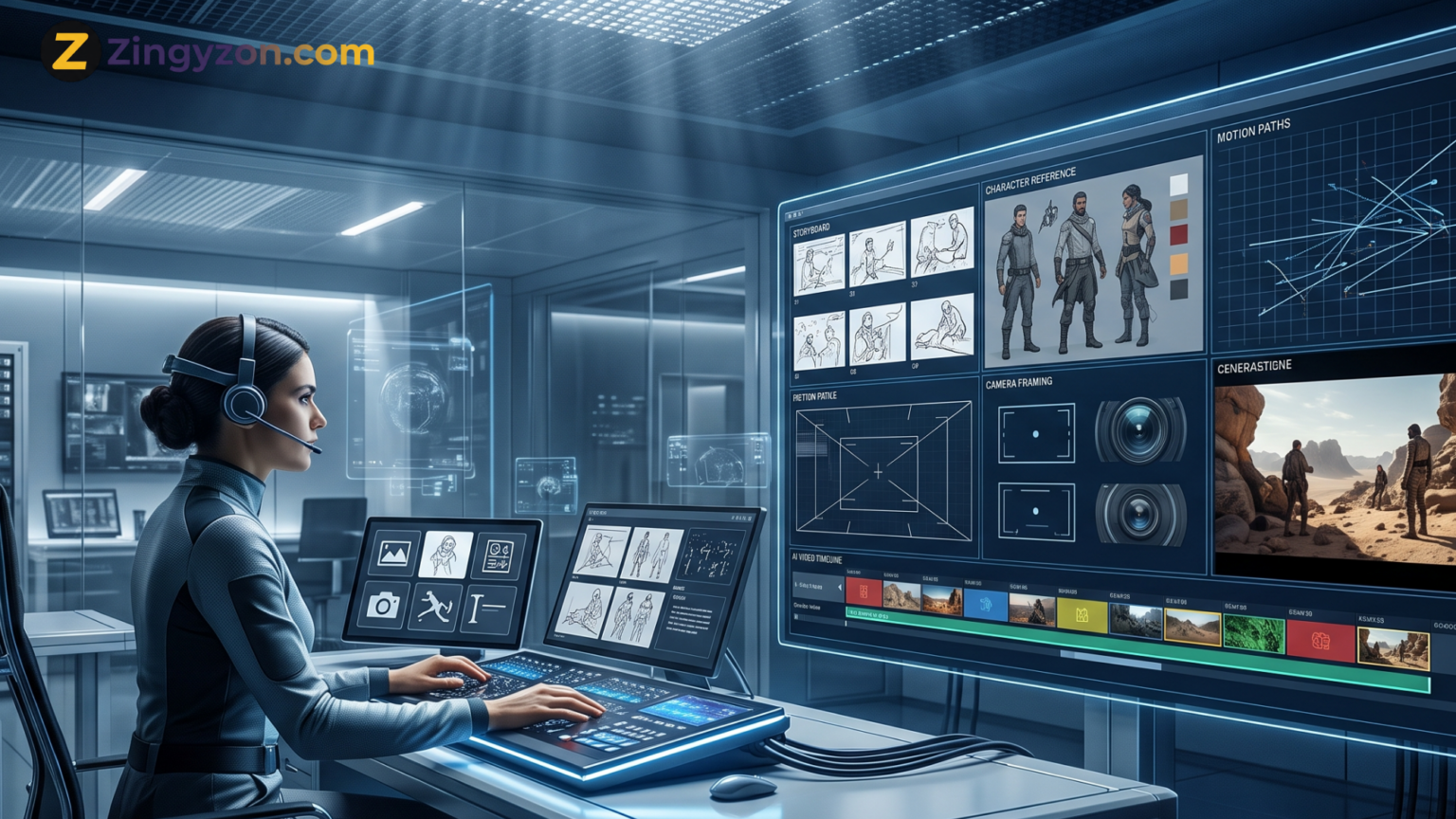
Text-to-video AI has changed the way creators imagine video production. A few years ago, turning a written idea into moving visuals sounded like science fiction. Today, creators can type a short prompt and generate cinematic shots, animated scenes, product videos, fantasy worlds, and social media clips within minutes. This has opened new opportunities for marketers, filmmakers, educators, influencers, and businesses that want faster visual content.
However, as exciting as text-to-video technology is, it also has clear limits. A simple prompt can create a beautiful clip, but filmmaking is not only about beautiful visuals. Real filmmaking depends on character consistency, scene continuity, camera direction, emotional timing, brand accuracy, object placement, lighting control, and story flow. This is where many text-to-video tools begin to struggle.
When creators need predictable results, the future may not belong to text prompts alone. It may belong to Reference-Driven AI Filmmaking, a workflow where images, videos, sketches, characters, motion examples, brand assets, and style references guide the AI more precisely. Instead of asking the model to guess everything from words, creators provide visual and creative references that help the system understand exactly what they want.
This article explores why text-to-video reaches its limits, how reference-driven filmmaking works, and why it deserves serious attention in the modern AI content ecosystem.
What Is Text-to-Video AI?
Text-to-video AI is a generative technology that creates video clips from written instructions. A user may enter a prompt such as “a futuristic city at sunset with flying cars and cinematic lighting,” and the AI model generates a moving scene based on that description.
This workflow is simple, fast, and accessible. It helps people who do not have cameras, actors, locations, animation teams, or editing budgets. For short clips, concept visuals, social media posts, and creative experiments, text-to-video is extremely useful.
But the simplicity of text-to-video is also its weakness. Human language is flexible, but visual production requires precision. A prompt can describe a scene, but it may not fully define the character’s face, exact costume, camera lens, movement style, object position, lighting direction, or emotional performance. The AI must interpret missing details, and this often leads to inconsistent results.
Where Text-to-Video Starts to Break Down
The biggest problem with text-to-video is not that it fails completely. In fact, many outputs look impressive at first glance. The problem appears when creators need control and continuity across multiple shots.
1. Character Consistency
A filmmaker may want the same character to appear across several scenes. In traditional filmmaking, the same actor, costume, makeup, and lighting setup help maintain consistency. In text-to-video, the character can change from one clip to another. The face may look slightly different, the outfit may shift, or the age and body type may not remain stable.
For storytelling, this is a serious issue. If the main character changes appearance every few seconds, the audience loses connection with the narrative.
2. Scene Continuity
A video project often needs multiple shots in the same environment. For example, a brand film may show a person walking into a café, sitting at a table, opening a laptop, and speaking to the camera. Text-to-video tools may generate each shot beautifully, but the café layout, colors, props, and background details may change from shot to shot.
Continuity matters because it makes the story feel real. Without it, the final video looks like a collection of unrelated AI clips.
3. Camera Control
Text prompts can describe camera movement, such as “slow dolly shot” or “wide cinematic angle,” but results are not always predictable. The camera may move too fast, focus on the wrong subject, or create unnatural motion. Professional creators need more than general instructions. They need control over framing, timing, movement, and composition.
4. Brand Accuracy
For businesses, visual consistency is essential. A company may need a product video where the logo, packaging, colors, and design remain accurate. Text-to-video models can struggle with exact text, logos, and brand-specific details. This makes them risky for commercial campaigns where accuracy is non-negotiable.
5. Physical Realism
AI-generated video can sometimes produce strange hand movements, object distortions, unnatural walking, inconsistent shadows, or impossible physics. While models are improving quickly, physical realism remains one of the major challenges in AI video generation.
What Is Reference-Driven AI Filmmaking?
Reference-Driven AI Filmmaking is a creative process where users guide AI video generation with reference materials instead of relying only on text. These references can include images, video clips, character sheets, storyboards, product photos, motion examples, brand guidelines, audio tracks, or previous scenes.
The basic idea is simple: show the AI what you mean instead of only describing it.
For example, instead of typing “a young woman in a red jacket walking through a neon street,” a creator can upload a character image, a style reference, and a motion reference. The AI can then use these inputs to create a video that follows the intended look more closely.
This approach gives creators more control over:
- Character appearance
- Scene design
- Motion style
- Camera direction
- Lighting mood
- Product accuracy
- Visual branding
- Shot continuity
- Editing rhythm
- Emotional tone
Reference-driven workflows are especially useful when creators want cinematic quality, repeatable results, and stronger creative direction.
Why References Matter More Than Prompts Alone
Words are powerful, but visuals are more specific. A phrase like “modern luxury apartment” can mean many different things. It could be minimalist, industrial, warm, futuristic, Scandinavian, or classic. If a creator uploads a reference image, the AI receives clearer visual guidance.
References reduce guesswork. They help the AI understand not only what should appear in the video, but also how it should look and feel. This is why reference-driven workflows are becoming important for serious creators.
For example, a fashion brand may upload a model reference, clothing reference, lighting mood board, and runway motion clip. A real estate company may upload property photos and ask the AI to create a cinematic walkthrough. A filmmaker may upload a storyboard and character sheet to generate early scene previews.
In all these cases, the reference material gives structure to the creative process.
The Rise of Next-Generation AI Video Workflows
AI video tools are moving from basic prompt generation toward multimodal creation. This means the systems can understand and combine different types of input, such as text, images, video, audio, and motion references.
For creators following the next wave of AI video tools, Seedance 3.0 is a useful anchor point for discussing where the industry is heading: more control, stronger references, better continuity, and more production-ready workflows.
The future of AI filmmaking will likely be less about typing one perfect prompt and more about building a complete creative package. That package may include a script, storyboard, character references, camera notes, music direction, voice tone, color palette, and editing style.
This is much closer to how real filmmaking works. Directors do not simply describe a movie in one sentence. They use scripts, mood boards, casting, production design, camera planning, lighting references, and editing notes. Reference-driven AI filmmaking brings that professional structure into the generative video process.
Benefits of Reference-Driven AI Filmmaking
1. Better Character Continuity
When a character reference is used, the AI has a stronger guide for facial features, clothing, hairstyle, and overall appearance. This can help maintain the same character across multiple clips, which is essential for short films, ads, explainers, and branded storytelling.
2. Stronger Visual Consistency
Reference images and style boards help maintain a consistent look throughout the video. Whether the creator wants a cyberpunk city, soft documentary style, luxury product aesthetic, or animated brand world, references make the output more aligned.
3. More Control Over Motion
Motion references can show the AI how an action should happen. Instead of simply saying “the person dances” or “the camera moves forward,” creators can provide a clip that demonstrates the movement. This improves direction and reduces random results.
4. Improved Brand Safety
Brands can provide product images, logo references, color guidelines, and approved visuals. This helps reduce the chance of inaccurate product representation. For commercial work, this is extremely important.
5. Faster Pre-Production
Filmmakers can use reference-driven AI to create concept scenes, test camera ideas, visualize scripts, and pitch storyboards. This can speed up pre-production and help teams make creative decisions before spending money on shoots.
6. Better Collaboration
When teams work with references, everyone can understand the creative direction more clearly. Writers, designers, editors, marketers, and clients can review visual references and align expectations before final generation.
Use Cases for Reference-Driven AI Filmmaking
Marketing and Advertising
Brands can create product videos, social media ads, launch teasers, and campaign visuals using reference-based workflows. Product shots, brand colors, and lifestyle references can guide the AI toward more accurate results.
Film and Storytelling
Independent filmmakers can create scene previews, mood films, character tests, and pitch trailers. Reference-driven AI can help visualize ideas before full production begins.
E-Commerce
Online stores can generate lifestyle product videos from product images. A shoe brand can show sneakers in urban scenes, fitness environments, or fashion shoots without arranging multiple physical productions.
Education and Training
Educators can create visual explainers, historical recreations, science animations, and training scenarios using controlled references.
Gaming and Virtual Worlds
Game designers can create cinematic concept videos, character motion tests, environment previews, and world-building visuals.
Music Videos
Artists can use references for mood, movement, wardrobe, lighting, and abstract visual style. This makes it easier to produce creative visuals with limited budgets.
Why Human Direction Still Matters
AI can generate visuals, but filmmaking still needs human taste. A tool can create motion, but it does not automatically understand emotional storytelling, cultural context, audience psychology, or brand strategy.
Human creators decide what matters. They choose the message, structure the story, select references, guide the tone, review outputs, and refine the final edit. Reference-driven AI does not remove the filmmaker. It gives the filmmaker a more powerful creative instrument.
This is also where platforms like Zingyzon can help readers stay informed about emerging technology, AI tools, digital trends, and creative workflows that are shaping the future of content production.
Challenges of Reference-Driven AI Filmmaking
Even though reference-driven workflows are powerful, they are not perfect.
Copyright and Rights Management
Creators must be careful when using reference images, videos, music, or character likenesses. Using copyrighted or unauthorized material can create legal and ethical problems. Professional workflows should rely on owned, licensed, or properly cleared references.
Overdependence on AI
AI should support creativity, not replace planning. Without a good script, clear direction, and strong creative judgment, even advanced tools can produce weak results.
Technical Learning Curve
Reference-driven workflows may require more knowledge than simple prompting. Creators need to understand how to choose references, structure prompts, control shots, and refine outputs.
Output Variability
AI video generation can still produce unexpected results. Multiple attempts may be needed to get the right shot, especially for complex motion or detailed scenes.
Editing Still Matters
Generated clips usually need post-production. Editing, color correction, sound design, captions, pacing, and music remain important parts of the final video.
Text-to-Video vs Reference-Driven AI Filmmaking
Text-to-video is best for quick ideas, experiments, simple clips, and creative exploration. It is fast, easy, and accessible.
Reference-driven AI filmmaking is better for serious production goals. It gives more control, consistency, and professional direction. Instead of asking the AI to invent everything, creators guide it with visual materials and structured intent.
The difference is similar to giving a designer a vague sentence versus giving them a complete creative brief. The second approach usually produces better results because the direction is clearer.
The Future of AI Filmmaking
The future of AI video will likely combine text prompts, visual references, motion control, sound generation, editing tools, and human creative supervision. Instead of replacing filmmakers, AI may become a production partner that helps creators move faster from idea to screen.
We may see tools that allow users to upload a script and receive a full storyboard, generate characters from reference sheets, maintain continuity across scenes, adjust camera movement with simple controls, and revise clips through natural language.
As these systems improve, creators who understand reference-driven workflows will have an advantage. They will know how to guide AI with better inputs, stronger creative direction, and clearer production goals.
Conclusion
Text-to-video AI is an impressive breakthrough, but it is not the complete future of filmmaking. Its limits become clear when creators need consistency, brand accuracy, character continuity, controlled motion, and professional storytelling.
Reference-Driven AI Filmmaking deserves a closer look because it solves many of the problems that text-only prompting cannot handle. By using images, clips, storyboards, brand assets, and motion references, creators can guide AI systems with greater precision and creative confidence.
The next generation of AI filmmaking will not be about replacing human imagination. It will be about giving human creators better tools to express that imagination. Text prompts opened the door, but references may define the next chapter.


Keep Exploring Zingyzon.com
Read more Zingyzon SEO, digital marketing, online earning, business, and technology guides for Australia, USA, and global readers.