
SEALMINER A4 Breaks Efficiency and Logistics Barriers in the New Mining Economics Debate
Bitcoin mining is entering an era in which raw computing power is no longer enough. Operators now have to examine […]
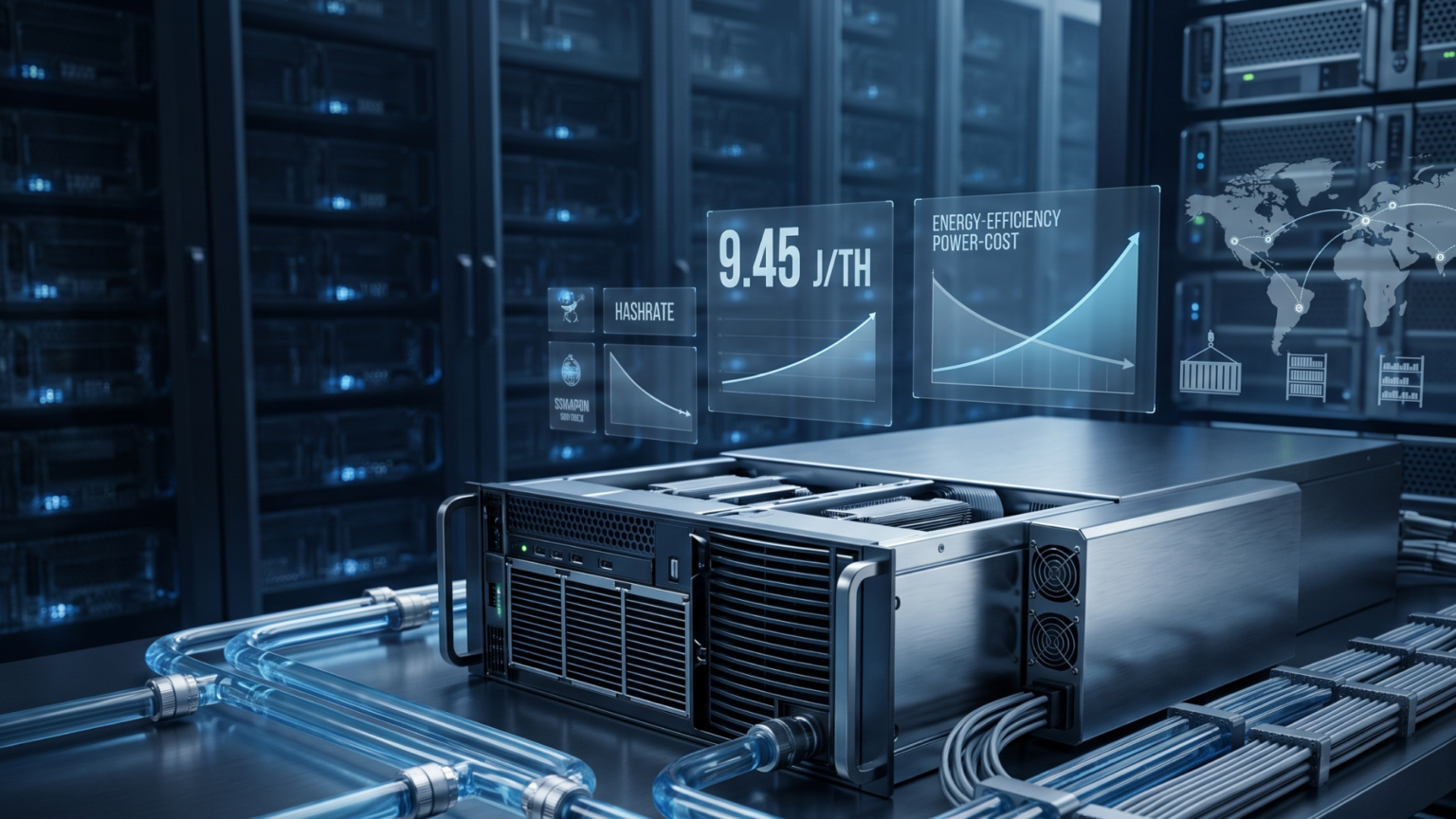
Bitcoin mining is entering an era in which raw computing power is no longer enough. Operators now have to examine electricity costs, machine density, cooling capacity, transportation, infrastructure, uptime, and the useful life of every miner they purchase.
That shift is changing the way mining hardware is judged. A machine with a high hashrate may look powerful, but it can still become a weak investment if it consumes too much electricity, requires costly cooling, takes up excessive space, or becomes difficult to deploy at scale.
Bitdeer’s SEALMINER A4 arrives directly in the middle of this debate. Announced in April 2026, the range includes one air-cooled model and two hydro-cooled models. Its flagship machine reaches a stated efficiency of 9.45 joules per terahash, while the two Pro models are rated at 10.9 J/TH. These figures place efficiency, rather than hashrate alone, at the centre of the product strategy.
The real importance of the A4 is not simply that it produces more computing power. Its combination of efficiency, compact design, cooling choices, high-density deployment, and industrial power support may change how operators calculate the true cost of mining.
Why Bitcoin Mining Economics Are Changing
Mining profitability is affected by several moving parts. These include Bitcoin’s market price, network difficulty, transaction fees, block rewards, electricity rates, cooling costs, machine prices, financing, and maintenance.
A mining company cannot directly control most of these factors. It cannot decide the Bitcoin price or stop network difficulty from increasing. What it can control is the efficiency of its equipment and the way that equipment is deployed.
This is why joules per terahash has become one of the most important specifications in the ASIC market. The number shows how much energy a machine requires to produce a unit of computing power.
A lower J/TH rating generally means the miner can generate the same amount of hashrate while using less electricity. It can also mean that more computing power can be installed within a fixed power limit.
For modern mining farms, this changes the purchase discussion. Operators are no longer asking only, “How many terahashes does this machine produce?” They are also asking:
- How much power does each terahash require?
- How much heat will the machine create?
- How many units can fit inside the current facility?
- Will the existing electrical system support them?
- What cooling infrastructure will be required?
- How expensive will shipping and installation be?
- How long can the machine remain competitive?
The SEALMINER A4 attempts to answer several of these questions at the same time.
SEALMINER A4 Specifications at a Glance
The SEALMINER A4 series consists of three SHA-256 mining machines designed for different operating environments.
| Model | Cooling System | Hashrate | Power Use | Efficiency |
|---|---|---|---|---|
| A4 Ultra Hydro | Hydro cooling | 886 TH/s | 8,372.7 W | 9.45 J/TH |
| A4 Pro Hydro | Hydro cooling | 680 TH/s | 7,412 W | 10.9 J/TH |
| A4 Pro Air | Air cooling | 336 TH/s | 3,662.4 W | 10.9 J/TH |
Bitdeer states that delivered performance may vary by up to 10% for hashrate and power consumption and by up to 5% for power efficiency. Buyers should therefore treat the listed figures as rated specifications rather than guaranteed results under every condition.
Even with that qualification, the range shows a clear direction. Bitdeer is offering one high-efficiency flagship for industrial hydro facilities, a lower-power hydro model, and an air-cooled option for locations that do not have liquid-cooling infrastructure.
Breaking the Sub-10 J/TH Efficiency Barrier
The main headline surrounding the A4 range is the 9.45 J/TH rating of the A4 Ultra Hydro.
Crossing below 10 J/TH is more than a marketing milestone. Electricity is normally the largest ongoing cost for a Bitcoin mining operation. A small improvement in machine efficiency can create substantial savings when repeated across hundreds or thousands of units.
The A4 Ultra Hydro delivers a stated hashrate of 886 TH/s while drawing approximately 8.37 kW. This means one machine produces close to 0.9 petahashes per second without crossing the 9 kW level.
To understand the difference, consider an older hydro-cooled model such as the SEALMINER A3 Pro Hydro. It provides 660 TH/s at 8,250 W and 12.5 J/TH. The A4 Ultra Hydro therefore offers approximately 34% more rated hashrate while using only around 1.5% more power.
This comparison shows why efficiency matters more than a simple power-consumption figure. Two machines can draw almost the same amount of electricity while producing very different levels of computing output.
For a mining facility with limited power capacity, better efficiency can turn existing megawatts into more total hashrate. The operator may increase output without having to secure an equally large increase in electrical supply.
What the Electricity Numbers Mean in Practice
At its rated power consumption, one A4 Ultra Hydro running continuously would use roughly 201 kilowatt-hours per day. Over a full year, that equals approximately 73,345 kWh before accounting for supporting infrastructure.
The estimated annual machine-level electricity cost would be:
| Electricity Rate | Approximate Annual Electricity Cost |
| $0.05 per kWh | $3,667 |
| $0.08 per kWh | $5,868 |
| $0.10 per kWh | $7,334 |
These figures are only examples. They do not include pumps, cooling distribution units, transformers, networking equipment, facility lighting, repairs, pool fees, taxes, or other operating expenses.
Still, they demonstrate why small differences in J/TH matter. Saving even one watt per terahash becomes meaningful when a farm operates petahashes or exahashes of computing capacity around the clock.
The economic value of an efficient miner also becomes more visible when mining revenue falls. Less efficient equipment may become unprofitable and need to be switched off sooner. A lower-energy machine has a larger operating margin between its electricity cost and its mining revenue.
That does not guarantee profitability. It simply gives the operator more room to respond to difficult market conditions.
Efficiency Is Also a Capacity Strategy
Power efficiency is often discussed only as a way to lower the electricity bill. For large mining companies, it is also a way to increase output from fixed infrastructure.
Imagine a site with 10 MW of power available for mining machines. Ignoring facility overhead, miners operating at 15 J/TH would theoretically produce about 667 PH/s. Machines operating at 9.45 J/TH could theoretically produce over 1 EH/s from the same 10 MW allocation.
Real facilities have power losses, cooling loads, safety margins, and other limitations, so actual figures will be lower. However, the underlying point remains important: more efficient hardware allows operators to extract more hashrate from the same electrical connection.
This can delay or reduce the need for:
- New utility agreements
- Additional transformers
- Expanded substations
- Larger generators
- New data centre buildings
- Extra land
- More cooling equipment
In locations where power capacity is difficult or expensive to expand, efficiency may be more valuable than the direct electricity saving alone.
How the A4 Addresses the Space Problem
Mining farms do not have unlimited floor space. Every machine requires rack or shelf capacity, electrical connections, network access, cooling, maintenance clearance, and safe airflow or liquid distribution.
The A4 hydro models use a standard 2U form factor measuring 482 × 665 × 86 mm. Bitdeer says this design is intended to fit professional server racks and support high-density deployment.
A standardised rack format can make planning easier. Operators can estimate the number of machines per rack, rack-level power demand, water connections, maintenance access, and total hashrate per row.
At 886 TH/s in a 2U format, the A4 Ultra Hydro offers a high level of computing density. Fewer physical machines may be needed to reach a target hashrate compared with lower-output units.
That reduction can affect several operational costs:
- Fewer network cables and switch ports
- Fewer power connections
- Fewer individual machines to monitor
- Reduced rack space per petahash
- Lower handling time during installation
- Less physical inventory to inspect
- Fewer units to move during a facility upgrade
This is where the A4 begins to challenge logistics barriers as well as energy barriers.
Why Logistics Matter in Mining Hardware Economics
Mining machines are heavy industrial assets. A large order may involve hundreds of pallets, freight charges, customs paperwork, insurance, warehousing, local transportation, installation staff, and replacement parts.
Operators often focus on the purchase price per terahash while overlooking the cost of moving and installing the hardware.
A machine that produces more hashrate per unit can reduce the number of boxes, pallets, racks, cables, and installation actions required for a given expansion target.
For example, a company targeting roughly 8.86 PH/s would need ten A4 Ultra Hydro machines based on rated performance. Reaching the same hashrate with 336 TH/s units would require more than 26 machines.
This does not automatically make hydro models the best choice, because liquid-cooling infrastructure adds its own costs. However, it shows why unit count matters.
Reducing the number of machines needed for the same hashrate can lower:
- Freight volume
- Customs handling
- Warehouse space
- Installation labour
- Rack requirements
- Network complexity
- Routine inspection time
- Spare-unit inventory
Bitdeer’s buying guidance also notes that product prices exclude shipping, customs duties, and potential taxes. It advises buyers to prepare customs documents in advance because missing information may cause delays, returns, or extra charges.
These are not minor details. In international mining projects, a delayed shipment may mean missed revenue, idle infrastructure, and financing costs before machines even begin hashing.
Hydro Cooling Versus Air Cooling
The A4 range does not force every buyer into the same cooling model. This is an important part of its design.
The A4 Ultra Hydro and A4 Pro Hydro are intended for facilities with hydro-cooling systems. Bitdeer states that the hydro models can operate across a coolant temperature range of 20°C to 55°C. The company positions the design as a way to support stable operation and reduce thermal stress in high-density environments.
Hydro cooling offers several potential advantages:
- More controlled chip temperatures
- Higher machine density
- Lower operating noise
- Better heat removal
- Reduced dependence on large-volume airflow
- Potential heat-reuse opportunities
However, hydro systems require pumps, pipes, manifolds, coolant management, heat exchangers, leak protection, and trained maintenance teams. A low J/TH rating does not remove these infrastructure costs.
The A4 Pro Air offers a simpler alternative. It provides 336 TH/s at 3,662.4 W with a rated efficiency of 10.9 J/TH. Bitdeer says its thermal architecture is designed for environments ranging from -20°C to 50°C.
Air-cooled machines may be easier to deploy in existing farms, modular containers, smaller operations, and locations without hydro infrastructure. Their lower per-unit power demand can also make electrical planning more manageable.
The correct choice depends on total site economics, not simply which machine has the lowest efficiency number.
Three-Phase Power and Industrial Deployment
The A4 hydro models use 380–480 V three-phase AC input. Bitdeer also states that the series continues the previous generation’s power-supply efficiency of up to 97%.
Three-phase power is common in industrial and data-centre environments because it supports large, balanced electrical loads more effectively than standard residential power.
For professional operators, this design may improve integration with existing mining infrastructure. For small or home-based miners, however, it creates a clear barrier. An A4 hydro unit cannot simply be connected to an ordinary household socket.
Before purchasing, operators need to confirm:
- Input voltage
- Circuit capacity
- Connector requirements
- Transformer compatibility
- Rack-level current
- Power distribution design
- Cooling-system capacity
- Local electrical regulations
A machine may be efficient on paper but still create expensive installation problems if the site is not ready for its electrical and cooling requirements.
Stability and Uptime Remain Part of the Equation
Mining revenue depends on machines remaining online. A highly efficient miner produces no revenue while it is shut down for repairs.
Bitdeer says the A4 hardware architecture has been designed for large-scale operations, with a focus on machine stability, uptime, and fewer operational interruptions. The hydro-cooling models are also positioned for reliable performance in high-density environments.
These are manufacturer claims that still need to be tested through long-term use in real mining farms. New hardware can perform differently depending on firmware, climate, coolant quality, voltage stability, maintenance, and operating mode.
Buyers should therefore examine more than launch specifications. Useful questions include:
- How consistent is the real-world hashrate?
- How often do hashboards fail?
- Are spare parts readily available?
- How fast is warranty support?
- Can repairs be completed locally?
- How stable is the firmware?
- What happens during high ambient temperatures?
- How much downtime is required for routine service?
Bitdeer lists a 365-day warranty from the shipment date. The customer is responsible for the cost of sending a unit for repair, while Bitdeer covers the shipping cost after the repair. Unauthorised changes to settings may void the warranty.
For international operators, repair shipping is itself a logistics and downtime consideration.
Does the A4 Guarantee Better Mining Profits?
No mining machine can guarantee profit.
The A4 can improve the controllable side of the mining equation by reducing energy use per terahash and increasing hashrate density. It cannot control Bitcoin’s price, network difficulty, block rewards, transaction fees, taxes, financing costs, or local electricity rates.
A proper purchasing decision should include:
- Machine purchase price
- Shipping and insurance
- Customs charges and taxes
- Cooling infrastructure
- Electrical installation
- Hosting or property costs
- Electricity price
- Pool and management fees
- Repair and spare-parts costs
- Expected resale value
- Forecasted network difficulty
- Realistic uptime
Operators should also calculate results under several scenarios. A machine may appear attractive under a strong Bitcoin price and low difficulty but struggle under a weaker revenue environment.
The strongest feature of the A4 is not that it removes market risk. It is that lower energy use and higher deployment density may give operators a better position from which to manage that risk.
What the A4 Means for Older Mining Fleets
The arrival of sub-10 J/TH hardware increases pressure on older machines.
When a newer miner creates more hashrate from the same amount of electricity, an older unit becomes less competitive even if it continues to function correctly.
This may push mining companies to:
- Retire older machines
- Move inefficient units to cheaper-power regions
- Sell hardware into secondary markets
- Upgrade high-cost facilities first
- Convert air-cooled sites to hydro cooling
- Use flexible operating modes during high electricity prices
Fleet upgrades will not happen everywhere at once. New equipment requires capital, and many operators will continue using older hardware while it remains profitable.
However, the A4 strengthens the argument that future mining competition will depend heavily on access to efficient chips, low-cost power, suitable cooling, and well-planned infrastructure.
A New Standard for Mining Hardware Evaluation
The SEALMINER A4 should not be evaluated only as another fast Bitcoin miner. Its broader significance comes from the way it combines several economic factors in one platform.
The flagship model pushes rated efficiency below 10 J/TH. The hydro range offers high hashrate in a 2U rack format. The Pro Air gives operators a more traditional cooling option. Three-phase power support, high-density design, and low-noise operation position the range primarily for organised mining environments.
This creates a more complete way to judge ASIC hardware. Buyers must look at:
- Energy per terahash
- Hashrate per machine
- Hashrate per rack
- Power per rack
- Cooling cost
- Shipping cost
- Installation time
- Maintenance requirements
- Warranty logistics
- Expected competitive life
More Bitcoin mining hardware analysis and technology updates can be found on zingyzon.com.
Frequently Asked Questions
What is the efficiency of the SEALMINER A4 Ultra Hydro?
The A4 Ultra Hydro has a rated power efficiency of 9.45 J/TH. It provides 886 TH/s of hashrate while consuming approximately 8,372.7 W. Actual delivered performance may vary within the ranges stated by Bitdeer.
How many models are included in the SEALMINER A4 range?
The range includes three models: A4 Ultra Hydro, A4 Pro Hydro, and A4 Pro Air. Two use hydro cooling, while the Pro Air uses conventional air cooling.
Is the A4 Ultra Hydro suitable for home mining?
It is mainly designed for industrial deployment. Its power use, three-phase electrical input, hydro-cooling requirements, and heat output make it unsuitable for most normal homes.
Why is 9.45 J/TH important?
A lower joules-per-terahash figure means less electricity is required to produce computing power. This can reduce the energy cost per terahash and allow more hashrate to operate within a fixed power limit.
Is hydro cooling cheaper than air cooling?
Not in every case. Hydro cooling can improve thermal control, density, and noise levels, but it requires pumps, pipes, heat exchangers, coolant, monitoring, and specialised maintenance. Total site costs must be considered.
Can SEALMINER A4 mine coins other than Bitcoin?
The machines use the SHA-256 algorithm. Bitdeer lists them for BTC, BCH, and BSV mining. Profitability varies by coin, network conditions, and pool support.
When should a mining company upgrade its hardware?
An upgrade may make sense when electricity savings, increased hashrate, reduced space use, and lower operating risk can justify the purchase and installation costs. Decisions should be based on scenario analysis rather than hashrate alone.
Conclusion
The SEALMINER A4 enters the market at a time when Bitcoin mining is becoming more focused on cost control, power access, infrastructure, and operational discipline.
Its 9.45 J/TH flagship efficiency is the most visible feature, but the larger story is how the range combines energy performance with rack density, hydro cooling, air-cooling flexibility, industrial power support, and fewer machines per target petahash.
These features may help large operators reduce electricity use per terahash, make better use of existing megawatts, limit equipment counts, and simplify parts of the deployment process.
The A4 does not eliminate the risks of Bitcoin mining. Profit will still depend on energy prices, hardware costs, difficulty, Bitcoin revenue, uptime, and financial planning.
What it does offer is a stronger hardware foundation for operators competing in a market where every watt, rack unit, shipment, and hour of uptime matters.

Keep Exploring Zingyzon.com
Read more Zingyzon SEO, digital marketing, online earning, business, and technology guides for Australia, USA, and global readers.