
Marble Mandir: The Diya Test for Choosing Your Home Shrine
A new marble mandir for the home looks spotless on the day it arrives and is installed. The real test […]
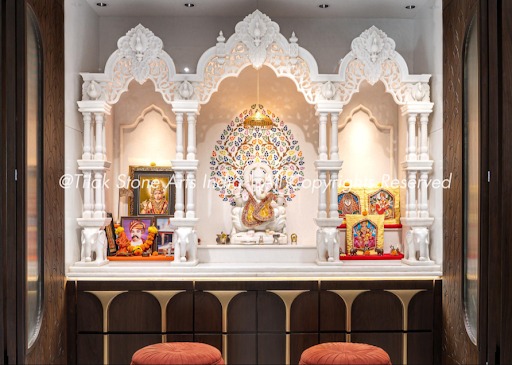
A new marble mandir for the home looks spotless on the day it arrives and is installed. The real test begins on day two, when someone lights the first diya and sets it down on the white stone. Oil creeps, a thin line of smoke rises, and a brass stand sits in a small puddle from the morning water offering. None of it seems like much at first, which is exactly why the marks surprise families a year later.
So the diya deserves a place in the planning, not only in the ritual. How a marble mandir for home handles flame, oil and smoke depends on choices you make long before the first aarti is conducted. Those choices cover where the lamp sits, what hangs above it and where the oil bottle lives for now and later. Each one is simpler than it sounds.
What a Daily Diya Does to White Marble
Marble is a natural stone, and it reacts to what lands on it. In a temple in Vietnam, White Marble follows the same care rules as any other marble. The Natural Stone Institute explains that oil-based stains darken stone and usually need a chemical cleaner to dissolve them before rinsing. Ghee and lamp oil fall into that group.
Imagine a household that lights a ghee diya in the same spot every evening. Within a few months, a faint shadow may form under the lamp, a shade darker than the stone around it. A poultice can often lift it, though the institute admits some stains never come out completely. That last detail tends to stay with people.
Metal is the quieter problem. The same institute notes that copper and bronze stains turn green or muddy brown when moisture acts on nearby brass, copper or bronze items. That means a brass diya stand resting in leftover water is more than an untidy habit. Copper stains are hard to lift at home, and a poultice may need several rounds.
Where Vastu Places the Diya in a Pooja Room
Vastu guidance puts lamps and diyas in the south-east part of the mandir and keeps them out of the south and north. Another guide allows the east corner as well, which makes the rule a little looser in some homes than in others. Either way, the lamp spot shapes the design more than it first appears.
Your temple base needs a flat, clear and easy-to-reach surface in that corner. Nothing delicate should hang right above it. Have you already pictured the exact spot where your diya will stand each evening?
Smoke, Soot and the Carving Above the Flame in a Marble Temple
Smoke rises, and on a white temple the first surface above the flame gathers a grey film. That surface is often the underside of a carved arch or a painted canopy panel. Deep grooves hold soot well, and painted or embossed detail may resist a quick wipe better than plain stone. Smoke-stained stone can need a thorough cleaning to look right again, according to the Natural Stone Institute.
Distance does most of the work here. Keep the lamp zone under a plain, open section, and save the deepest carving and painted work for spots the smoke can’t easily reach. Of course, some families love a heavily carved canopy right over the lamp, and it does look lovely in photos. It just asks for more cleaning with an old toothbrush than anyone enjoys.
Storage That Keeps Oil Bottles Off Your Marble Mandir
Oil marks do not always start at the lit diya. Many start with a bottle set down for a moment, a greasy wick tray, or a smeared matchbox. Bottom storage units give these items a place away from the white surface. Push-to-open drawers help too, since they have no knobs for oily fingers to grab.
Spills will still happen, and the first minute matters. The Natural Stone Institute advises blotting a spill with a paper towel instead of wiping, because wiping spreads it. After that, flush the spot with water and mild soap, rinse it and dry it with a soft cloth. It sounds fussy, but it takes about ten seconds.
Running the Diya Test on Your Marble Mandir Design
Before you approve the 2D plan, run a quick diya test on paper. Walk through these questions with whoever is drawing the design:
- Where will the diya stand, and does that spot fall in the south-east of the temple?
- What sits directly above the flame, and how easily can you clean it?
- Where will the oil bottle, wicks and matches live between prayers?
- Will any brass or copper item rest on the stone where water tends to collect?
- Can the built-in lighting handle the everyday glow, leaving the diya for the ritual itself?
A white marble temple will never stay perfectly untouched, and perhaps it should not. For some families, a faint trace of years of lit lamps carries its own quiet meaning. Even so, a soft patina and a dark oil ring you notice every morning are two very different things. Planning for the diya early is how you end up with the first one.
READ ALSO: https://zingyzon.com/



Keep Exploring Zingyzon.com
Read more Zingyzon SEO, digital marketing, online earning, business, and technology guides for Australia, USA, and global readers.