
Autonomous Missions and Mission Platforms in Modern UAV Ecosystems
Unmanned Aerial Vehicles, commonly known as UAVs or drones, have moved far beyond simple remote-controlled flying machines. Today, they are […]
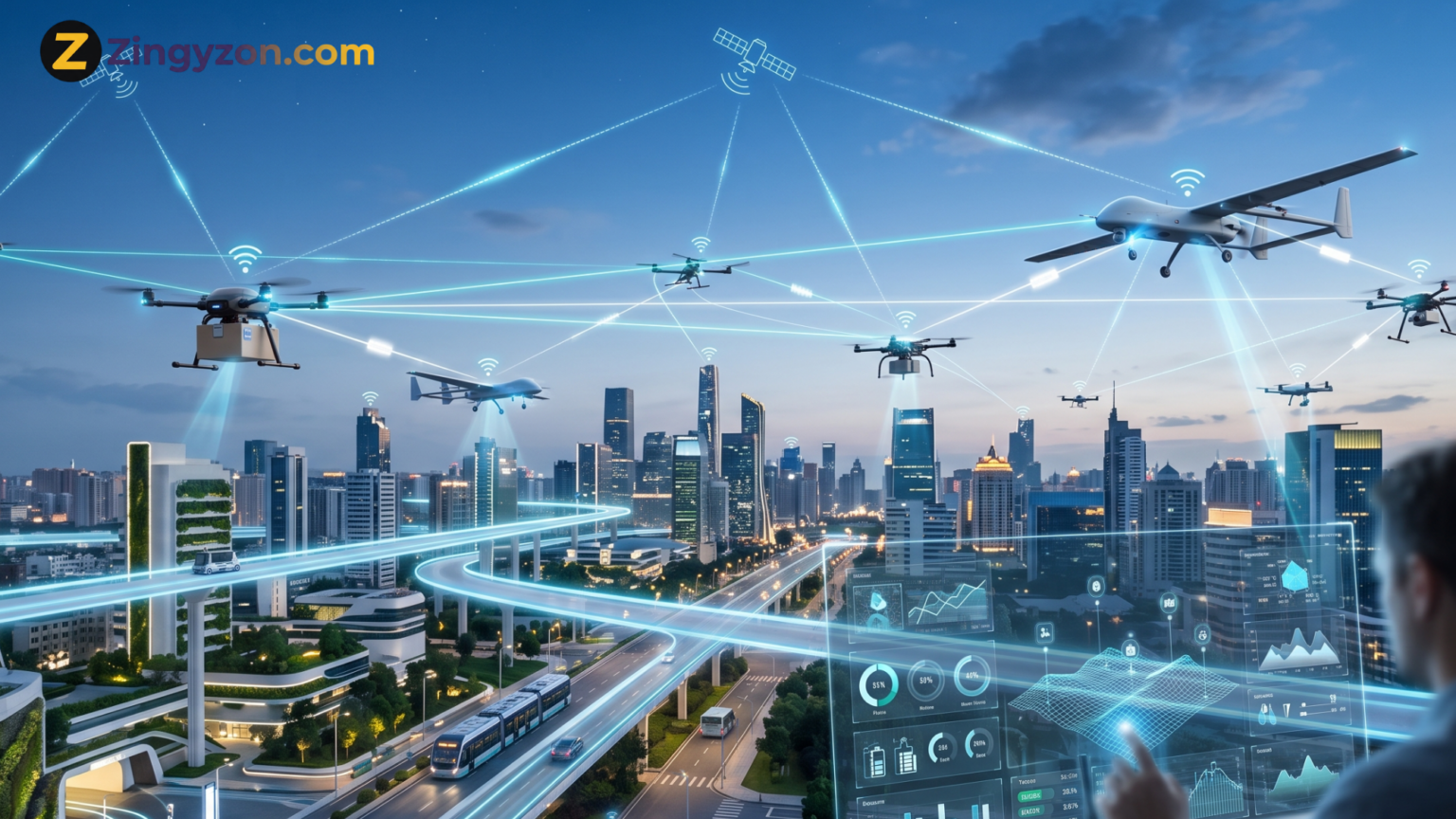
Unmanned Aerial Vehicles, commonly known as UAVs or drones, have moved far beyond simple remote-controlled flying machines. Today, they are becoming intelligent aerial systems capable of planning routes, collecting data, adapting to changing environments, and completing tasks with minimum human input. This shift has created a powerful new concept in aviation technology: autonomous missions.
Autonomous missions allow UAVs to perform complex operations such as surveillance, mapping, inspection, delivery, disaster response, environmental monitoring, and defense support without constant manual control. Behind these missions, however, there is a critical digital foundation: mission platforms. These platforms help operators design, monitor, control, analyze, and optimize drone missions from one centralized system.
In modern UAV ecosystems, autonomy is not just about a drone flying by itself. It is about connecting aircraft, sensors, software, communication networks, artificial intelligence, ground control systems, and data analytics into one coordinated workflow. As drone operations become larger and more advanced, businesses, governments, and researchers need reliable systems that can support safe, scalable, and intelligent UAV missions.
This article explains how autonomous missions work, why mission platforms matter, and how they are shaping the future of modern UAV ecosystems.
What Are Autonomous Missions in UAV Ecosystems?
Autonomous missions are drone operations where the UAV can perform tasks based on pre-defined instructions, onboard intelligence, sensor input, and real-time decision-making. Instead of a human pilot controlling every movement, the drone follows a planned mission path and can respond to certain conditions during flight.
For example, a UAV assigned to inspect a solar farm may automatically follow a grid route, capture thermal images, identify damaged panels, avoid obstacles, and return to its base when the mission is complete. Similarly, a drone used in agriculture can scan crops, collect multispectral imagery, and generate data that helps farmers understand plant health.
Autonomous missions usually include several stages:
- Mission planning
- Route optimization
- Sensor configuration
- Automated takeoff
- In-flight monitoring
- Data collection
- Obstacle awareness
- Mission completion
- Landing or return-to-home
- Data analysis
The real value of autonomy comes from consistency, speed, safety, and repeatability. A human pilot may get tired or make manual errors, but an autonomous UAV can follow the same mission pattern accurately every time. This is especially useful in industries where precision matters, such as infrastructure inspection, construction, mining, emergency response, and military intelligence.
The Role of Mission Platforms
A mission platform is the software and operational environment that helps manage UAV missions from planning to completion. It acts as the control center where users can create flight paths, assign tasks, monitor drone status, manage payloads, receive live data, and review mission results.
Modern UAV operations are no longer limited to one drone and one pilot. Many organizations now operate fleets of drones across different locations. In such cases, manual coordination becomes difficult. Mission platforms solve this problem by giving operators a unified interface for mission control, data management, and operational oversight.
A powerful mission platform can support:
- Flight route planning
- Multi-drone coordination
- Real-time telemetry
- Payload and sensor control
- Live video feeds
- Weather and airspace awareness
- Automated reporting
- Data storage and processing
- Compliance tracking
- Mission replay and analysis
NASA’s UAS Traffic Management research has also focused on enabling safer low-altitude drone operations, especially for beyond-visual-line-of-sight use cases. This shows how important traffic management, system coordination, and digital safety layers are becoming in future UAV ecosystems.
Why Mission Platforms Are Important for Modern UAVs
As UAV use increases, operators need more than basic flight controls. They need intelligent systems that can manage complexity. This is where mission platforms become essential.
First, mission platforms improve operational efficiency. Instead of manually preparing each flight, teams can create reusable mission templates. This saves time and ensures consistent results across repeated operations.
Second, they improve safety. A mission platform can include geofencing, emergency return commands, obstacle alerts, battery monitoring, and risk assessment tools. NASA has also highlighted advanced drone safety management systems that add safety layers for routine drone flights over communities and operational areas.
Third, mission platforms improve data quality. In many industries, the drone itself is only one part of the value chain. The real value comes from the data it collects. A mission platform helps organize images, videos, sensor readings, maps, and reports in a structured way.
Fourth, they support scalability. A company operating one drone may manage missions manually, but a company operating hundreds of drones needs automation, fleet visibility, permissions, logs, and analytics. Without a mission platform, large-scale UAV operations can become inefficient and risky.
For businesses exploring UAV innovation, platforms and resources available through Zingyzon can help connect technology-focused readers with useful insights into modern autonomous systems.
Key Components of a UAV Mission Platform
A modern UAV mission platform usually includes several important components. Each component plays a role in making autonomous missions safer and more effective.
1. Mission Planning Interface
The mission planning interface allows operators to define the objective of the flight. They can set waypoints, altitude, speed, camera angle, sensor activity, and return path. Advanced systems can also recommend optimized routes based on terrain, battery life, weather, and restricted airspace.
Research on automated mission planning shows that task allocation, real-time replanning, and decision-support interfaces can reduce operator workload and improve mission performance.
2. Ground Control Station Integration
Ground Control Stations, or GCS, are central to UAV operations. They allow operators to monitor and control UAVs remotely during a mission. Modern GCS systems often include mission planning software, real-time control, GPS integration, data links, and video feed monitoring.
When connected with a mission platform, the GCS becomes more powerful. Operators can manage multiple drones, review telemetry, update mission commands, and respond to emergencies from a single dashboard.
3. AI and Autonomous Decision-Making
Artificial intelligence helps UAVs move from basic automation to advanced autonomy. AI can support object detection, route optimization, target recognition, anomaly detection, and predictive maintenance.
For example, an inspection drone can use AI to detect cracks in bridges, corrosion on pipelines, or heat loss in buildings. Instead of only collecting raw images, the UAV can help identify problems during or shortly after the mission.
4. Sensor and Payload Management
UAVs can carry different payloads depending on the mission. These may include RGB cameras, thermal sensors, LiDAR, multispectral cameras, gas sensors, communication relays, or delivery modules.
A mission platform allows users to configure and manage these payloads. This ensures the right sensor is active at the right time and that collected data is properly tagged with location, altitude, and timestamp information.
5. Communication and Data Links
Reliable communication is essential for autonomous missions. UAVs need to send telemetry, receive commands, stream video, and share mission data. In beyond-visual-line-of-sight operations, communication becomes even more important.
Modern mission platforms may integrate radio links, cellular networks, satellite communication, mesh networks, or cloud-based data transfer systems. The goal is to maintain mission continuity even when the drone operates in complex or remote environments.
6. Data Analytics and Reporting
After a mission is complete, the collected data must be processed into useful insights. Mission platforms can help create maps, 3D models, inspection reports, heat maps, vegetation indexes, and operational summaries.
This transforms UAVs from flying cameras into intelligent data systems. For industries like agriculture, energy, logistics, and construction, this data-driven approach can reduce costs and improve decision-making.
Benefits of Autonomous Missions
Autonomous missions bring several benefits to modern UAV ecosystems.
Increased Efficiency
Autonomous UAVs can complete repetitive missions faster and with fewer human resources. A single operator can manage multiple drones or supervise missions instead of manually piloting every aircraft.
Better Accuracy
Autonomous flight paths are highly repeatable. This is useful for surveying, mapping, and inspections where the same area must be scanned regularly for comparison.
Improved Safety
Drones can be used in dangerous environments such as disaster zones, wildfires, high-voltage power lines, offshore platforms, and military areas. Autonomous missions reduce the need for humans to enter risky locations.
Lower Operational Costs
Automation reduces manual labor, improves resource planning, and helps organizations complete more missions in less time. Over time, this can lower the cost of inspections, monitoring, and data collection.
Real-Time Intelligence
With live data feeds and AI-based analysis, autonomous UAVs can provide immediate insights. Emergency teams can use drones to assess disaster damage, locate people, and plan rescue operations more effectively.
Applications of Autonomous Missions and Mission Platforms
Autonomous missions are useful across many industries.
Agriculture
Farmers use UAVs for crop monitoring, soil analysis, irrigation planning, and pest detection. Autonomous routes allow drones to scan large fields consistently.
Infrastructure Inspection
Drones inspect bridges, roads, towers, pipelines, wind turbines, and power lines. Mission platforms help create repeatable inspection paths and organize visual evidence.
Defense and Security
UAVs support surveillance, reconnaissance, border monitoring, and tactical awareness. Autonomous mission systems can help reduce operator workload and improve response speed.
Disaster Response
In floods, earthquakes, fires, and storms, UAVs can quickly map damaged areas and support rescue planning. Autonomous missions allow emergency teams to collect data without sending people into unsafe zones.
Logistics and Delivery
Drone delivery depends heavily on autonomy. UAVs must navigate routes, avoid obstacles, manage landing zones, and complete deliveries safely.
Environmental Monitoring
UAVs can track wildlife, monitor forests, measure pollution, inspect coastlines, and support climate research. Autonomous missions make repeated monitoring easier and more affordable.
Challenges in Autonomous UAV Ecosystems
Despite strong potential, autonomous UAV ecosystems still face challenges.
Regulatory Compliance
Drone laws vary by country and region. Operators must follow airspace rules, privacy laws, safety requirements, and permissions for commercial operations.
Cybersecurity Risks
Mission platforms rely on software, networks, and data links. If these systems are not secure, they can become targets for hacking, signal interference, or data theft.
Battery and Flight Time Limits
Most UAVs still have limited battery life. Mission platforms must account for energy use, payload weight, distance, wind, and return-to-home requirements.
Data Overload
UAVs can collect huge amounts of data. Without good analytics and storage systems, organizations may struggle to turn this data into useful information.
Human Oversight
Even in autonomous systems, human supervision remains important. Operators must understand mission goals, monitor exceptions, and intervene when needed.
The Future of Mission Platforms in UAV Ecosystems
The future of UAV ecosystems will depend on smarter mission platforms. As drones become more autonomous, platforms will need to support AI planning, multi-drone coordination, real-time risk management, and seamless integration with air traffic systems.
We can expect several future developments:
- More cloud-based drone fleet management
- AI-powered mission recommendations
- Automated compliance checks
- Better obstacle detection
- Integration with smart cities
- Drone swarm coordination
- Predictive maintenance tools
- Stronger cybersecurity features
- Advanced beyond-visual-line-of-sight support
Future mission platforms may also allow users to define missions using natural language. Instead of manually setting every waypoint, an operator may simply describe the objective, such as “inspect all solar panels in sector three and flag thermal anomalies.” The platform would then convert that instruction into a safe and optimized mission plan.
Conclusion
Autonomous missions and mission platforms are transforming the way UAV ecosystems operate. Drones are no longer just remote-controlled devices; they are becoming intelligent aerial systems connected to software, sensors, AI, communication networks, and data analytics.
A strong mission platform helps operators plan flights, manage fleets, monitor safety, process data, and scale UAV operations. As industries demand faster inspections, safer monitoring, better intelligence, and lower operational costs, autonomous UAV systems will become even more important.
The future of UAV technology will not be defined by drones alone. It will be shaped by the platforms that control, connect, and optimize them. In modern UAV ecosystems, mission platforms are the bridge between aerial hardware and real-world intelligence.


Keep Exploring Zingyzon.com
Read more Zingyzon SEO, digital marketing, online earning, business, and technology guides for Australia, USA, and global readers.