
Why GMCELL NiMH Battery Packs Are Widely Used in the Embedded Applications
Embedded applications are everywhere around us. From medical devices and security systems to wireless sensors, handheld tools, industrial controllers, emergency […]
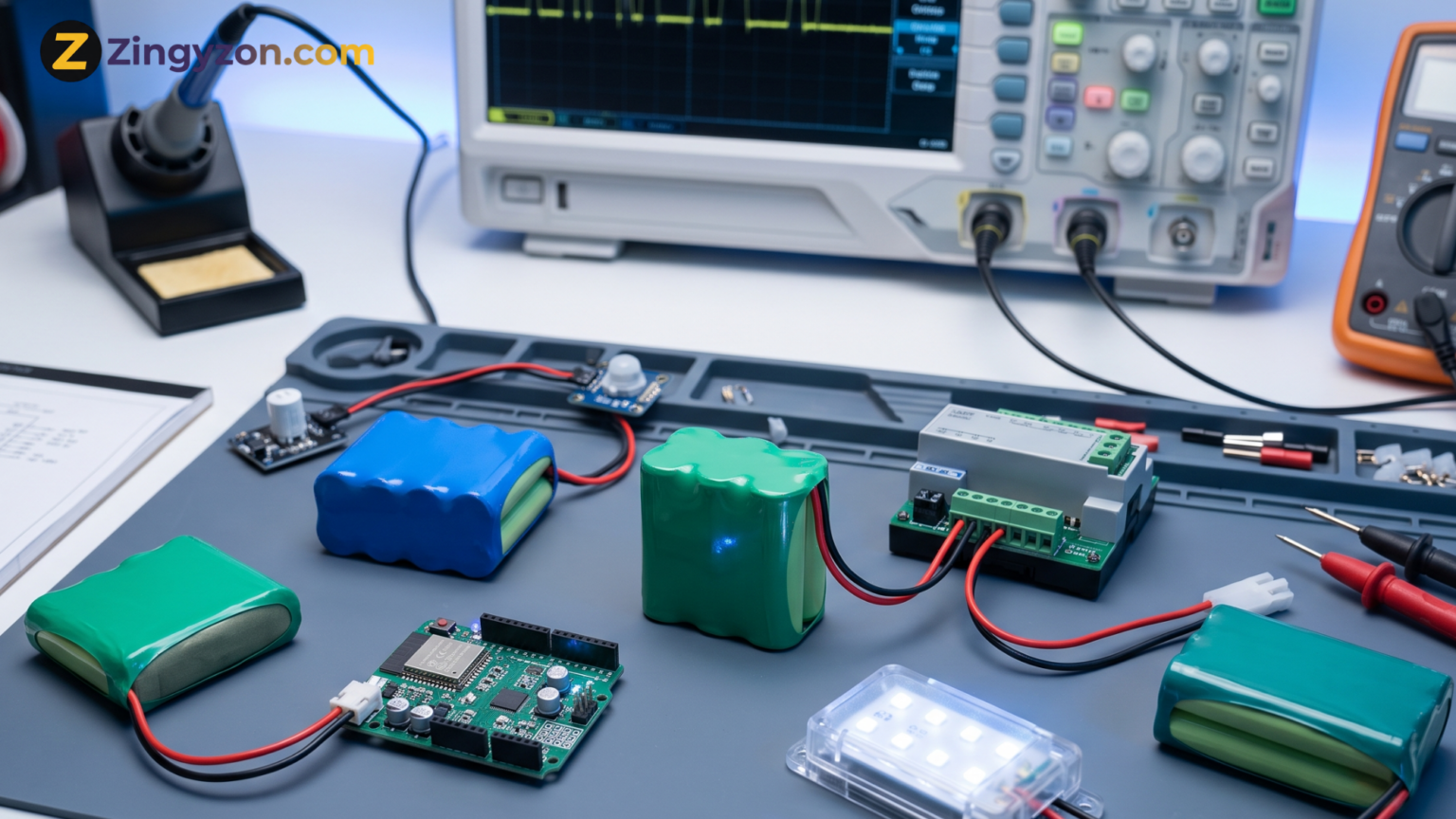
Embedded applications are everywhere around us. From medical devices and security systems to wireless sensors, handheld tools, industrial controllers, emergency lights, remote monitoring units, toys, smart appliances, and communication equipment, embedded systems need reliable power to perform consistently. In many of these applications, the battery is not just an accessory. It is a core part of the product design.
A weak or unstable battery pack can cause system resets, short runtime, poor user experience, safety issues, and higher maintenance costs. That is why manufacturers and engineers pay close attention to battery chemistry, pack design, voltage stability, recharge cycles, temperature behavior, safety, and supply reliability.
Among different rechargeable options, NiMH battery packs remain widely used in embedded applications. While lithium-ion batteries often receive more attention, Nickel Metal Hydride technology still offers practical advantages for many devices. For OEM projects that require stable, rechargeable, and customizable power solutions, GMCELL NiMH battery packs are a popular choice.
This guide explains why GMCELL NiMH battery packs are widely used in embedded applications and what makes them useful for modern product design.
What Are NiMH Battery Packs?
NiMH stands for Nickel Metal Hydride. A NiMH battery is a rechargeable battery that stores energy through electrochemical reactions using nickel oxide hydroxide and a hydrogen-absorbing alloy. NiMH batteries became popular because they offer better capacity than older nickel-cadmium batteries and avoid cadmium, which is toxic and environmentally problematic.
A NiMH battery pack is created by connecting multiple NiMH cells together to achieve a required voltage and capacity. For example, individual NiMH cells are commonly rated at 1.2V. When several cells are connected in series, the pack can provide higher voltage such as 3.6V, 4.8V, 6V, 7.2V, 9.6V, or other custom configurations.
For embedded applications, this flexibility is important. Engineers can select a battery pack that matches the power needs, physical space, charging method, and expected runtime of the device.
Why Embedded Applications Need Reliable Battery Packs
Embedded systems often perform dedicated tasks. Some run continuously, while others stay in standby mode and activate only when needed. Many are installed inside larger products, remote equipment, or sealed devices where battery replacement is not always convenient.
For example, an emergency lighting system must work during a power failure. A wireless sensor must continue sending data. A medical device must deliver stable performance. A security device must remain active even if the main power supply fails.
In these cases, battery reliability matters more than hype. The battery must be safe, stable, rechargeable, and predictable. This is one reason why NiMH battery packs are still relevant in many embedded designs.
Why GMCELL Is Used for OEM and Embedded Power Needs
GMCELL is known as a battery manufacturer and supplier offering multiple battery categories, including alkaline, carbon zinc, lithium, rechargeable batteries, and Ni-MH battery products. For embedded applications, the key benefit is not just the cell itself, but the ability to support OEM and customized battery pack requirements.
Embedded projects often need more than a standard off-the-shelf battery. They may require a specific voltage, capacity, connector type, wire length, protection design, pack shape, labeling, packaging, or supply arrangement. A manufacturer that can support custom battery packs becomes valuable for product companies that need consistency across production batches.
For businesses building devices at scale, working with a battery supplier that understands OEM needs can reduce sourcing complexity and improve product reliability.
Stable Voltage for Embedded Devices
One of the major reasons NiMH battery packs are used in embedded applications is stable voltage performance. Many embedded circuits require predictable voltage behavior to work properly. Sudden voltage drops can cause resets, data loss, communication errors, or unstable device operation.
NiMH batteries are commonly used where moderate energy density, reliable discharge performance, and safe rechargeability are required. They can deliver steady power for many low-to-medium drain devices and can also support applications that need short bursts of current.
For embedded products such as handheld tools, monitoring equipment, toys, emergency devices, and control systems, this stable power behavior helps maintain consistent operation.
Rechargeability Reduces Long-Term Cost
Disposable batteries may seem cheaper at first, but they can become expensive over time. Devices that use batteries frequently need replacements again and again. This increases maintenance cost, user inconvenience, and waste.
Rechargeable NiMH battery packs help solve this problem. They can be recharged many times, making them suitable for products that are used regularly. For embedded systems installed in professional environments, rechargeable packs can reduce service visits and operating costs.
This is especially useful for devices such as emergency lighting, cordless equipment, remote controllers, test instruments, and portable electronics. Instead of replacing batteries repeatedly, users can recharge the pack and continue using the device.
Safer Chemistry for Many Applications
Safety is a major concern in embedded product design. Battery packs are often placed inside plastic housings, medical equipment, industrial tools, or consumer products. Engineers must think about heat, charging behavior, short circuits, storage conditions, and user handling.
NiMH batteries are generally considered a mature and stable rechargeable chemistry. They do not require the same level of complex protection circuitry as many lithium-ion packs, although proper charging and protection are still important. For some applications, this makes NiMH a practical choice where safety, simplicity, and predictable behavior are priorities.
This does not mean NiMH is always better than lithium-ion. Each chemistry has its place. But for many embedded designs, NiMH offers a balanced combination of safety, reliability, and cost.
Good Performance in Backup and Standby Applications
Many embedded systems are not always active. Some remain in standby mode and only need power during an outage or emergency. Examples include backup lighting, alarm systems, communication modules, access control devices, and monitoring equipment.
NiMH battery packs are useful in these situations because they can be integrated into rechargeable backup systems. The device can stay connected to a charging circuit, maintain battery readiness, and use stored energy when main power is unavailable.
For embedded applications where backup power is important, battery pack design must be matched carefully with the charging system and expected standby period. GMCELL NiMH battery packs can be configured for different voltage and capacity requirements, making them suitable for many backup-oriented devices.
Flexible Pack Design for Custom Products
Embedded products come in many shapes and sizes. Some devices have narrow battery compartments. Others need flat packs, cylindrical arrangements, wire leads, connectors, heat shrink wrapping, or special layouts.
A key advantage of NiMH battery packs is design flexibility. Cells can be arranged in different configurations to fit the product enclosure. This is important because embedded systems often have strict space limitations.
A custom NiMH Battery pack can be designed to meet specific electrical and mechanical requirements. This helps product designers balance runtime, size, weight, voltage, and manufacturing needs.
For OEMs, this flexibility can simplify product development because the battery pack can be built around the device rather than forcing the device to fit a generic battery format.
Useful for Industrial and Commercial Devices
NiMH battery packs are widely used in industrial and commercial equipment because they are durable, rechargeable, and available in many configurations. Devices used in factories, warehouses, field service, and technical environments often need dependable power rather than the smallest possible battery size.
Examples include handheld scanners, measuring instruments, backup controllers, portable lighting, safety devices, communication tools, and remote monitoring equipment. In these environments, downtime can be costly. A reliable battery pack helps keep equipment ready for daily operation.
GMCELL NiMH battery packs are suitable for these types of applications because they can support OEM supply, bulk orders, and product-specific requirements.
Better Environmental Profile Than Disposable Batteries
Sustainability is becoming more important in product design. Businesses and consumers are paying more attention to waste, recyclability, and long-term environmental impact.
Rechargeable NiMH battery packs help reduce the number of disposable batteries used over the life of a product. Since they can be recharged many times, they reduce battery waste compared with single-use batteries.
NiMH batteries also avoid cadmium, which was a major issue with older NiCd batteries. This makes NiMH a more environmentally friendly option for many rechargeable applications.
For companies selling embedded devices, using rechargeable packs can support a more responsible product image and reduce customer concerns about frequent battery replacement.
Cost-Effective for Many OEM Projects
Cost is always important in embedded applications. Engineers and purchasing teams must balance performance, safety, availability, and budget. Lithium-ion batteries may offer higher energy density, but they can also require more complex battery management systems, protection circuits, certification considerations, and handling requirements.
NiMH battery packs can be cost-effective for applications that do not require ultra-high energy density. They provide a practical balance of price, reliability, rechargeability, and design simplicity.
For high-volume OEM projects, this balance can be valuable. A battery pack that is reliable, affordable, and easy to integrate can reduce total product cost and improve manufacturing efficiency.
Easy Integration With Existing Charging Systems
Many older and current embedded products already use NiMH charging circuits. For companies upgrading or maintaining product lines, continuing with NiMH battery packs can reduce redesign work.
Changing from NiMH to lithium-ion may require new charging electronics, protection systems, enclosure changes, certifications, and safety testing. In some cases, this redesign is not worth the cost or complexity.
Using GMCELL NiMH battery packs can help manufacturers maintain compatibility with existing product platforms while still receiving reliable rechargeable performance.
Suitable for Moderate Power Requirements
Not every embedded application needs extreme battery performance. Many devices need moderate power, stable runtime, and dependable recharge cycles. For these use cases, NiMH battery packs are often a practical choice.
They are especially useful in devices where weight is not the top concern, but reliability and safety are important. Examples include toys, emergency devices, backup modules, industrial controllers, portable instruments, and household electronics.
This is why NiMH technology continues to be used even as newer battery chemistries become popular.
Important Design Considerations
Although NiMH battery packs are reliable, proper design is still essential. Engineers should consider voltage requirements, capacity, discharge current, charging method, operating temperature, space limitations, connector type, and expected service life.
Charging must be managed correctly to avoid overheating or reduced battery life. The device should be designed so the battery pack is not exposed to unnecessary stress. If the application is mission-critical, testing under real operating conditions is important.
Battery selection should never be based only on capacity. A good embedded battery pack must match the complete product environment.
Why Supply Reliability Matters
For embedded product manufacturers, battery availability is just as important as technical performance. If a battery pack becomes unavailable, production can stop. If quality changes between batches, product performance can suffer.
This is why OEMs often prefer suppliers that can support consistent production, private labeling, bulk supply, and customized solutions. A reliable battery supply chain helps manufacturers avoid delays and maintain product quality.
GMCELL’s OEM and wholesale battery pack support makes it useful for companies that need repeatable battery solutions for embedded applications.
Future of NiMH Battery Packs in Embedded Applications
NiMH batteries may not dominate headlines like lithium-ion, but they still have a strong future in embedded applications. Their mature technology, stable performance, safety profile, rechargeability, and design flexibility keep them relevant.
As embedded devices continue to grow in industrial, commercial, consumer, and IoT markets, there will always be demand for practical battery solutions. Not every device needs the highest energy density. Many need a dependable, affordable, and easy-to-integrate power source.
For those use cases, GMCELL NiMH battery packs remain a smart option.
Final Thoughts
GMCELL NiMH battery packs are widely used in embedded applications because they offer a strong balance of reliability, safety, rechargeability, cost-effectiveness, and customization. They are suitable for backup systems, portable devices, industrial equipment, emergency lighting, toys, monitoring tools, and many OEM products.
While lithium-ion batteries are popular in high-energy consumer electronics, NiMH battery packs still play an important role where stable power, simple integration, and long-term dependability matter.
For engineers, product designers, and businesses building embedded systems, choosing the right battery pack can improve performance, reduce maintenance, and support a better user experience. For more helpful technology and product guides, visit zingyzon.com.

Keep Exploring Zingyzon.com
Read more Zingyzon SEO, digital marketing, online earning, business, and technology guides for Australia, USA, and global readers.