
Meta’s New Video Ad Format: What Singapore Brands Need to Know in 2026
Meta’s video ecosystem looks noticeably different in 2026. Facebook has moved away from treating standard videos and Reels as separate […]
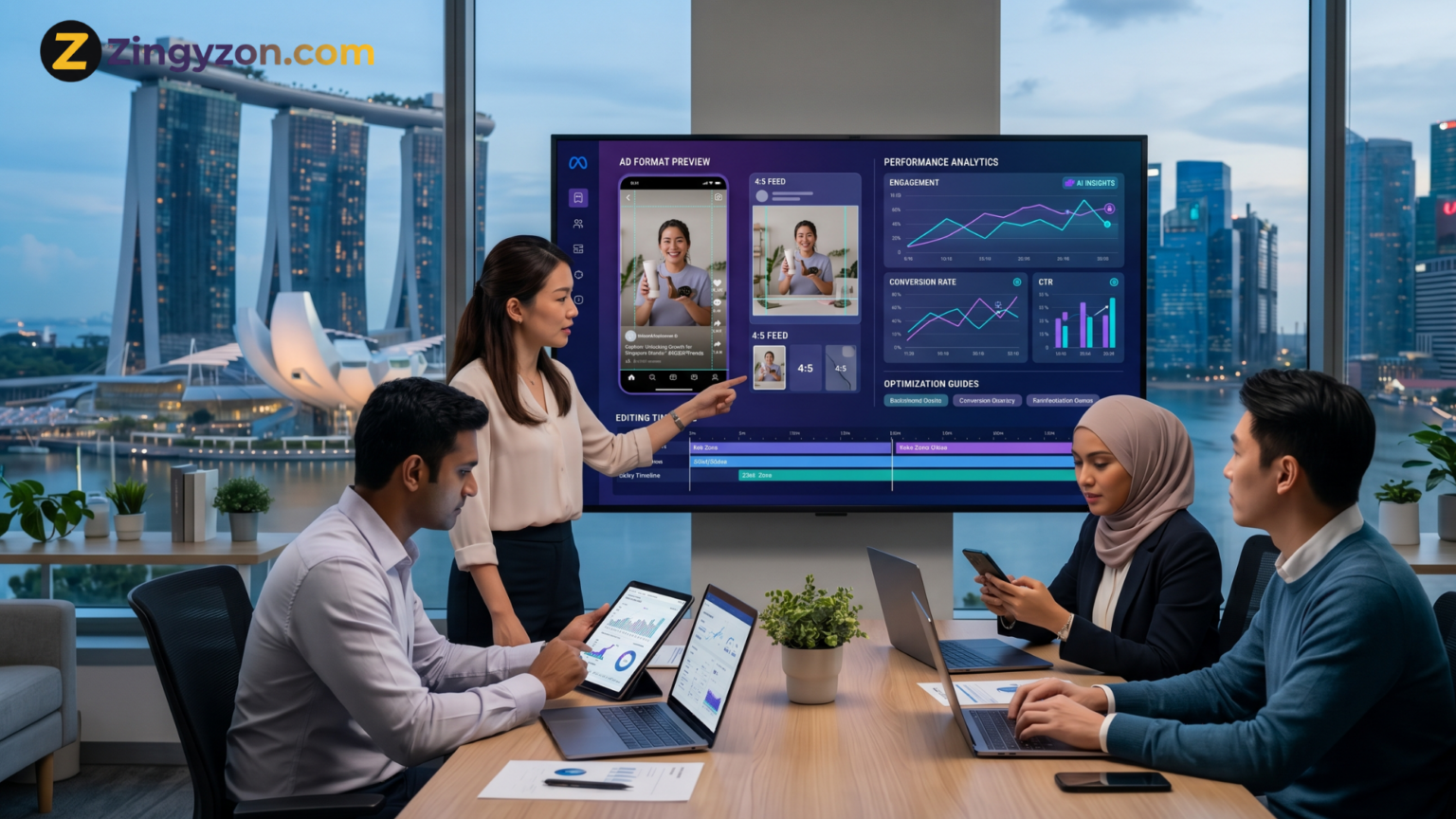
Meta’s video ecosystem looks noticeably different in 2026. Facebook has moved away from treating standard videos and Reels as separate publishing formats, Instagram continues to prioritise vertical short-form viewing, and Meta’s advertising tools increasingly use artificial intelligence to resize, remix, personalise, and distribute creative across placements.
For Singapore brands, this is more than a technical update. It changes how campaigns should be planned, filmed, edited, approved, and measured. A polished horizontal corporate video may still have value, but it is no longer enough to upload one master file and expect it to work equally well in Facebook Feed, Instagram Feed, Stories, and Reels.
The practical lesson is simple: brands now need a vertical-first production system rather than a single finished video. This guide explains what Meta’s new direction means, which formats matter, how Singapore businesses can adapt, and where human creative judgement still matters despite the rise of automation.
What Does Meta’s New Video Ad Format Mean in 2026?
The phrase “new video ad format” does not refer to one new file extension or one universal ad unit. It describes Meta’s broader move toward a Reels-first, mobile-native, and AI-assisted video environment.
Meta announced that videos posted to Facebook would be shared as Reels, removing the old choice between uploading a conventional video and creating a Reel. Facebook’s organic Reels can now support different lengths and orientations, but advertising placements still have their own specifications and display behaviour.
An advertiser must therefore separate two ideas: Facebook may classify every uploaded video as a Reel, yet the creative still needs to be prepared correctly for Feed, Stories, Reels, and other paid placements.
At the same time, Meta is encouraging advertisers to provide adaptable creative. Its Advantage+ creative tools can generate variations, adjust text, resize visual assets, and select combinations that may appeal to different viewers.
The platform is moving from “one advertisement shown to everyone” toward a flexible collection of video, copy, crop, and call-to-action elements assembled and delivered through machine learning.
For brands, the new format is best understood as a system with three characteristics:
- Video is increasingly organised around Reels-style discovery.
- Vertical creative receives greater attention because most viewing occurs on mobile screens.
- Meta’s systems expect multiple creative options rather than one rigid final asset.
Why the Shift Matters in Singapore
Singapore is a highly connected, mobile-first market where consumers move quickly between Facebook, Instagram, WhatsApp, ecommerce platforms, and physical retail experiences.
Its compact and competitive environment exposes users to many offers during a short scrolling session. A video that takes too long to reveal its point can lose attention before the brand or product benefit appears.
Singapore’s diversity adds another layer. English may be the main working language for many campaigns, but audiences differ by age, culture, household language, purchase motivation, and platform behaviour.
The updated Meta environment therefore rewards modular videos, thoughtful localisation, and several tested openings rather than one expensive “hero film” cropped into every placement.
The Core Video Sizes Singapore Brands Should Prepare
A strong 2026 workflow normally begins with at least two main versions of every important video advertisement.
9:16 for Reels and Stories
A 9:16 vertical video, commonly exported at 1080 × 1920 pixels, is the natural format for Instagram Reels, Facebook Reels, and Stories. It fills the mobile screen and feels consistent with the content people already consume in those environments.
Keep faces, products, subtitles, prices, and calls to action away from interface-heavy areas near the top and bottom. Platform controls, account information, captions, and buttons can cover important details.
Build around a central safe zone rather than placing text at the extreme edges.
Vertical does not mean placing a horizontal video in the centre with large empty bars. It means composing for a phone screen from the beginning.
Close-ups, medium shots, clear demonstrations, readable typography, and direct eye contact generally work better than distant wide shots.
4:5 for Facebook and Instagram Feeds
A 4:5 portrait asset, typically 1080 × 1350 pixels, gives brands more vertical screen space in Feed than a square or landscape video.
It is a useful format for product demonstrations, testimonials, educational clips, and offer-led advertisements.
The 4:5 version should not be an automatic crop that removes hands, products, captions, or environmental context. Editors should reframe shots intentionally.
This is particularly important for retail, food, real estate, fitness, and event content where visual details influence credibility.
1:1 for Selected Placements and Carousels
Square video remains useful for carousels, some Feed configurations, retargeting assets, and campaigns that need broad placement compatibility.
However, it should not be the only format produced. A square master often feels small inside a full-screen Reels experience.
16:9 for Specific Uses
Horizontal 16:9 video still has a role in websites, presentations, YouTube, connected screens, long-form case studies, and selected in-stream environments.
It is no longer the safest default for a Meta-first campaign. Brands should treat it as one output within a broader production package.
Creative Strategy: Design for the First Three Seconds
A strong Meta video needs to communicate before the viewer decides to scroll. This does not require frantic editing, but it does require immediate relevance.
Start with the problem, result, surprise, product action, recognisable location, or customer emotion. Avoid opening with a long animated logo, a slow building exterior, or generic footage that gives the viewer no reason to stay.
A Singapore restaurant could begin with steam rising from its signature dish rather than an exterior sign. A financial service could open with a familiar customer question instead of a corporate mission statement.
A property campaign might reveal the view, layout advantage, or commute benefit immediately. An event organiser could lead with crowd energy, a speaker’s strongest line, or a dramatic stage moment.
The first frame should also work as a visual headline. Many viewers encounter videos with limited sound or in distracting environments such as public transport, queues, offices, and cafés.
The message must remain understandable through visuals and captions.
Build Videos for Sound-On and Sound-Off Viewing
Music, voice, and ambient sound can make Reels feel immersive, but brands should not rely on audio alone. Captions improve accessibility and help viewers follow the message when they cannot or do not want to turn on sound.
Use concise subtitles with strong contrast and comfortable reading speed. Do not cover the entire screen with text.
Singapore campaigns may also benefit from language variants when audience data and campaign objectives support them. Instead of squeezing multiple languages into one crowded video, create separate versions with adapted subtitles, voiceovers, and on-screen copy.
Sound should serve the story. Product clicks, packaging sounds, kitchen ambience, applause, city noise, and natural dialogue can make an advertisement feel more immediate than generic stock music.
Ensure that music and voice recordings are licensed appropriately for paid advertising.
Native-Looking Content Usually Beats Overproduced Advertising
Meta users open Facebook and Instagram to discover, connect, and be entertained. An advertisement that feels detached from surrounding content may be skipped instantly.
Native-looking video uses direct-to-camera speech, demonstrations, authentic settings, creator-style framing, customer questions, concise captions, and a clear point of view. It can still be professionally planned.
Financial services, healthcare providers, educators, luxury brands, and property companies should balance platform authenticity with accuracy and brand credibility.
A useful creative mix includes polished brand footage, creator-style videos, customer or staff-led clips, product demonstrations, and short retargeting edits.
These formats give Meta’s delivery system meaningful differences to test.
Turn Events Into a Library of Meta Ad Assets
Conferences, product launches, exhibitions, workshops, store openings, award ceremonies, and community activations can generate weeks of advertising material.
The mistake is filming only a long highlight video after the event.
Plan short-form outputs before filming begins. Capture vertical interviews, speaker soundbites, product demonstrations, crowd reactions, branded details, behind-the-scenes moments, and clear calls to action.
An experienced event video production team can help create both archival coverage and platform-specific edits from the same occasion.
A single Singapore event can generate an awareness Reel, a short summary, speaker clips, attendee testimonials, behind-the-scenes Stories, retargeting ads, recruitment content, and vertical still frames.
This reduces the cost per usable asset and prevents valuable footage from disappearing into one long corporate montage.
How Meta’s AI Tools Change the Production Process
Meta’s Advantage+ creative features can create or recommend variations, resize assets, generate text options, apply visual adjustments, and personalise delivery.
In 2026, AI plays a larger role in selecting which creative combination is likely to resonate with a particular viewer.
That does not eliminate the need for good production. Automation can produce more versions of a weak idea, but it cannot guarantee that the central promise is relevant, truthful, distinctive, or culturally appropriate.
Singapore brands should give the system useful ingredients:
- Several hooks rather than one opening
- Clean product and lifestyle footage
- Alternative headlines
- Multiple calls to action
- Short and medium-length edits
- 9:16 and 4:5 versions
- Captioned and voice-led options
- Clear landing pages matched to each message
Review every AI-generated or automatically modified version. Check whether logos are distorted, products look inaccurate, subtitles remain correct, claims change meaning, or visual elements become culturally inappropriate.
Meta may label some ads that are created or significantly edited with its generative AI tools. Brands should therefore plan for transparency rather than trying to make synthetic content appear secretly authentic.
Choosing a Production Partner in Singapore
A production company should understand more than cameras and lighting. It should know how footage will be broken into placement-specific assets, how safe zones affect composition, how captions will be delivered, and how campaign testing changes the edit list.
When comparing video production companies in Singapore, ask for examples of vertical paid-social work rather than relying only on cinematic showreels.
A beautiful horizontal brand film does not prove that a team can produce high-performing Reels advertisements.
Ask whether the team will frame for 9:16 and 4:5, how many hooks and edits are included, whether captions and music licences are covered, how quickly performance-led revisions can be produced, and how talent releases or location permissions are handled.
The best partner is not always the cheapest or largest. It is the one that connects business objectives, production planning, platform behaviour, and measurable campaign outcomes.
Singapore Compliance and Brand-Safety Considerations
Performance should never come at the expense of trust. Singapore advertisers need to consider Meta’s advertising standards alongside local rules and industry guidance.
The Advertising Standards Authority of Singapore provides guidance for interactive marketing and social media. Commercial relationships, sponsored content, and influencer partnerships should be disclosed clearly.
A vague hashtag hidden at the end of a caption may not communicate the relationship effectively.
The Personal Data Protection Act is also relevant when brands collect, use, or disclose personal data. This can affect lead-generation forms, customer lists, tracking, testimonials, event recordings, and audience-matching activities.
Businesses should review whether appropriate notices, permissions, contractual protections, and security controls are in place.
For filmed events, brands should plan how attendees will be informed about recording and how identifiable footage may be used. High-risk campaigns should be reviewed by qualified legal or data-protection professionals.
Claims must also be supportable. Health, financial, environmental, educational, and performance claims deserve particular scrutiny.
A short format is not an excuse to create a misleading impression.
A Practical Campaign Workflow for 2026
Step 1: Define One Outcome
Choose the objective before scripting. Awareness, leads, sales, bookings, event registrations, and remarketing need different messages.
Step 2: Develop Several Hooks
Write at least three openings based on a problem, benefit, curiosity gap, or social proof.
Step 3: Film Modular Scenes
Record direct-to-camera lines, close-ups, demonstrations, environmental footage, reactions, and clean product shots.
Step 4: Export Placement-Specific Versions
Prepare 9:16 for Reels and Stories and 4:5 for Feed. Do not depend entirely on automated cropping.
Step 5: Add Captions and Clear Branding
Introduce the brand naturally, keep subtitles readable, and place key information inside safe zones.
Step 6: Test Meaningful Differences
Compare hooks, offers, presenters, demonstrations, and storytelling approaches rather than tiny colour changes.
Step 7: Measure the Full Funnel
Track hold rate, completion, clicks, landing-page behaviour, leads, purchases, cost per result, and lead quality.
Step 8: Improve the Next Edit
Use performance data to combine strong elements and repair weak transitions instead of discarding an entire concept.
Which Metrics Should Singapore Brands Track?
Video views alone do not prove that an advertisement is profitable. Meta may count different types of views and engagement, but the business still needs to decide which behaviours indicate genuine progress.
Hook or Scroll-Stop Rate
This shows whether the opening attracts attention. A weak opening often causes viewers to leave before the main message appears.
Average Watch Time
Average watch time helps identify whether viewers stay long enough to understand the offer. Compare it across videos with similar lengths.
Video Completion Rate
Completion rate is particularly useful for short advertisements. A high rate may indicate that the story is clear, although it does not guarantee conversions.
Click-Through Rate
CTR measures whether viewers move from watching to exploring the offer. A video may earn strong watch time but still need a clearer call to action.
Landing-Page Conversion Rate
A high CTR with a weak landing-page conversion rate may indicate a mismatch between the advertisement and the page.
Cost Per Lead or Purchase
This connects creative performance to a business outcome. Singapore advertisers should also examine lead quality rather than celebrating a large number of low-intent enquiries.
Return on Ad Spend
For ecommerce and trackable sales campaigns, ROAS helps evaluate revenue relative to advertising cost. It should be reviewed alongside profit margins, refunds, repeat purchases, and customer lifetime value.
How Different Singapore Industries Can Use the Format
Retail and Ecommerce
Retailers can use vertical videos for product demonstrations, unboxing, comparisons, customer reactions, limited-time offers, and seasonal launches.
The product should appear early. Waiting ten seconds to reveal what is being sold creates unnecessary friction.
Food and Beverage
Restaurants, cafés, food delivery businesses, and packaged-food brands can highlight preparation, texture, freshness, ambience, and customer experience.
Natural kitchen sounds and close-up visuals often create stronger sensory appeal than generic background music.
Property and Interior Design
Property brands can showcase room flow, views, neighbourhood access, design features, and renovation transformations.
Vertical framing should be planned carefully because excessively tight shots can make rooms look smaller or conceal important context.
Education and Training
Schools, tuition centres, universities, and professional-training providers can use student stories, teacher explanations, campus footage, course outcomes, and question-led educational clips.
Claims about employment, results, or academic performance should be accurate and properly qualified.
B2B and Professional Services
Consultancies, technology companies, legal firms, accounting businesses, and corporate service providers can turn complex ideas into short explanations.
A strong B2B video can begin with a recognisable operational problem and then demonstrate the solution clearly.
Tourism and Hospitality
Hotels, attractions, tour providers, and travel businesses can use first-person experiences, destination highlights, staff stories, room tours, and itinerary ideas.
Visual storytelling should still provide practical information rather than relying only on scenic footage.
Common Mistakes to Avoid
The first mistake is uploading the same horizontal video everywhere. The second is allowing automatic cropping to decide where faces, text, and products appear.
The third is producing only one hook and expecting targeting to rescue weak creative.
Brands also lose performance by delaying the message, using tiny subtitles, hiding the offer, copying international trends without localisation, or making claims that are too vague to be persuasive.
Another common problem is judging success by cheap video views while ignoring whether viewers take the desired action.
Finally, avoid treating AI as a substitute for strategy. The platform may optimise delivery, but the advertiser still owns the positioning, evidence, customer understanding, compliance, and final quality.
What Singapore Brands Should Do Next
Audit your current library and identify which assets were built for horizontal viewing, which can be reframed, and which require a fresh shoot.
Then create a repeatable production template that delivers vertical and Feed-ready outputs from every campaign.
Build a testing calendar rather than waiting for one perfect advertisement. Refresh hooks, presenters, customer problems, demonstrations, offers, and cultural moments throughout the year.
Singapore brands can plan around relevant periods such as Lunar New Year, Hari Raya, Deepavali, National Day, school cycles, travel seasons, and major retail events, while avoiding superficial or stereotypical creative.
For additional digital marketing and content insights, visit zingyzon.com.
Final Thoughts
Meta’s new video environment is not simply a change in dimensions. It is a shift toward Reels-style discovery, vertical storytelling, modular production, creator-influenced aesthetics, and AI-assisted delivery.
Singapore brands that continue producing one expensive master video may struggle to generate enough creative variety.
Brands that plan multiple hooks, shoot for vertical screens, adapt content for Feed, respect local audiences, and measure real business outcomes will be better positioned.
The strongest 2026 strategy combines human understanding with platform automation. Let Meta optimise combinations and delivery, but keep people responsible for the idea, promise, cultural judgement, factual accuracy, and brand story.

Keep Exploring Zingyzon.com
Read more Zingyzon SEO, digital marketing, online earning, business, and technology guides for Australia, USA, and global readers.