
How Battery Storage Helps Solve Renewable Overgeneration Problems
Solar panels and wind turbines are producing an increasing share of the world’s electricity. This growth supports cleaner energy systems, […]
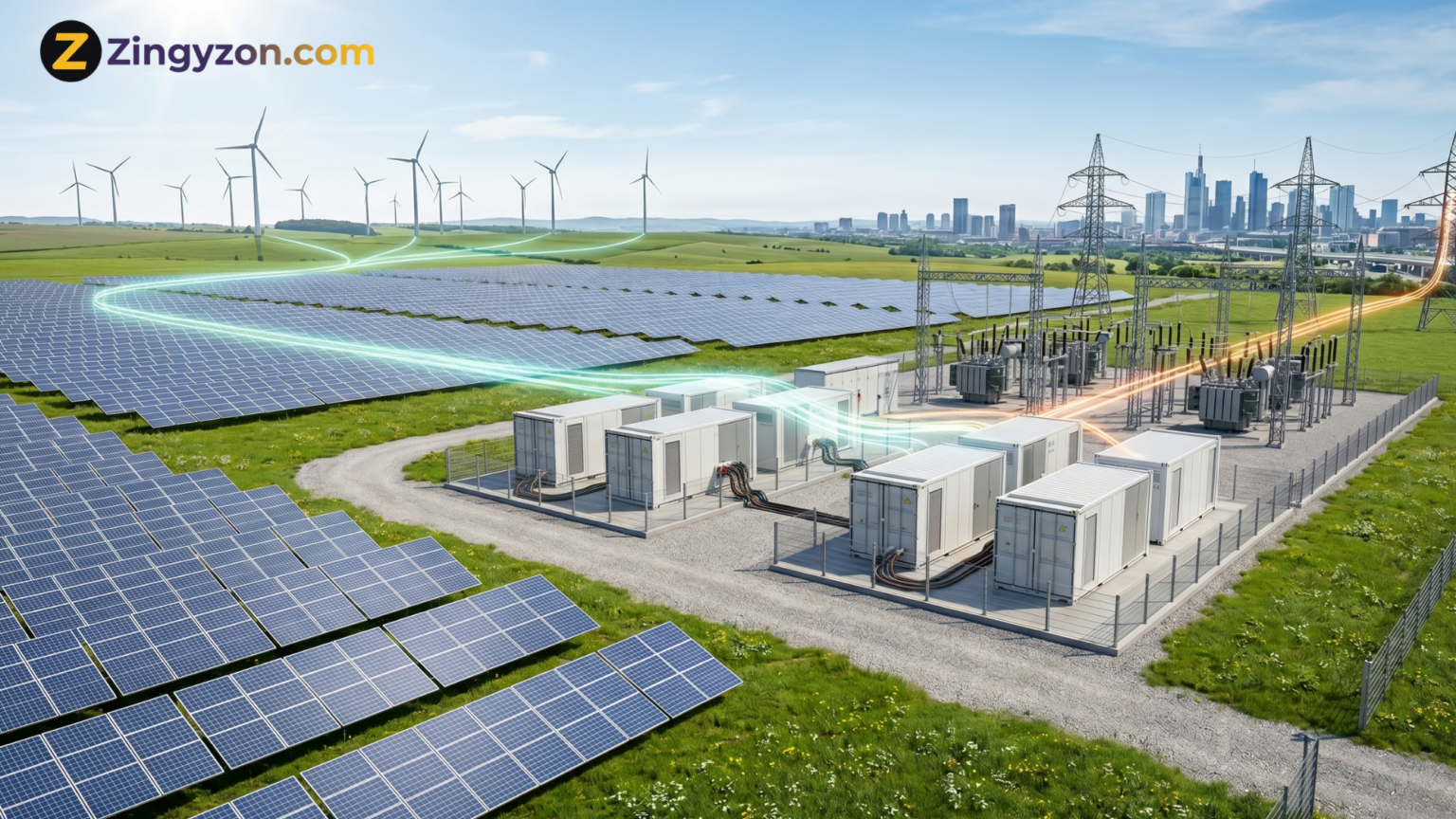
Solar panels and wind turbines are producing an increasing share of the world’s electricity. This growth supports cleaner energy systems, reduces dependence on conventional fuels, and gives homes and businesses more ways to control their energy use. However, renewable electricity brings an important challenge: production does not always occur when demand is highest.
A solar farm may generate its strongest output around midday, when electricity demand is relatively low. Meanwhile, homes may require considerably more electricity during the evening, after solar production begins to decline. Wind farms can face a similar problem. Strong winds may produce large amounts of electricity overnight when factories, offices, and commercial buildings are using less power.
When renewable generation exceeds electricity demand or the grid’s ability to transport and absorb that energy, renewable overgeneration occurs. Grid operators may then reduce renewable production through curtailment, export power at extremely low prices, or take other measures to protect grid stability.
Battery storage for renewable overgeneration offers a practical response. Instead of wasting surplus renewable electricity, batteries can capture it, hold it, and release it later when demand increases. This ability makes renewable energy more flexible, predictable, and valuable.
What Is Renewable Overgeneration?
Renewable overgeneration happens when solar, wind, or another renewable source produces more electricity than consumers and the power network can use at that particular moment.
An electricity grid must maintain a continuous balance between supply and demand. Electricity is different from many physical products because large amounts cannot simply be left sitting on the network until someone needs them. Without adequate storage, electricity generally needs to be consumed, exported, or reduced at almost the same time it is generated.
Consider a sunny spring afternoon. Solar farms and rooftop panels may be generating close to their maximum output. However, mild weather means people are using less heating and air conditioning. Commercial demand may also be lower during a weekend or public holiday. As a result, available solar production may become greater than immediate electricity demand.
Renewable overgeneration can also result from limited transmission capacity. One region may have abundant solar or wind electricity, while another region needs additional power. Nevertheless, if the transmission lines connecting those areas are congested, the renewable electricity cannot reach the customers who could use it.
Why Renewable Energy Is Sometimes Curtailed
When the grid cannot safely accept all available renewable generation, operators may instruct solar or wind facilities to reduce their output. This process is known as renewable energy curtailment.
Curtailment helps maintain system stability, but it means some potentially useful clean electricity is never delivered. A solar facility may temporarily disconnect part of its generation, while wind turbines may change their blade angles to reduce production.
Conventional power stations could theoretically reduce their output first. In practice, many traditional plants have minimum operating levels. They may also need to remain online to provide reserves, voltage support, frequency response, or other grid services. Restarting them can be slow or expensive.
Therefore, renewable projects are sometimes curtailed even though their electricity has low operating costs. Some curtailment is normal and may be more economical than building enough infrastructure to capture every final unit of renewable output. However, repeated and substantial curtailment can reduce project revenue, waste clean electricity, and weaken the financial case for future renewable investment.
The Renewable Energy Timing Problem
The central overgeneration challenge is usually not that renewable energy has no value. Instead, the energy is available at the wrong time or in the wrong location.
Solar generation follows a relatively predictable daily pattern. Output increases after sunrise, peaks around midday, and falls as evening approaches. In areas with extensive solar capacity, grid demand may fall significantly during the afternoon because customers are receiving electricity from solar systems.
Later, solar generation decreases just as households begin cooking, using entertainment systems, charging devices, and running heating or cooling equipment. Other electricity resources must then increase their output rapidly. This pattern is often associated with the “duck curve,” which describes the changing shape of electricity demand after solar production is subtracted.
Wind generation follows weather patterns rather than daylight. A region may experience several hours of powerful wind production during periods of limited demand. Later, output may fall when demand rises.
Battery storage helps address both situations by moving electricity from the time it is generated to the time it provides greater value.
How a Battery Energy Storage System Works
A battery energy storage system, commonly called a BESS, includes several connected components. The battery cells store electrical energy in chemical form. A battery management system monitors cell voltage, temperature, state of charge, and overall battery health.
The power conversion system or inverter converts alternating-current electricity into direct current while the battery is charging. When electricity is needed, it converts the stored direct-current energy back into alternating current for use by homes, businesses, factories, or the wider electricity network.
An energy management system controls when the battery charges and discharges. It can use renewable production forecasts, electricity prices, building demand, grid signals, weather conditions, and battery operating limits to make decisions.
A complete installation may also include cooling or heating equipment, fire detection, fire suppression, electrical protection, monitoring software, transformers, and communication systems.
During renewable overgeneration, the battery behaves like an electricity consumer. It absorbs surplus power from the grid or renewable facility. Later, it becomes an electricity supplier by discharging the stored energy.
1. Battery Storage Reduces Renewable Curtailment
One of the clearest benefits of battery storage is its ability to capture energy that would otherwise be curtailed.
Suppose a solar farm can produce 100 megawatts during the afternoon, but its grid connection can export only 80 megawatts. Without storage, the facility may have to reduce production by 20 megawatts. A correctly sized battery could absorb some of that excess output.
The battery could later discharge after sunset, when the solar farm is no longer producing at full capacity. In this way, the renewable project delivers more of its available electricity without exceeding its connection limit.
The same principle applies to wind farms. A battery can charge when strong winds produce more electricity than the local network can accept. It can then discharge during calmer or higher-demand periods.
Although storage may not eliminate all curtailment, it can significantly reduce recurring energy losses when properly sized and operated.
2. Batteries Shift Renewable Energy to Peak Hours
Energy shifting is the process of moving electricity from one period to another. Batteries charge during times of abundant, low-cost generation and discharge when demand or electricity value increases.
For solar energy, this usually means charging around midday and discharging during the evening. The stored solar electricity can support households and businesses after sunset instead of relying entirely on other power stations.
Wind energy may require a different operating schedule. A battery could charge during a windy night and release electricity during the morning demand increase.
This process improves the practical value of renewable generation. Electricity produced during an oversupplied period may have little market value. However, the same electricity can become much more useful when released during a constrained or high-demand period.
Energy shifting can also reduce pressure on conventional peaking plants, which are commonly used for short periods when electricity demand is particularly high.
3. Battery Storage Helps Manage the Evening Ramp
The evening ramp is a major operational challenge in regions with substantial solar generation. Solar output can fall quickly as the sun sets, while demand remains high or continues increasing.
Grid operators must replace the declining solar output with electricity from other sources. If flexible generation is limited, this rapid transition can create operational stress, higher prices, or increased reliance on fossil-fuel power plants.
A battery charged with excess daytime solar power can discharge during this transition. Instead of the grid experiencing a sharp drop in renewable output, stored electricity fills part of the gap.
Battery duration is especially important here. A high-power battery with limited energy may support the grid for only a short period. A system designed for several hours can cover a larger portion of evening demand.
Therefore, planners must evaluate both the battery’s power rating and its energy capacity when designing a solution for the evening ramp.
4. Batteries Smooth Solar and Wind Fluctuations
Renewable output can change quickly. Passing clouds may reduce solar production and then allow it to recover a few minutes later. Wind output can also rise or fall as weather conditions change.
These variations are manageable across large and diverse electricity systems. However, they can create challenges for local networks, remote communities, industrial microgrids, and areas with limited flexible generation.
Battery systems can respond rapidly. When renewable production suddenly rises, a battery can increase its charging rate. When generation falls, the battery can temporarily discharge.
This smoothing function reduces sharp changes in the electricity supplied to the grid. It gives generators, grid equipment, and energy management systems more time to adjust.
The goal is not necessarily to make renewable production completely constant. Instead, storage helps create a more controlled and manageable power profile.
5. Storage Can Reduce Local Grid Congestion
Renewable curtailment does not always happen because the entire electricity system has too much power. Sometimes, the problem is limited to one location.
For example, a rural area may contain several large wind or solar projects. The local transmission line may not be strong enough to carry their combined output during peak production. Even if cities elsewhere need the electricity, the constrained line prevents the energy from reaching them.
A battery installed near the renewable projects can charge before the transmission line becomes overloaded. It can discharge later when renewable production declines and additional line capacity becomes available.
This strategy can improve the use of existing transmission infrastructure. In some cases, storage may also delay an expensive network upgrade.
Nevertheless, battery location matters. A system installed on the wrong side of a network constraint may provide limited benefit. Detailed grid studies are needed to identify where storage can absorb excess production and where its discharge will be most useful.
6. Battery Storage Supports Grid Frequency
Electricity grids generally operate at a tightly controlled frequency. When generation exceeds demand, frequency can rise. When demand becomes greater than supply, frequency can fall.
Traditional power stations have historically helped regulate these changes. However, battery systems can also respond within a very short time.
During an oversupply event, a battery can increase its charging rate and absorb more electricity. If the system experiences a sudden shortage, the same battery may discharge power.
This fast response makes batteries useful for frequency regulation, operating reserves, and other grid-support services. Depending on system design and local rules, power conversion equipment may also contribute to voltage control and reactive power management.
By supporting these technical requirements, batteries can help the grid accommodate larger amounts of renewable generation without compromising reliability.
7. Batteries Improve Renewable Forecast Management
Solar and wind generation can be forecast, but actual weather conditions do not always follow predictions perfectly.
A cloud system may arrive earlier than expected. Winds may become stronger or weaker than forecast. These differences can cause renewable facilities to produce more or less electricity than scheduled.
Battery storage creates a controllable buffer. When actual renewable production is higher than expected, the battery can charge. When production is lower than expected, stored energy can cover part of the difference.
As a result, a renewable project paired with storage may provide a smoother and more predictable output profile.
However, good state-of-charge management is essential. A fully charged battery cannot absorb an unexpected renewable surplus. Similarly, an empty battery cannot compensate for a production shortfall. Operators must keep sufficient charging and discharging capacity available.
8. Storage Increases Solar Self-Consumption
Renewable overgeneration also occurs at homes and commercial buildings.
A house with rooftop solar panels may generate more electricity than it uses during the afternoon. Without a battery, the surplus electricity is exported to the grid. The homeowner may then purchase electricity later in the evening.
A home battery can store the unused daytime solar electricity and release it after sunset. This increases solar self-consumption and may reduce electricity purchased from the grid.
Commercial buildings can use a similar approach. An office, hotel, warehouse, or retail building may have significant rooftop solar capacity. A battery can store surplus electricity, reduce peak demand, provide limited backup power, or support electric vehicle charging.
Readers interested in reducing energy waste at home can also explore energy-saving guidance on Zingyzon.com.
Residential, Commercial, and Utility Storage Systems
Battery energy storage can be designed for several different scales.
Residential systems commonly support rooftop solar, backup electricity, and household self-consumption. Commercial systems may focus on peak-demand management, solar energy shifting, resilience, and tariff optimisation.
Industrial facilities may require larger batteries to support heavy equipment, reduce demand charges, maintain critical operations, or integrate on-site renewable generation.
Utility-scale batteries can absorb electricity from large solar and wind farms, provide grid services, relieve network congestion, and supply power during regional peak-demand periods.
Companies evaluating different system configurations can review examples of HT Infinite Power battery energy storage systems, which include residential, commercial, industrial, and containerised storage options.
Understanding Battery Power, Capacity, and Duration
Three measurements are particularly important when evaluating storage for renewable overgeneration.
Power Rating
Power is measured in kilowatts or megawatts. It shows how quickly the battery can charge or discharge.
A high-power system can absorb a sudden renewable production spike. However, it may not be able to store that energy for long if its total energy capacity is limited.
Energy Capacity
Energy capacity is measured in kilowatt-hours or megawatt-hours. It indicates how much electricity the battery can store.
A battery needs sufficient energy capacity to capture the volume of renewable electricity produced during an oversupply period.
Storage Duration
Duration indicates approximately how long a battery can discharge at its rated power. It is generally determined by dividing energy capacity by power.
For example, a battery with 20 megawatt-hours of energy capacity and a 5-megawatt power rating has a nominal duration of four hours.
Short-duration systems can manage brief fluctuations and frequency events. Longer-duration systems are better suited to shifting several hours of solar production into the evening.
Economic Benefits of Capturing Surplus Electricity
Battery storage may generate value through several activities. These can include:
- Reducing renewable energy curtailment
- Shifting electricity into higher-price hours
- Lowering commercial demand charges
- Providing frequency regulation
- Supplying operating reserves
- Deferring certain network upgrades
- Supporting backup and resilience
- Improving renewable project scheduling
However, battery economics must be evaluated carefully. Project costs may include battery modules, inverters, transformers, site construction, grid interconnection, software, insurance, cooling equipment, maintenance, financing, and eventual component replacement.
Batteries also experience efficiency losses during charging and discharging. Their usable capacity gradually declines because of cycling, temperature conditions, operating practices, and calendar ageing.
Furthermore, electricity price patterns can change. When many batteries begin charging and discharging at similar times, price differences between low-demand and high-demand periods may become smaller. Therefore, project developers should test several financial and operating scenarios.
Battery Storage Limitations
Battery storage is not a complete solution to every renewable overgeneration problem.
First, a battery cannot absorb additional electricity after reaching its maximum state of charge. A long period of strong solar or wind generation may produce more surplus energy than the battery can store.
Second, batteries lose some electricity during charging, storage, and discharging. Although modern systems can be efficient, no storage process returns every unit of electricity placed into it.
Third, battery cells degrade over time. Frequent cycling, high temperatures, deep discharges, and unsuitable operating conditions can accelerate capacity loss.
Safety is another important consideration. Large battery systems require appropriate cell selection, thermal management, electrical protection, monitoring, fire detection, emergency planning, and compliance with local installation requirements.
Finally, common lithium-ion systems are generally more suitable for short- to medium-duration energy shifting than seasonal storage. Storing large amounts of summer solar electricity for use months later may require different technologies.
Batteries Work Best with Other Grid Solutions
A reliable renewable energy system should not depend on batteries alone.
Transmission lines allow electricity to move between regions with different weather patterns and demand levels. When one area has excess wind or solar power, another may be able to use it.
Demand response encourages consumers to move flexible activities into renewable-rich periods. Electric vehicle charging, water heating, refrigeration, industrial pumping, and some manufacturing processes can operate when clean electricity is abundant.
Smart tariffs can encourage homes and businesses to use more electricity during midday solar peaks or overnight wind production.
Other storage options can also contribute. Pumped hydropower, flow batteries, thermal storage, compressed-air storage, and hydrogen may provide longer-duration services in suitable locations.
Improved forecasting, flexible electricity markets, modern grid controls, and diversified renewable generation further reduce overgeneration risks.
Battery storage performs best as one component of this broader flexibility strategy.
How to Plan a Battery Storage Project
A successful battery project should begin with detailed data.
Project planners need to determine how often overgeneration occurs, how long it lasts, and how much renewable electricity is usually curtailed. Hourly or sub-hourly generation and demand data provide a clearer picture than monthly totals.
The next step is identifying the objective. A project designed primarily for frequency regulation may require a different battery than one intended to shift six hours of solar production.
Planners should also consider:
- Battery power and energy capacity
- Expected operating cycles
- Renewable generation forecasts
- Transmission and interconnection limits
- Electricity tariffs or market prices
- Available installation space
- Environmental conditions
- Fire and electrical safety
- Battery warranties
- Maintenance requirements
- Software and cybersecurity
- Recycling and end-of-life responsibilities
After installation, actual performance should be monitored. Curtailment reduction, battery efficiency, system availability, revenue, and battery health may differ from initial forecasts. Ongoing optimisation helps the project adapt to changing electricity prices, renewable capacity, and grid conditions.
Frequently Asked Questions
Can battery storage completely prevent renewable curtailment?
Battery storage can reduce curtailment, but completely eliminating it may require an extremely large and expensive system. A limited amount of curtailment can still be economically reasonable.
Can batteries store both solar and wind electricity?
Yes. A battery can charge from solar panels, wind turbines, or the electricity grid when its design and local regulations allow it.
What battery type is commonly used for renewable storage?
Lithium-ion batteries are widely used because they respond quickly, offer modular installation, and have an established supply chain. Other battery and storage technologies may be more suitable for specialised or long-duration applications.
Is a larger battery always a better choice?
No. An oversized battery may cost more without producing proportional benefits. The correct size depends on the amount and duration of surplus electricity, the grid connection, demand patterns, and the intended services.
Can a battery provide electricity during a power outage?
Only when the system includes backup capability, appropriate switching equipment, and controls for operating independently from the grid. Some standard grid-connected batteries shut down during outages for safety.
How long can renewable electricity remain stored?
The practical storage period depends on battery chemistry, system design, self-discharge, operating limits, and the intended application. Many battery systems are designed to shift electricity across several hours rather than several months.
Final Thoughts
Renewable overgeneration happens when clean electricity production exceeds immediate demand or the grid’s ability to transport and use that power. Although curtailment helps keep electricity networks stable, repeated curtailment wastes valuable solar and wind energy.
Battery storage provides a flexible solution by capturing surplus electricity and releasing it when demand increases. It can reduce curtailment, manage the evening ramp, smooth renewable fluctuations, relieve certain network constraints, improve forecast management, and support grid frequency.
Nevertheless, storage must be correctly sized, safely installed, intelligently controlled, and placed where it provides the greatest value. It should also be combined with transmission investment, demand response, smart charging, accurate forecasting, and other forms of energy storage.
When included within a flexible energy system, battery storage for renewable overgeneration helps turn variable solar and wind production into electricity that is more dependable, useful, and economically valuable.



Keep Exploring Zingyzon.com
Read more Zingyzon SEO, digital marketing, online earning, business, and technology guides for Australia, USA, and global readers.