
Colorado Mom Invents First Safety Compliant Silicone Vomit Bib
Parenting products often begin with an ordinary problem that becomes impossible to ignore. For Colorado-based mother and inventor Lauren, that […]
Parenting products often begin with an ordinary problem that becomes impossible to ignore. For Colorado-based mother and inventor Lauren, that problem was sudden childhood vomiting during travel.
Her daughter experienced frequent motion sickness, making car rides and flights stressful. Years later, after the family adopted a son who faced similar episodes, the challenge returned. A particularly difficult experience on a remote road—without convenient access to water, laundry, or cleaning supplies—made the need for a more practical solution unmistakable.
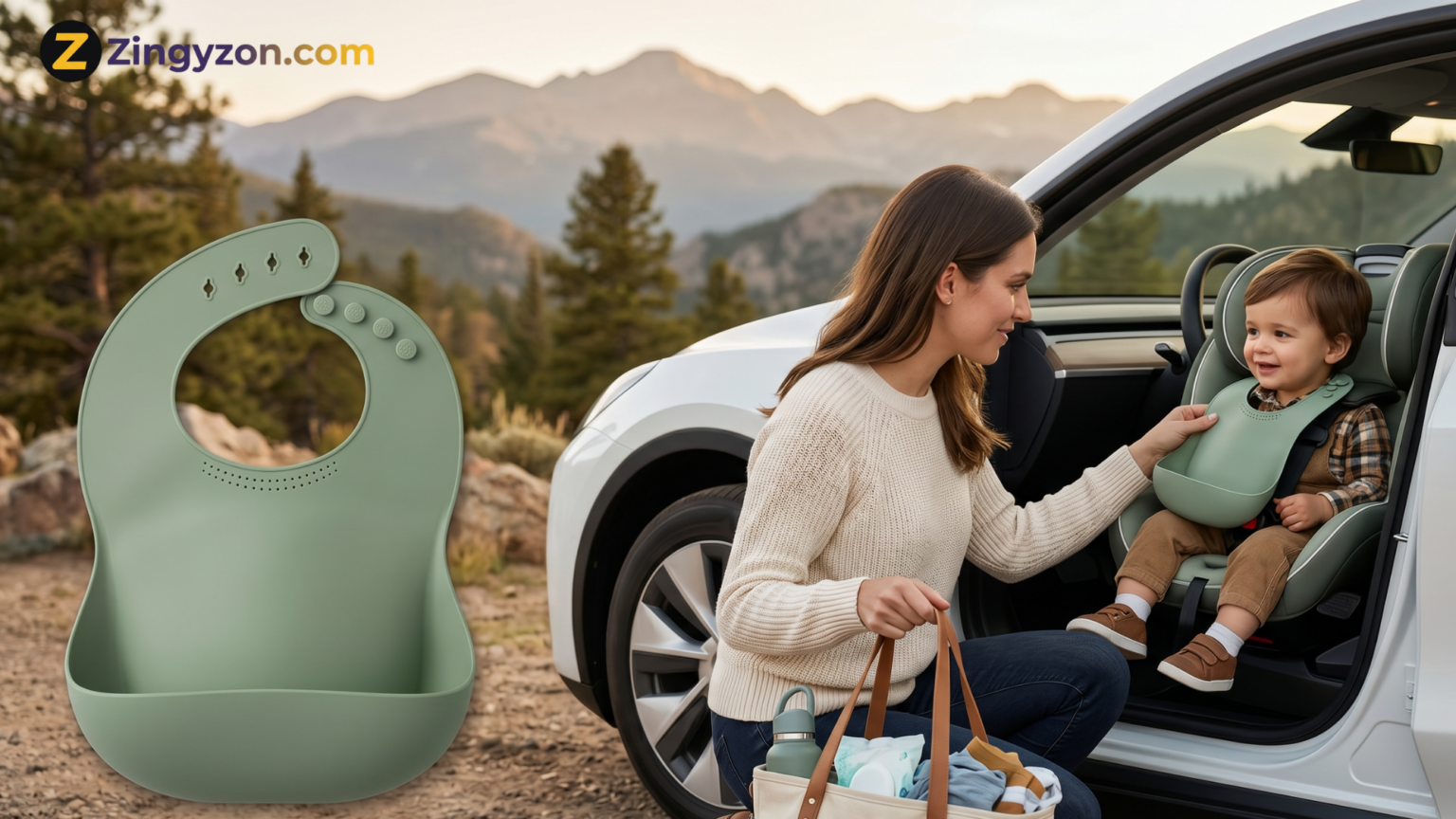
The result was Heaveroo, a reusable silicone bib designed to catch vomit, liquid spills, food, and other messes before they spread onto clothes, car seats, furniture, or floors.
The company describes the product as America’s first patented, CPSIA-compliant silicone vomit bib. That “first” description is a brand claim rather than the conclusion of an independent review of every product ever sold. What can be evaluated more directly is the product’s design, its stated testing and certification approach, and the everyday problem it attempts to solve.
The story offers more than an unusual parenting invention. It shows how firsthand experience, product safety, thoughtful design, and persistence can transform an uncomfortable family moment into a practical consumer product.
The Parenting Problem Behind the Invention
Children may vomit for many reasons. Motion sickness, stomach infections, reflux, food sensitivities, migraine, anxiety, medication, and other conditions can all cause nausea or vomiting.
The event itself may last only a few moments, but the cleanup can affect the rest of a journey. Clothes become wet, car-seat covers require washing, unpleasant odors remain inside the vehicle, and parents may struggle to find a safe place to stop.
Traditional feeding bibs are not usually designed for this kind of event. Fabric bibs absorb small spills but may quickly become saturated. Standard silicone feeding bibs often have shallow pockets intended for crumbs and dropped food rather than a larger volume of liquid.
Disposable emesis bags can work well when a child is old enough to recognize nausea, communicate clearly, and hold the bag in the correct position. Babies, toddlers, and younger children may not provide enough warning or understand what to do.
The difficulty is even greater when a parent is driving and cannot immediately reach the child. A sudden episode may occur before the vehicle can safely stop.
Lauren’s idea was to create a wearable catchment product that stayed in position rather than relying on the child to hold a bag or container at exactly the right moment.
From a Difficult Journey to a Product Idea
According to the brand’s account, the idea developed from two generations of the same parenting challenge within one family.
Lauren’s daughter experienced motion sickness and unexpected messes, including a stressful incident during a flight. When her son later faced similar difficulties, the family again found itself preparing for possible vomiting whenever they travelled.
A remote-road episode reportedly became the turning point. With limited access to clean water and laundry, the family needed more than wipes, spare clothing, or an ordinary bib.
Many successful consumer inventions begin in this way. The inventor is not initially trying to create a company. They are trying to solve a recurring problem in their own life.
However, recognising a need is only the beginning. A product worn around a young child’s neck must address comfort, material safety, cleaning, fit, durability, airflow, and applicable children’s-product regulations.
The journey from improvised idea to sellable product therefore required more than forming a large silicone pocket. The design had to be evaluated as a children’s product rather than merely a household cleaning accessory.
What Is Heaveroo?
Heaveroo is a flexible silicone bib with a large front collection pocket. Instead of absorbing liquid, the bib is designed to contain it until an adult can safely empty and clean the product.
The current product description states that the bib:
- Is made from food-grade silicone
- Is free from BPA, regulated phthalates, and lead
- Has an adjustable neck closure
- Includes integrated airflow holes
- Uses a smooth interior without a hidden inner rim
- Can be cleaned in a dishwasher
- Holds up to one litre
- Is intended for children aged six months and older
The large pocket is the feature that separates it visually and functionally from a conventional feeding bib. It creates a deeper container intended for sudden, higher-volume messes.
The design can also be used during messy meals, although its defining purpose is preparation for vomiting associated with travel, motion sickness, illness, or other unpredictable episodes.
Why Silicone Was Chosen
Silicone is frequently used in modern baby-feeding products because it can be flexible, waterproof, durable, and easy to wipe or rinse. Unlike woven fabric, it does not depend on absorbency.
For a vomit-catching bib, non-absorbency is important. Liquid remains inside the pocket instead of soaking through the material and spreading onto clothing.
A reusable silicone product may also reduce the need to carry numerous disposable bags or wash several fabric bibs during a trip. After use, the bib can be emptied and cleaned according to the manufacturer’s instructions.
However, the word “silicone” alone does not prove that a product is safe. Silicone formulations, colorants, additives, manufacturing processes, and finished-product quality can vary.
Parents should therefore look beyond broad phrases such as “food grade” or “non-toxic.” For children’s products sold in the United States, documentation, traceability, applicable testing, and a Children’s Product Certificate are more meaningful indicators than material marketing alone.
What Does CPSIA Compliance Mean?
CPSIA refers to the Consumer Product Safety Improvement Act. The law strengthened safety requirements for products designed or intended primarily for children aged 12 and younger.
In general, covered children’s products must comply with applicable federal safety rules. Manufacturers and importers may also need third-party testing from a laboratory accepted by the U.S. Consumer Product Safety Commission.
A compliant product must be supported by a written Children’s Product Certificate, commonly called a CPC. This certificate identifies the product, lists the rules for which it is being certified, names the manufacturer or importer, and provides information about testing and production.
Children’s products may also require permanent tracking information on the product and packaging where practicable. These markings help identify manufacturing details if a safety investigation or recall becomes necessary.
The Heaveroo website states that its bib is tested through a CPSIA-accredited laboratory and accompanied by a Children’s Product Certificate. The brand says the evaluation covers relevant chemical, heavy-metal, physical, mechanical, tracking-label, and age-grading requirements.
Parents can also request compliance documentation from a seller. A responsible company should be able to explain which rules apply, where the product was tested, and how its certification is supported.
What Compliance Does—and Does Not—Tell Parents
Safety compliance is valuable, but it should be understood accurately.
It indicates that a manufacturer or importer has certified the product against the applicable children’s-product rules identified on its certificate. It does not mean that the CPSC has personally tested, endorsed, or guaranteed every individual unit.
Compliance also does not turn a bib into medical equipment. The product does not diagnose, prevent, or treat motion sickness, infection, reflux, chronic vomiting, or another medical condition.
It is a mess-management tool. It may help contain vomiting when an episode occurs, but it does not address the reason the child is vomiting.
Parents should still seek medical advice when vomiting is frequent, severe, unexplained, accompanied by dehydration, associated with significant pain, or connected to another concerning symptom.
Design Features Intended to Improve Safety
Any product placed around a child’s neck deserves careful attention. Heaveroo’s design includes several features that the company says were developed with this concern in mind.
Integrated Airflow Holes
The back section contains holes intended to support airflow if the material moves upward or is placed over the face.
These openings should not be interpreted as a reason to leave a young child unsupervised. They are an added design feature rather than a replacement for responsible adult monitoring.
Adjustable Neck Closure
Multiple adjustment points allow the bib to fit different children. The closure should be secure enough to keep the collection pocket correctly positioned but should not feel tight or restrict comfortable movement.
Parents should follow the stated age guidance and check the fit each time the bib is used.
Smooth Internal Surface
The brand highlights the lack of a hidden internal lip or ridge. A simpler interior may be easier to inspect, rinse, wash, and dry because fewer areas can trap residue.
This matters when the product is used for vomit rather than dry food. Small crevices can make thorough cleaning more difficult.
Flexible Construction
A flexible bib can move with the child and may be easier to pack than a rigid bucket. Flexibility also allows it to be used in several settings, although parents must ensure the pocket remains open and correctly positioned.
How the Collection Pocket Changes the Traditional Bib
Most baby bibs are designed to protect the upper chest from drool, milk, or food. Even models with catch pockets are usually intended to collect crumbs and small pieces.
The Heaveroo vomit Bib takes the same general concept but enlarges and deepens the front pocket.
This changes the bib from a surface protector into a temporary liquid-containment product.
The company states that the pocket holds up to one litre. Capacity is not the only consideration, however. The opening must also remain accessible, the bib must sit correctly, and an adult must empty it carefully after an incident.
The design cannot guarantee that every mess will be captured. A child’s position, movement, direction of vomiting, clothing, seat angle, and correct product placement can all influence real-world performance.
A responsible description should therefore avoid claiming that any wearable bib makes vomiting completely mess-free.
Motion Sickness and Why Preparation Matters
Motion sickness can occur when the visual information received by the eyes conflicts with movement signals from the inner ear.
A child may feel dizzy, become pale, yawn, sweat, complain of stomach discomfort, or suddenly vomit. Young children may not recognize or communicate these warning signs.
Motion sickness can happen in cars, aircraft, trains, boats, and amusement rides. Some children experience it occasionally, while others face it on almost every journey.
Practical prevention strategies may include:
- Encouraging the child to look outside rather than down at a screen or book
- Providing fresh air when possible
- Offering a light meal or snack before travel rather than a heavy one
- Keeping the child hydrated
- Planning breaks during long road trips
- Stopping the vehicle as soon as safely possible when symptoms begin
- Discussing recurrent or severe symptoms with a pediatrician
Medication should not be given to a young child merely on the basis of online advice. Age limits, dosing, side effects, sedation, and medical history matter, so parents should consult a qualified healthcare professional.
A vomit bib fits into the preparation stage. It does not prevent motion sickness, but it may give caregivers another way to manage an episode if prevention is unsuccessful.
Using the Bib During Car Travel
Car-seat safety must remain the priority during every trip. The child should be restrained according to the car-seat manufacturer’s instructions, and no accessory should alter the harness fit or interfere with buckles, chest clips, straps, or the child’s airway.
Before using any wearable accessory in a car seat, parents should review both the product instructions and the car-seat manual. They may also contact the car-seat manufacturer when uncertain about compatibility.
The bib should be positioned so that it does not sit underneath the harness or create bulky material between the child and the restraint system.
An adult should check that the child can breathe and move comfortably and that the bib does not shift into an unsafe position.
When signs of motion sickness appear, the driver should stop in a safe place as soon as reasonably possible. The bib should never encourage a driver to continue while a child is actively unwell or distressed.
Other Situations Where a Vomit Bib May Be Useful
Although road trips are an obvious use case, the concept may be helpful in other supervised situations.
Air Travel
A child may become sick during takeoff, landing, turbulence, or a prolonged flight. Access to a restroom may be temporarily restricted, and seat space is limited.
Boat Trips and Cruises
Sea motion can trigger nausea even in children who normally tolerate car travel. Reusable containment may be useful when disposable supplies are limited.
Stomach Bugs
Vomiting caused by viral illness can occur with little warning. A washable collection bib may help protect bedding, clothing, furniture, or a caregiver while a child is sitting upright and directly supervised.
Chronic Conditions
Some children experience recurrent vomiting because of an underlying medical condition. Families in this situation should work with their healthcare team. A bib may help with cleanup, but it should be considered supportive equipment rather than treatment.
Mealtimes
The large pocket can also catch food, liquids, and ordinary feeding messes. This gives the product a purpose beyond illness or travel.
Cleaning and Hygiene
A vomit-catching product must be cleaned promptly and thoroughly.
The brand states that its bib can be placed in a dishwasher or washed with warm, soapy water. Parents should follow the current care instructions provided with the product.
After an incident, the contents should be emptied safely. The bib should then be rinsed, washed, inspected, and allowed to dry completely.
Caregivers should pay attention to the neck closure, airflow holes, pocket corners, and any area where residue could remain.
The bib should not be reused while visibly dirty or damaged. Cuts, tearing, stickiness, persistent odor, surface deterioration, or a broken closure may indicate that replacement is appropriate.
When vomiting is caused by a contagious stomach infection, handwashing and cleaning nearby surfaces remain important. A washable bib can contain part of the mess, but it cannot prevent every route of germ transmission.
The Importance of Dignity During an Embarrassing Moment
Vomiting can be frightening or embarrassing for a child, particularly when it happens in a public place, vehicle, classroom, or aircraft.
A containment product may reduce the amount of attention drawn to the incident, but the adult’s reaction remains equally important.
Caregivers should speak calmly, avoid showing disgust, reassure the child, and focus first on comfort and safety. The child did not create the situation intentionally.
Products such as Heaveroo are most useful when they reduce stress without making the child feel ashamed. The goal is not only easier cleaning; it is also a gentler response to an uncomfortable experience.
A Colorado Parenting Idea With Wider Relevance
Lauren’s invention reflects a familiar pattern in family-focused entrepreneurship. Parents encounter a practical problem, search for an existing answer, and discover that available products do not fully meet their needs.
Turning that frustration into a commercial product requires persistence. The inventor must create prototypes, select materials, evaluate manufacturers, consider intellectual property, test the finished item, prepare compliance documentation, build a brand, and explain an unfamiliar product category to customers.
A “vomit bib” may initially sound unusual, but its purpose is immediately understandable to families dealing with motion sickness or recurrent vomiting.
The product’s strongest marketing advantage may therefore be its specificity. It does not attempt to solve every parenting problem. It addresses one stressful moment with a simple physical design.
Questions Parents Should Ask Before Buying
Parents comparing Heaveroo with another children’s bib or vomiting product should consider several practical questions:
- Is the product intended for the child’s age?
- Can the seller provide a valid Children’s Product Certificate?
- Has the finished product been tested for applicable safety requirements?
- Does it fit without restricting breathing or movement?
- Can it be used without interfering with the car-seat harness?
- Is the interior easy to inspect and clean?
- Can the product be washed and dried using realistic household methods?
- Is the pocket large enough for the intended use?
- Are clear instructions and warnings included?
- Can replacement or customer support be accessed easily?
These questions are more useful than relying entirely on phrases such as “parent approved,” “non-toxic,” or “premium quality.”
Frequently Asked Questions
Is Heaveroo a medical device?
The product is marketed as a children’s silicone bib rather than a treatment for nausea or vomiting. It should not replace medical assessment or prescribed treatment.
What age is it designed for?
The brand states that it is intended for children aged six months and older. Parents should confirm the current product guidance and assess whether their child can wear it safely and comfortably.
Does it stop motion sickness?
No. It is designed to catch and contain a mess if vomiting occurs. Motion-sickness prevention and treatment are separate issues.
Is it dishwasher safe?
The manufacturer describes the bib as dishwasher safe. Follow the care instructions supplied with the specific product.
Can it be used in a car seat?
Parents should ensure it does not interfere with harness positioning, buckles, straps, or breathing. Follow both the bib instructions and the car-seat manufacturer’s guidance.
Does CPSIA compliant mean CPSC approved?
Not exactly. Manufacturers or importers certify covered children’s products based on applicable testing requirements. The certificate does not mean the CPSC personally endorses the brand or guarantees every use of the product.
Can a child wear it without supervision?
A young child should not be left unattended while wearing a neck-fastened product. Adult supervision and correct fitting remain essential.
Final Thoughts
The Heaveroo story began with an uncomfortable problem familiar to many parents: a child becoming sick without enough warning to protect clothes, seating, or the surrounding area.
Lauren’s response was to rethink the ordinary silicone bib. By enlarging the catch pocket, simplifying the interior, adding airflow openings, and pursuing children’s-product testing and certification, she created a product aimed specifically at vomiting and other large messes.
Its practical value will depend on correct fit, responsible supervision, safe use around child restraints, thorough cleaning, and realistic expectations.
The bib cannot prevent nausea, replace medical care, or guarantee that every incident will be perfectly contained. What it can offer is preparation—a reusable tool designed for moments when parents often have very few good options.
That combination of personal experience, safety-focused development, and straightforward function explains why an invention created by one Colorado mother may resonate with families far beyond her home state.
For more product innovation, parenting, lifestyle, and consumer-interest stories, explore zingyzon.com.


Keep Exploring Zingyzon.com
Read more Zingyzon SEO, digital marketing, online earning, business, and technology guides for Australia, USA, and global readers.