
Lippan Art vs Madhubani Art: Differences, Meaning and Décor Ideas
Indian folk art has a wonderful way of making a home feel more personal. It does not simply cover an […]
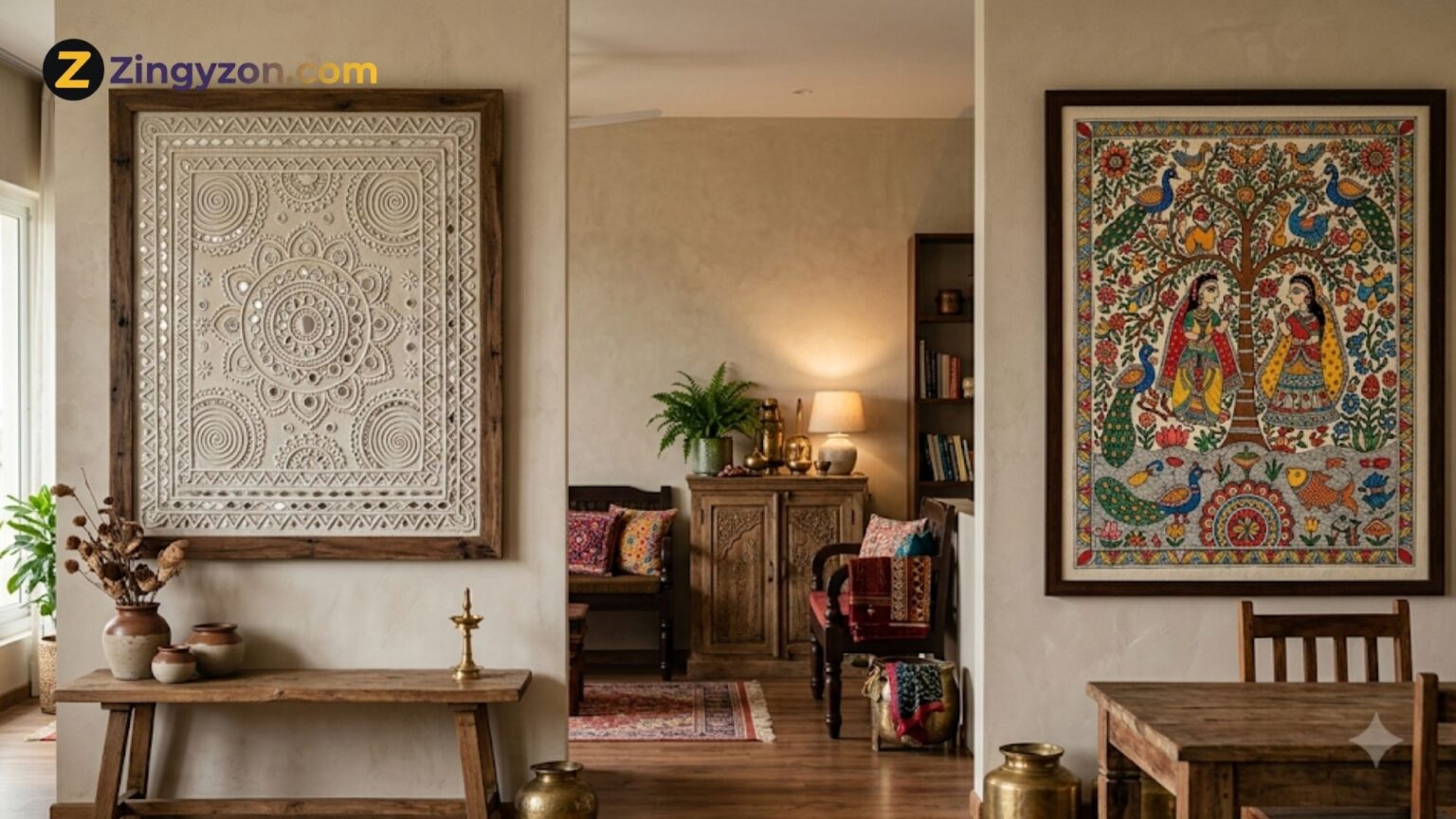
Indian folk art has a wonderful way of making a home feel more personal. It does not simply cover an empty wall. It introduces texture, colour, stories and traditions that have been passed down through generations.
Lippan art and Madhubani painting are two popular Indian art forms that can completely change the mood of a room. Both are traditional, handmade in appearance and rich in cultural character, yet they look and feel very different.
Lippan art is known for raised patterns and reflective mirror details. Madhubani art is recognised for bold outlines, detailed motifs and narrative compositions. One often feels subtle and textural, while the other tends to be expressive and full of visual storytelling.
Understanding their differences can help you decide which one fits your home, your existing décor and the atmosphere you want to create.
What Is Lippan Art?
Lippan art, also known as mud and mirror work, comes from the Kutch region of Gujarat. Traditionally, it was created on the interior walls of homes using a mixture of mud and natural binding materials.
Small mirrors were placed within the raised designs to catch and reflect light. In homes with limited lighting, these mirrors helped brighten the space while also turning an ordinary wall into something decorative.
Modern Lippan artwork is usually created on wooden boards or similar surfaces, making it easier to display in contemporary homes. The designs often feature geometric shapes, floral patterns, peacocks, elephants, trees, mandalas and traditional symbols.
The raised surface is one of the most distinctive features of Lippan art. Even when the artwork uses only white, beige, clay or gold tones, the texture gives it depth and prevents the wall from looking plain.
What Is Madhubani Art?
Madhubani art, also called Mithila painting, originated in the Mithila region of Bihar. It was traditionally painted on walls and floors during weddings, festivals and important family occasions.
The art form is known for its bold outlines, closely filled spaces and detailed decorative patterns. Common subjects include trees, flowers, fish, birds, animals, people, scenes from mythology and moments from everyday life.
Madhubani paintings rarely leave large spaces empty. Smaller lines, dots, leaves, circles and geometric patterns are often used to fill the background. This gives each composition a rich and energetic appearance.
While Lippan art creates interest through texture and reflection, Madhubani art creates it through drawing, colour and storytelling.
The Main Difference Between Lippan and Madhubani Art
The most noticeable difference lies in the way the artwork is constructed.
Lippan art is three-dimensional. Its raised patterns create shadows and depth, while the embedded mirrors respond to changing light. The appearance of the artwork may shift slightly depending on the time of day and the direction from which it is viewed.
Madhubani painting is primarily two-dimensional. Its impact comes from intricate lines, repeated patterns and the relationship between figures, colours and symbols.
Another important difference is the overall visual mood. Lippan artwork often feels symmetrical, calm and balanced. Madhubani painting usually feels more active, expressive and story-driven.
Neither approach is better than the other. They simply serve different visual purposes within a home.
Meaning and Cultural Significance
Lippan art is closely connected with the homes and communities of Kutch. Traditionally, women decorated walls to make their living spaces more beautiful and welcoming. The mirrors, patterns and natural materials reflected both local creativity and the practical realities of desert life.
Many Lippan designs also draw inspiration from nature, animals and everyday village surroundings. Their repeated patterns create a sense of order and harmony.
Madhubani art has strong ceremonial and symbolic roots. Traditional paintings were often created for weddings, religious occasions and festivals. Different subjects carried different meanings.
Fish may represent prosperity and fertility, while trees can symbolise life and growth. Peacocks are associated with beauty, and lotus flowers often suggest purity. Paintings depicting Radha and Krishna, Ganesha or scenes from the Ramayana connect the artwork with mythology and devotion.
Today, both styles have moved beyond their original settings and are used in homes around the world. Even so, understanding their background makes the artwork feel more meaningful than a purely decorative print.
Which Art Form Suits a Minimal Home?
Lippan art is often easier to introduce into a minimal interior.
Its neutral palette can sit comfortably alongside plain walls, simple furniture and natural materials. A white or beige circular Lippan piece can add detail to the room without disturbing its calm appearance.
The mirrors introduce small points of light, while the raised design adds texture. This is especially useful when a room feels too flat but does not need additional colour.
A large piece of mud mirror work art can work above a neutral sofa, console table or dining cabinet. Smaller pieces can be used in an entrance, hallway or reading corner.
Madhubani art can also work in a minimal home, but it usually becomes the main focal point. When the furniture and wall colours are simple, a detailed painting can provide just the right amount of personality.
Which Art Form Adds More Colour?
Madhubani painting is usually the stronger choice when a room needs colour and energy.
Traditional compositions may include red, yellow, green, blue, orange, black and earthy shades. Even modern monochrome versions contain enough pattern and detail to attract attention.
A madhubani painting for home can make a plain living room feel warmer without requiring major changes to the furniture or wall colour.
To make the artwork feel connected to the room, repeat one or two shades from the painting through cushions, a rug, curtains or decorative accessories. There is no need to match every colour.
Lippan art is generally more restrained. However, coloured backgrounds, gold accents and painted mirrors can give modern Lippan pieces a stronger visual presence when needed.
Living Room Décor Ideas
The wall above the sofa is an obvious place for a large artwork, but size matters. A very small piece above a wide sofa can look disconnected. Choose one large artwork, a pair of coordinated pieces or a thoughtfully arranged group.
A wide Madhubani composition can make a strong feature wall, particularly when the room contains solid-coloured furniture. Keep the surrounding décor relatively simple so that the details remain easy to appreciate.
For Lippan art, a large circular or square piece can soften the straight lines of a sofa and console. Positioning it near warm lighting allows the mirrors to reflect a gentle glow in the evening.
Avoid filling the same wall with clocks, shelves, photographs and several unrelated decorations. Both Lippan and Madhubani art deserve enough open space around them.
Entrance and Hallway Décor Ideas
The entrance is a good place for artwork that creates an immediate impression.
A Lippan panel above a wooden console can make the area feel bright and welcoming. Pair it with a simple lamp, ceramic bowl or indoor plant rather than several small accessories.
A vertical Madhubani painting can suit a narrow entrance wall or passage. Subjects such as a tree of life, peacocks, village scenes or floral compositions can add character without occupying floor space.
For a long hallway, two or three smaller artworks can create continuity. Use related designs or similar frames so that the arrangement feels intentional.
Dining Room Décor Ideas
Madhubani art works especially well in dining spaces because it naturally encourages people to look closely and notice different details.
A colourful composition can bring warmth to a room with wooden dining furniture. If the upholstery or curtains already contain patterns, choose a painting with a simpler colour palette to avoid visual overload.
Lippan art can create a quieter dining environment. A wide geometric design or group of smaller mirror-work panels can add texture without making the room feel too formal.
Artociti offers different formats across Indian traditional-art collections, which can make it easier to compare statement pieces, framed paintings and decorative wall panels for various room sizes.
Can Lippan and Madhubani Art Be Used Together?
Both styles can be used in the same home, although placing them on separate walls or in different rooms usually works best.
Lippan art could be used in the entrance or main living area, where its mirrors interact with natural and artificial light. Madhubani art could then bring colour to the dining room, hallway, bedroom or reading corner.
If both art forms are visible from connected spaces, create consistency through the frames or surrounding materials. Wooden finishes, brass accents or a shared earthy colour can help the styles feel related without making them look identical.
How to Choose Between Them
Choose Lippan art when your room needs texture, gentle reflection and a balanced handcrafted look. It works particularly well with neutral colours, wood, cane, jute, clay and simple furniture.
Choose Madhubani art when the room needs colour, detailed patterns and a stronger narrative element. It is suitable for spaces that feel too plain or need a clear focal point.
Also consider the amount of detail already present. A room with patterned upholstery and decorative shelves may benefit from the calmer appearance of Lippan art. A room with plain furniture and empty walls may be the perfect background for Madhubani painting.
Conclusion
Lippan and Madhubani art represent two distinct sides of Indian artistic tradition. Lippan art creates beauty through raised textures, symmetry and reflected light. Madhubani painting creates impact through bold lines, expressive subjects and carefully filled patterns.
Before choosing, observe the room at different times of day, measure the available wall and think about whether the space needs texture, colour or storytelling. The right artwork should feel connected to the room rather than looking like something added only to cover an empty area.
Compare a few designs, imagine how they will look alongside your furniture and choose the piece you would genuinely enjoy seeing every day. Whether you prefer the subtle shine of mirror work or the lively detail of a folk painting, thoughtful placement can turn traditional Indian art into a natural part of a modern home.

Keep Exploring Zingyzon.com
Read more Zingyzon SEO, digital marketing, online earning, business, and technology guides for Australia, USA, and global readers.