
Limewash Walls Pros and Cons
Limewash walls have become increasingly popular in modern interior design, but the finish is far from new. It has been […]
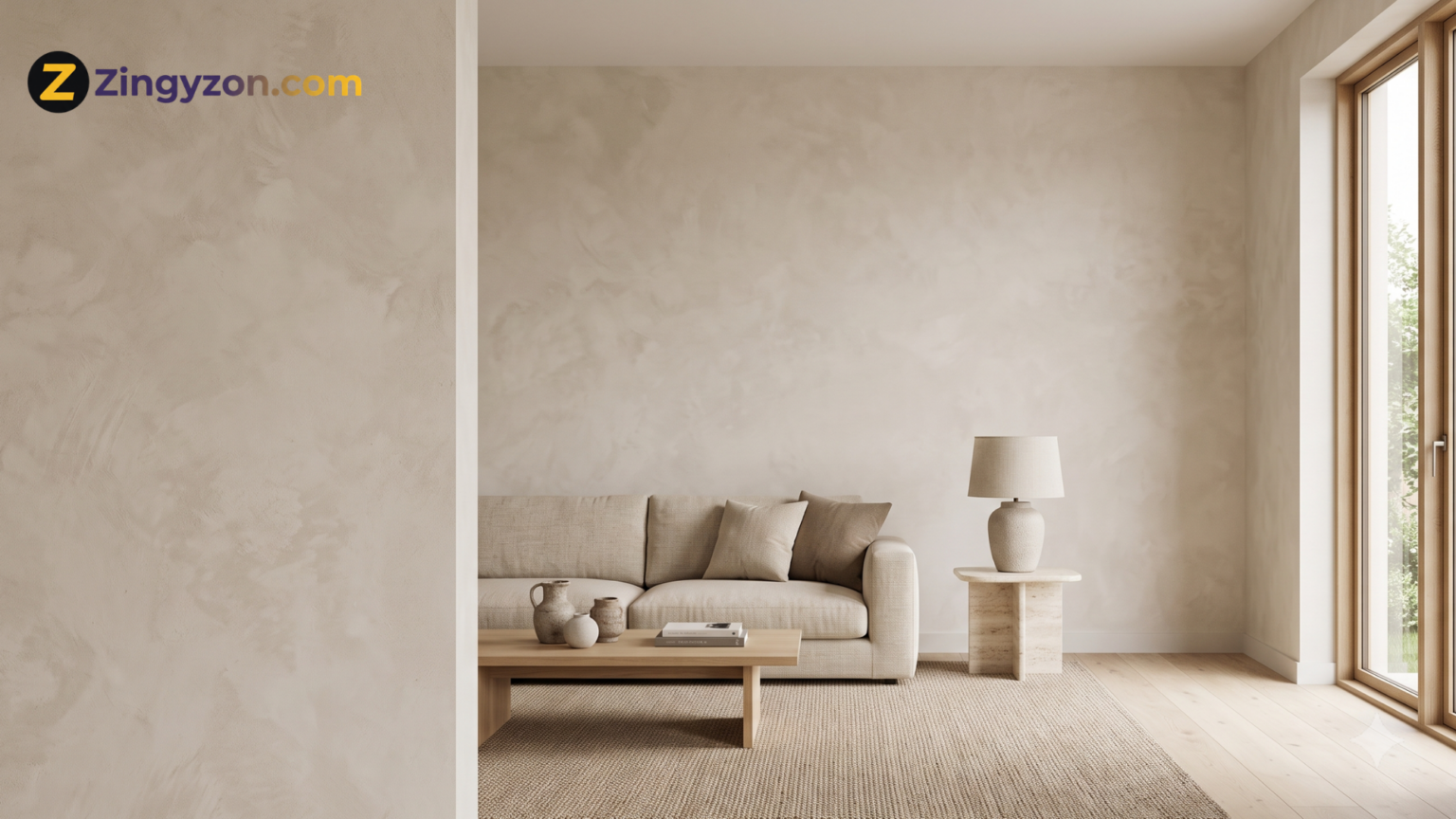
Limewash walls have become increasingly popular in modern interior design, but the finish is far from new. It has been used on buildings for centuries and is still admired for its soft texture, cloudy color variation, and relaxed, natural appearance.
Unlike standard wall paint, limewash is not designed to create a perfectly flat and uniform block of color. Its beauty comes from visible movement, overlapping brushstrokes, and subtle changes in tone. This can make a plain room feel warmer, more dimensional, and more carefully designed.
However, limewash is not suitable for every wall or every household. It may require special preparation, careful application, and more delicate cleaning than conventional washable paint.
Understanding the main limewash walls pros and cons will help you decide whether this timeless finish matches your home, budget, decorating style, and maintenance expectations.
What Is Limewash Paint?
Traditional limewash is a mineral-based finish made primarily from slaked lime and water. Natural or mineral pigments may be added to produce different colors.
As limewash dries, it reacts with carbon dioxide in the air through a process known as carbonation. This gradually creates a mineral finish on the surface. Limewash has historically been applied to interior and exterior materials such as brick, stone, lime plaster, and masonry.
Modern limewash products may contain additional ingredients that make them easier to apply or more suitable for contemporary interiors. Some products can be used on drywall and previously painted walls, but they normally require a compatible primer or undercoat.
Because formulas differ between manufacturers, it is important to follow the instructions provided for the exact product you purchase.
What Do Limewash Walls Look Like?
Limewash normally produces a matte, softly textured finish with natural-looking variations in color. Rather than completely hiding the painter’s brushwork, it uses overlapping strokes to create depth and movement.
The final appearance may include:
- Cloudy or softly mottled color
- Light and dark tonal variation
- Visible but blended brush movement
- A chalky or mineral-like surface
- A handcrafted, slightly imperfect character
The effect can be subtle in warm white, beige, or light gray. Deeper shades such as clay, olive, charcoal, muted blue, and terracotta usually create more noticeable movement.
Limewash works particularly well in Mediterranean, rustic, farmhouse, minimalist, Scandinavian, traditional, organic-modern, and contemporary interiors. Before selecting a finish, exploring different home interior design styles can help you choose a color that suits the overall character of your room.
Limewash Walls Pros
1. Limewash Creates Beautiful Depth
The most obvious advantage of limewash is its visual depth. Standard paint is normally designed to look consistent across the wall, while limewash creates intentional changes in tone.
Light reflects differently across the mineral surface and layered brushstrokes. This allows even a quiet neutral shade to look interesting without making the room feel busy.
A limewashed wall may appear slightly different throughout the day. Natural morning light can make the color look pale and soft, while evening lamps may bring out warmer or deeper tones.
This changing appearance gives the room a more atmospheric quality.
2. It Adds Texture Without Heavy Plaster
Limewash creates visual texture without adding the thick, raised surface associated with Venetian plaster, textured render, or other decorative wall treatments.
This makes it useful for homeowners who want a more interesting finish without dramatically changing the shape of the wall. It can be used throughout a room or limited to one feature wall.
The result normally feels softer than wallpaper and less formal than decorative plaster. It also works well with simple furnishings because the wall itself becomes a major part of the design.
3. It Is Breathable on Compatible Surfaces
Traditional limewash is vapor-permeable when used on suitable porous mineral surfaces. This means moisture vapor can move through the finish instead of being completely trapped behind an impermeable coating.
This quality is one reason lime-based finishes continue to be used in many historic and traditional buildings. The National Park Service notes that lime-based finishes can help compatible walls release trapped moisture.
However, breathability should not be confused with waterproofing. Limewash cannot repair leaking pipes, rising damp, damaged roofs, failed exterior seals, or poor ventilation.
Any moisture problem should be properly diagnosed before a decorative coating is applied.
4. Many Products Have a Mineral-Based Composition
Authentic limewash products are generally based on lime and mineral ingredients. Some manufacturers also offer limewash products with very low or zero listed volatile organic compounds.
This may be attractive for people who dislike the strong smell associated with certain conventional paints.
However, not every product marketed as limewash has the same formula. Ingredients, additives, emissions, and certifications vary between brands.
Always review the product’s technical data and safety sheet rather than assuming that every limewash is completely natural, chemical-free, or identical to a traditional mixture.
5. It Can Make a Room Look More Expensive
A carefully applied limewash finish can make a simple room feel customized and thoughtfully designed.
Because the walls already provide depth and character, you may not need large amounts of artwork or decorative paneling. A few well-chosen pieces of furniture, soft lighting, natural fabrics, and simple accessories can complete the room.
Although specialty limewash may cost more than basic paint, it can still be part of a controlled decorating budget. It may also be combined with other affordable home improvement ideas to refresh a space without carrying out a complete renovation.
6. Imperfections Can Become Part of the Style
Conventional painted walls often look best when the color is completely uniform. Small roller marks, patches, and differences in sheen may appear like mistakes.
Limewash is different. Soft variation and visible movement are expected parts of the finish. Minor differences across the surface can make it feel more natural and handcrafted.
This does not mean poor preparation will be hidden. Cracks, holes, water stains, and flaking paint still need to be repaired. Limewash may soften small visual irregularities, but it cannot correct serious surface damage.
7. It Complements Natural Materials
Limewashed walls pair particularly well with wood, stone, linen, cotton, rattan, wool, aged metal, and handmade ceramics.
These materials share the same relaxed and slightly imperfect character. Together, they can make a newly decorated room feel established rather than overly polished.
Limewash also works with both light and dark palettes. Pale colors can make a room feel airy, while darker shades can create a warm and intimate atmosphere.
Limewash Walls Cons
1. Surface Preparation Can Be Complicated
Traditional limewash bonds most naturally with porous mineral surfaces such as unsealed brick, stone, lime plaster, stucco, and absorbent masonry.
Modern drywall, glossy paint, patched areas, stains, and previously sealed walls may absorb the product unevenly. A compatible mineral primer or undercoat is often required to create a consistent base.
The wall should also be clean, dry, stable, and free from grease, dust, loose paint, and unresolved moisture damage.
Skipping preparation may cause uneven color, poor adhesion, visible patches, or premature failure.
2. Application Requires Practice
Limewash is commonly applied with a wide block brush rather than a standard paint roller. The painter works in overlapping strokes while keeping the edges wet.
Although the finished wall is supposed to look organic, the brush pattern still needs balance. Stopping in the middle of a large wall or allowing one area to dry before continuing can create harsh lines.
Beginners may also apply too much product in one section and too little in another.
Practicing on a sample board is highly recommended. It allows you to understand the color, coverage, dilution, and brush technique before working on the actual wall. Manufacturers of interior limewash systems also recommend testing the cross-hatch technique in advance.
3. The Color Can Be Difficult to Predict
Limewash often looks different when wet, dry, and fully cured. It may dry considerably lighter than it appears in the container.
The final color can also be affected by:
- The original wall color
- The type of primer
- Wall absorbency
- The number of coats
- Brush pressure and direction
- Natural and artificial lighting
- The texture of the surface
A small printed color card may not accurately show the complete effect. Applying a large sample to a board is more useful because it reveals the color movement across a wider area.
Anyone who expects an exact, perfectly uniform shade may find limewash frustrating.
4. Limewash May Be Harder to Clean
Unsealed limewash is often less washable than durable acrylic or latex wall paint. Repeated wiping, scrubbing, abrasive sponges, and strong cleaners may leave marks or change the appearance of the finish.
This can make it less practical for playrooms, narrow hallways, busy entrances, or walls that are regularly touched by children and pets.
Some manufacturers offer compatible matte sealers to improve wipeability. However, adding a sealer may affect the color, texture, sheen, or vapor permeability of the surface. Portola, for example, recommends a dedicated sealer when a more wipeable limewash surface is required.
Always test the complete paint-and-sealer system before covering the entire room.
5. Touch-Ups May Be Visible
Repairing a small section of limewash can be more difficult than touching up ordinary flat paint.
A new patch may have different brush marks, absorption, or color depth from the surrounding wall. Even when the same product is used, aging and lighting may make the repaired section noticeable.
Sometimes the new limewash can be feathered into a wider area. In other cases, repainting the complete wall from corner to corner may provide a better result.
Keeping leftover product and recording the color, primer, number of coats, and application method can make future maintenance easier.
6. It May Cost More Than Basic Paint
Limewash is not always the cheapest wall finish.
The total project cost may include:
- Specialty limewash paint
- A compatible primer
- Large application brushes
- Sample containers
- Wall repairs
- Multiple coats
- A protective sealer
- Professional labor
Professional application may cost more because brushing an entire wall takes longer than using a roller.
DIY application can reduce labor costs, but mistakes may require additional product or repainting. The price should therefore be compared as a complete system rather than looking only at the cost of one container.
7. It Is Not Suitable for Every Wet Area
Some modern limewash products can be used in kitchens and bathrooms, but this does not mean they are suitable for every surface in those rooms.
A ventilated bathroom ceiling or wall may be acceptable, while the inside of a shower or the area directly beside a bathtub may not be recommended. One manufacturer specifically advises against using its bathroom limewash inside showers or immediately next to baths.
Similarly, a kitchen dining wall may be suitable, while the areas behind sinks and cooking surfaces may need tile or a more washable coating.
The exact product instructions should always determine where the finish can be used.
Best Rooms for Limewash Walls
Living Rooms
Living rooms are ideal because their larger walls allow the tonal movement to become visible. The finish works beautifully with natural daylight, lamps, timber furniture, rugs, and simple artwork.
Bedrooms
Soft neutral limewash can make a bedroom feel calm and restful. Darker clay, green, blue, or charcoal shades can create a cozy and more dramatic atmosphere.
Dining Rooms
Limewash looks especially attractive under pendants, sconces, and candlelight. Dining rooms also tend to experience less wall contact than busy hallways or children’s rooms.
Home Offices
A muted mineral finish can give a home office an interesting background without becoming distracting. It may also create an attractive setting for video calls.
Entryways
Limewash can create a strong first impression, but entrance walls may receive frequent contact. Consider whether the chosen product needs a compatible protective sealer.
Which Surfaces Can Be Limewashed?
The most suitable surfaces generally include:
- Lime plaster
- Unsealed brick
- Porous stone
- Stucco
- Absorbent masonry
- Compatible cement render
Drywall and previously painted walls may also be limewashed when the selected system includes a suitable primer.
Glossy, sealed, greasy, unstable, or non-absorbent surfaces require additional preparation and may not work with every product.
Painted or damaged historic masonry should be assessed carefully. Applying the wrong coating can affect how moisture moves through an older wall.
How to Apply Limewash to Interior Walls
The exact instructions vary, but a typical process includes:
- Check the wall for dampness, cracks, stains, and loose material.
- Complete necessary repairs and allow them to dry.
- Clean the surface thoroughly.
- Apply the recommended primer when required.
- Stir the limewash carefully.
- Apply it with a wide brush in loose, overlapping strokes.
- Maintain a wet edge and avoid stopping halfway across the wall.
- Allow the first coat to dry for the recommended period.
- Add a second coat using a balanced brush pattern.
- Allow the wall to cure before cleaning or sealing it.
Do not combine the primer, dilution ratio, sealer, and application instructions from different manufacturers. The components should be treated as one complete system.
Limewash vs. Regular Paint
Regular paint is usually the better choice when you need:
- Fast roller application
- Uniform color
- Strong washability
- Simple touch-ups
- A wider range of sheen options
Limewash may be the better choice when you prefer:
- Natural tonal movement
- An ultra-matte appearance
- Visible handcrafted texture
- A historic or organic character
- Compatibility with suitable mineral surfaces
Neither option is universally better. The right choice depends on the room and how the walls will be used.
Is Limewash Worth It?
Limewash is worth considering when the visual atmosphere of the room is more important than perfect uniformity. It can create depth, warmth, and character without adding wallpaper or heavy decorative plaster.
It may not be the best investment when your priority is a highly washable surface that can be repaired quickly. Homes with active children, pets, or heavily used corridors may benefit from conventional washable paint in high-contact areas.
A practical solution is to use limewash selectively. One bedroom, dining room, living-room feature wall, or home office can provide the full decorative effect without increasing maintenance throughout the entire house.
For additional home styling, décor, and improvement guides, visit zingyzon.com.
Frequently Asked Questions
Are limewash walls difficult to maintain?
They can require more careful maintenance than washable conventional paint. Dust should be removed gently, and stains should be cleaned according to the manufacturer’s instructions. Aggressive scrubbing may affect an unsealed finish.
Can limewash be applied over normal paint?
Some modern limewash products can be applied over painted walls when a compatible primer is used. Traditional limewash may not bond properly to glossy, sealed, or non-porous paint without preparation.
Does limewash rub off walls?
A properly prepared and cured product should remain attached to a suitable surface. However, unsealed limewash may be more sensitive to rubbing and repeated cleaning than standard washable paint.
Is limewash waterproof?
No, limewash should not automatically be treated as a waterproofing product. Breathability and waterproofing are different properties. Water leaks and damp problems must be repaired separately.
Can limewash be used in a bathroom?
It may be used on approved bathroom walls and ceilings when ventilation is good. It should not be used in direct splash or shower areas unless the manufacturer specifically approves the complete system for that location.
How many coats of limewash are needed?
Many interior limewash projects use two coats, but the required number depends on the product, substrate, primer, color, and desired effect.
Can limewash be applied with a roller?
A large brush is normally used to create the characteristic movement. A roller may produce a flat or unsuitable appearance unless the product manufacturer specifically recommends it.
Does limewash hide damaged walls?
No. It may soften the appearance of very small irregularities, but it will not repair cracks, holes, peeling paint, water stains, or unstable plaster.
Is limewash cheaper than regular paint?
Basic wall paint is usually cheaper and quicker to apply. Limewash may require specialty products, primers, brushes, multiple coats, or professional labor. Its main value is its distinctive appearance.
Can limewash walls be painted over later?
Yes, but the surface must be clean, dry, and stable. The preparation and primer will depend on whether the new coating is another limewash, mineral paint, or conventional wall paint.
Final Thoughts
The main limewash walls pros include beautiful color movement, natural-looking depth, compatibility with many interior styles, and breathability on suitable mineral surfaces.
The disadvantages include extra preparation, slower brush application, less predictable color, limited washability, potentially visible touch-ups, and higher material or labor costs.
Limewash is best for homeowners who appreciate variation and do not expect every part of the wall to look identical. It may not be suitable for people who need a highly scrub-resistant and perfectly uniform surface.
Test a large sample, choose a compatible primer, prepare the wall properly, and follow one manufacturer’s complete system. With careful planning, limewash can create a timeless and atmospheric finish that feels equally appropriate in historic homes and modern interiors.

Keep Exploring Zingyzon.com
Read more Zingyzon SEO, digital marketing, online earning, business, and technology guides for Australia, USA, and global readers.