
How To Find the Right Vacation Home for Your Trip
Choosing a vacation home can shape the entire experience of a trip. The right property gives travellers enough space, privacy […]

Choosing a vacation home can shape the entire experience of a trip. The right property gives travellers enough space, privacy and convenience to relax, while the wrong one can create problems involving transportation, unexpected charges, unsuitable sleeping arrangements or unclear rental rules.
Finding a good rental involves more than selecting the most attractive property photographs. Travellers should consider who is joining the trip, which activities they have planned, how much they can realistically spend and which amenities will make the stay comfortable.
A beachfront villa may look perfect but become inconvenient if most of the itinerary takes place in the city centre. A remote cabin may offer privacy but require long drives for groceries, restaurants and attractions. Similarly, a property advertised for ten guests may not provide ten proper beds or enough bathrooms for the group.
The following steps will help you find the right vacation home by comparing practical details alongside appearance and price.
1. Begin With the Purpose of Your Trip
Before opening a rental website, define what the trip is meant to achieve.
A family holiday will have different accommodation requirements from a business retreat, romantic break, wedding celebration or group reunion. Understanding the purpose helps narrow the search and prevents travellers from paying for features they will not use.
Ask the group:
- Is the trip mainly for relaxation or sightseeing?
- Will most meals be prepared at the property?
- Are children or older adults travelling?
- Will anyone need to work remotely?
- Are guests planning to host visitors?
- Is privacy more important than central access?
- Will the group rent cars or use public transport?
- Are there any mobility or accessibility requirements?
A group planning a quiet coastal break may prioritise a private pool and outdoor space. Travellers attending events may care more about location, parking and reliable transportation.
Creating a short list of priorities before searching makes it easier to compare properties objectively.
2. Confirm the Number of Guests and Real Beds
Vacation homes are frequently marketed according to their maximum occupancy. However, the advertised guest capacity may include sofa beds, bunk beds, rollaway beds or shared sleeping areas.
Review the sleeping arrangement carefully. Do not assume that a property for twelve guests has six private bedrooms.
Check:
- Number of bedrooms
- Number and size of beds
- Sofa beds and temporary beds
- Bedroom locations
- Bathroom availability
- Privacy between sleeping areas
- Maximum permitted occupancy
- Rules concerning children and infants
Ask every traveller whether they are comfortable sharing a room or sleeping on a convertible sofa.
Bathrooms are also important. A property with enough beds but only one or two bathrooms may be uncomfortable for a large group, particularly when everyone must prepare for an event at the same time.
Obtain written confirmation from the host when the floor plan or sleeping arrangements are unclear.
3. Choose the Right Location, Not Just the Right Property
A beautiful vacation home in the wrong area can make the trip expensive and tiring.
Use a map to calculate the approximate travel time between the property and the places you intend to visit. Consider traffic conditions, parking availability, public transport and the cost of repeated taxi or ride-sharing journeys.
Important nearby locations may include:
- Beaches
- Airports
- Restaurants
- Grocery stores
- Event venues
- Tourist attractions
- Hospitals or pharmacies
- Public transport stations
- Hiking trails
- Business districts
Do not rely only on descriptions such as “minutes from the beach” or “close to downtown.” These phrases do not indicate whether the distance is walkable or requires a vehicle.
Enter the approximate property location into a mapping service and test several planned journeys. The best vacation home is not necessarily the closest to one attraction. It is the property that provides convenient access to the overall itinerary.
4. Calculate the Complete Cost of the Stay
The displayed nightly price is only one part of a vacation rental’s total cost.
Additional charges may include:
- Cleaning fees
- Booking fees
- Security deposits
- Resort fees
- Service charges
- Pet fees
- Parking charges
- Pool-heating fees
- Extra guest fees
- Early check-in charges
- Late check-out fees
- Local lodging charges
Government-imposed Taxes are mandatory contributions, but the type and amount charged can vary according to the jurisdiction and transaction. Vacation-rental operators in some destinations may also need specific resort-tax registrations or business approvals.
Request a complete price breakdown before making a payment. Divide the final amount by the number of nights rather than comparing properties only through their advertised nightly rates.
Also clarify how the security deposit works, when it will be collected and how long it normally takes to be released after departure.
5. Separate Essential Amenities From Luxury Extras
Long amenity lists can make a property appear better than it is. Focus first on the features that directly affect the comfort and practicality of your stay.
Essential amenities may include:
- Reliable Wi-Fi
- Air conditioning or heating
- Adequate bathrooms
- Laundry facilities
- A functional kitchen
- Safe parking
- Suitable beds
- Hot water
- Basic cooking equipment
- Secure entrances
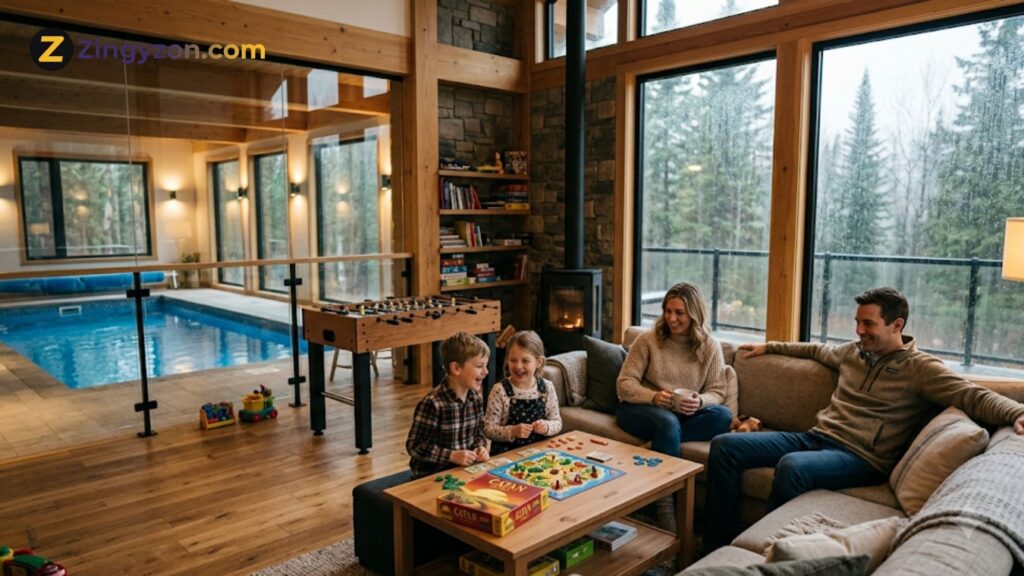
Luxury extras may include a private pool, hot tub, cinema room, games area, rooftop terrace, gym, boat dock or private chef service.
Luxury amenities can enhance the trip, but they should not distract from missing essentials. A spectacular pool does not compensate for poor sleeping arrangements or unreliable air conditioning.
Confirm whether special facilities are available throughout the year. Pools may not be heated automatically, fireplaces may be seasonal and outdoor spaces may be affected by local weather conditions.
6. Review the Kitchen According to Your Meal Plans
A kitchen can reduce dining expenses and make the stay more convenient, particularly for families and larger groups. However, the word “kitchen” can describe anything from a fully equipped cooking space to a small area with a microwave and refrigerator.
Check whether the property provides:
- Oven and stove
- Refrigerator and freezer
- Microwave
- Coffee maker
- Kettle
- Dishwasher
- Pots and pans
- Cooking utensils
- Plates and glasses
- Dining seats
- Outdoor cooking facilities
Ask whether basic items such as salt, oil, coffee, washing-up liquid and bin bags are supplied. These details vary widely between rentals.
Travellers with food allergies or strict dietary needs may prefer preparing their own meals, making a properly equipped kitchen especially important.
7. Read Recent Reviews Strategically
The overall star rating provides a quick impression, but the written reviews usually contain more useful information.
Focus on recent reviews discussing:
- Cleanliness
- Accuracy of photographs
- Host communication
- Noise
- Bed comfort
- Wi-Fi quality
- Water pressure
- Air conditioning
- Neighbourhood safety
- Check-in experience
- Maintenance problems
- Deposit disputes
One unusual complaint should not automatically eliminate a property. Look for repeated patterns.
If several guests mention weak Wi-Fi, difficult parking or construction noise, assume the issue may still exist unless the host confirms that it has been resolved.
Pay attention to how the owner or management company responds to criticism. A calm, professional response may demonstrate good problem-solving, while aggressive replies can indicate how future disputes might be handled.
8. Confirm That the Listing Is Authentic
Rental scams can involve properties that do not exist, copied photographs, hijacked listings or people pretending to represent legitimate owners.
The US Federal Trade Commission recommends searching for the property address and the name of the owner or rental company online. If the same home appears under different names, prices or contact details, further investigation is needed. The FTC also warns against pressure to make an immediate decision and advises travellers not to pay for rentals through wire transfers, prepaid cards or gift cards.
Before paying:
- Search the property photographs online.
- Verify the rental company’s website.
- Compare the listing across platforms.
- Speak directly with the host or agent.
- Request a written agreement.
- Use a payment method offering reasonable protection.
- Avoid deals that appear far below comparable prices.
- Keep copies of messages, receipts and policies.
A professional website alone does not guarantee legitimacy. Verification should take place before any large payment is transferred.
9. Check Local Vacation-Rental Rules
Short-term rental rules differ between cities, neighbourhoods and individual buildings. A listing being visible online does not necessarily prove that the property is legally permitted for short stays.
Miami Beach, for example, states that vacation rentals lasting less than six months and one day are prohibited in all single-family homes and in many multifamily properties located within certain zoning districts. Approved rentals may need appropriate zoning permission, a business-tax receipt and a resort-tax account.
Before booking, ask the host whether the property has the licences, registrations and permissions required by the destination.
Travellers should also review:
- Homeowners’ association rules
- Building regulations
- Noise restrictions
- Parking limitations
- Guest-registration procedures
- Maximum occupancy
- Minimum-stay requirements
- Rules concerning events
This is particularly important when planning a party, wedding dinner, business event or professional photoshoot.
10. Examine Property-Specific Conditions
Each rental may have different check-in, visitor, event and pet policies.
For example, the listing for Villa Nova Miami Beach states that the property can accommodate up to twelve guests, with check-in at 4:00 p.m. and check-out at 11:00 a.m. It also advises that events may be restricted, pets require prior approval and an additional fee, and guests must provide a signed rental agreement and valid identification.
This illustrates why travellers should read the complete listing rather than looking only at photographs and headline features.
Check whether the property has rules covering:
- Outside visitors
- Parties and events
- Music and noise
- Smoking
- Pets
- Children
- Commercial photography
- Boats or water equipment
- Parking
- Minimum renter age
Obtain approval in writing for anything outside an ordinary residential stay.
11. Understand the Cancellation Policy
Travel plans can change because of illness, transport disruption, weather or personal emergencies. The cancellation policy determines how much money can be recovered.
Review:
- Free-cancellation deadline
- Percentage refunded
- Non-refundable booking amount
- Date-change options
- Rules for shortened stays
- Weather cancellation terms
- Host cancellation procedures
- Refund processing time
Do not assume that serious weather automatically qualifies for a refund. Some contracts provide refunds only when authorities prohibit access or the property becomes uninhabitable.
Travel insurance may provide protection for certain covered circumstances, but exclusions, limits and documentation requirements should be checked before purchase.
12. Evaluate Check-In and Guest Support
A smooth arrival is especially important after a long flight or road journey.
Ask how guests will enter the property. Common methods include:
- Personal host greeting
- Concierge check-in
- Keypad
- Lockbox
- Smart lock
- Reception desk
Confirm what happens if the flight is delayed or the group arrives late at night.
Also determine who will be available if the air conditioning stops working, a key is lost or a plumbing issue occurs. A beautiful property becomes far less attractive when no one responds to urgent problems.
Professional management services may offer dedicated guest assistance, but response hours and emergency procedures should still be verified.
13. Consider Accessibility and Different Guest Needs
A property described as spacious is not automatically accessible.
Travellers with mobility requirements should ask specific questions concerning:
- Steps at the entrance
- Lift availability
- Ground-floor bedrooms
- Doorway width
- Walk-in showers
- Bathroom handrails
- Pool access
- Path surfaces
- Accessible parking
- Distance between rooms
Families may need cots, highchairs, stair gates, pool fencing or child-safe outdoor areas. Older travellers may prefer bedrooms away from steep staircases and bathrooms with easy access.
Do not rely entirely on general accessibility labels. Ask for photographs, measurements or a video call when necessary.
14. Review Safety and Security Features
Vacation homes should have suitable safety measures for their location and facilities.
Look for:
- Smoke alarms
- Carbon-monoxide detectors
- Fire extinguishers
- Secure door and window locks
- Pool barriers where appropriate
- Exterior lighting
- Emergency instructions
- First-aid supplies
- Clearly marked exits
- Safe electrical installations
Waterfront homes, swimming pools, balconies and rooftop areas require extra care when children are travelling.
Privacy is also important. Ask whether outdoor cameras, doorbell cameras or noise-monitoring devices are installed. Their locations and purpose should be disclosed, and indoor surveillance in private guest areas should not be accepted.
15. Compare the Rental Agreement With the Listing
Before signing, ensure the agreement matches the information provided online.
Verify:
- Property address
- Booking dates
- Total price
- Deposit amount
- Guest capacity
- Included services
- Cancellation terms
- Damage responsibilities
- Event restrictions
- Check-in and check-out times
- Pet approval
- Refund conditions
Question any clause that appears inconsistent with the listing.
Also check who is responsible for problems involving utilities, appliances, pool equipment or internet access. The contract should explain the procedure for reporting damage and resolving disputes.
Never sign a blank or incomplete agreement.
16. Avoid Choosing Through Photographs Alone
Professional photography can make rooms appear larger and brighter. Wide-angle lenses may change the perception of space, while older photographs may not show the current condition.
Look for:
- Multiple angles of every room
- Exterior and neighbourhood images
- Bathroom photographs
- Kitchen details
- Views from windows
- Pool and garden condition
- Parking arrangements
- Floor plans
- Recent guest photographs
Ask when the images were taken and whether any significant changes have occurred since then.
A live video tour can be worthwhile for expensive bookings, extended stays or important group events.
A Practical Vacation Home Checklist
Before confirming your reservation, make sure you have checked:
- Exact guest capacity
- Real sleeping arrangements
- Number of bathrooms
- Location and journey times
- Final price with all fees
- Deposit and refund terms
- Kitchen facilities
- Wi-Fi and climate control
- Parking
- Recent reviews
- Listing authenticity
- Local rental permissions
- Cancellation policy
- Guest-support details
- Accessibility
- Safety equipment
- Event and visitor rules
- Written rental agreement
Taking a few extra minutes to review these points can prevent expensive misunderstandings.
Common Mistakes to Avoid
Travellers frequently make mistakes such as:
- Booking only by the lowest nightly price
- Ignoring cleaning and service fees
- Assuming maximum occupancy means private beds
- Choosing an isolated property without transport
- Failing to read the cancellation policy
- Paying through an unsafe method
- Not checking recent reviews
- Planning an event without written approval
- Assuming every rental is legally authorised
- Overlooking accessibility requirements
- Booking before confirming the group size
The best property is not necessarily the largest or most luxurious. It is the one that aligns most closely with the trip.
Final Thoughts
Learning how to find the right vacation home requires balancing appearance with practical details. Start by defining the purpose of the trip, confirming the group’s needs and choosing a location that supports the itinerary.
Compare the complete cost rather than the advertised nightly price. Read recent reviews, verify the listing and examine the rental agreement before paying. Important conditions relating to visitors, pets, events, deposits and cancellations should be confirmed in writing.
Luxury features can improve a trip, but comfort, legality, safety and reliable guest support should come first.
For more travel planning, accommodation and lifestyle guidance, visit zingyzon.com.
A carefully selected vacation home can give travellers more privacy, flexibility and space than conventional accommodation. The key is to choose according to how the group will actually use the property—not simply how impressive it appears in photographs.

Keep Exploring Zingyzon.com
Read more Zingyzon SEO, digital marketing, online earning, business, and technology guides for Australia, USA, and global readers.