
Best uPVC Casement Windows for Homes: Buying Guide
Choosing new windows can appear straightforward until quotations begin arriving. One supplier promotes extra frame chambers, another focuses on triple […]
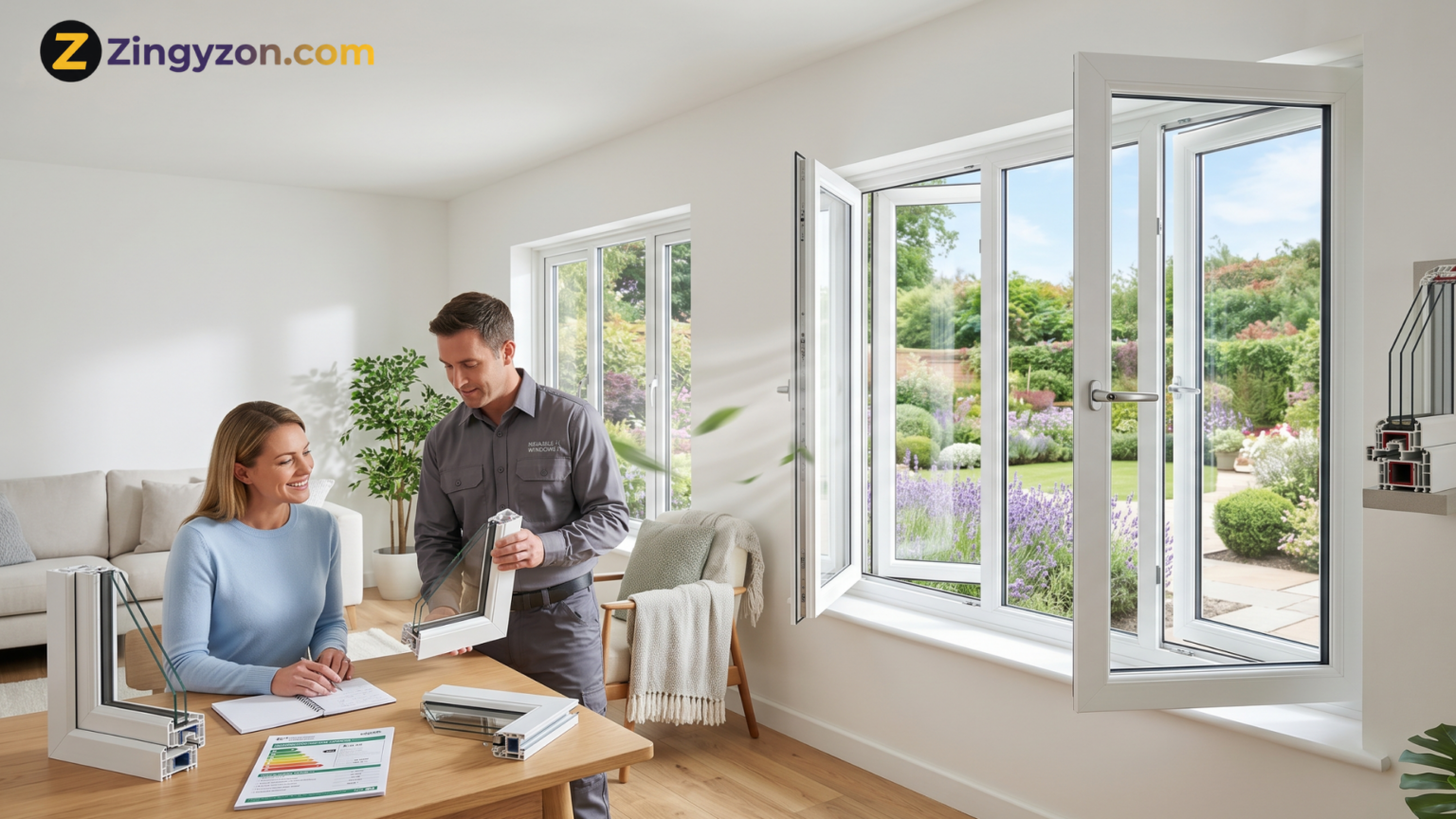
Choosing new windows can appear straightforward until quotations begin arriving. One supplier promotes extra frame chambers, another focuses on triple glazing, and a third promises premium security hardware. Prices may differ considerably even when the windows look almost identical.
The best uPVC casement windows are not necessarily the products with the longest feature list. They are windows whose frame, glass, seals, hardware, drainage system, and installation method work together for your climate, room, building design, and budget.
Casement windows remain a popular choice because their hinged sashes can provide effective ventilation and a strong compression seal when closed. Combined with rigid uPVC profiles, modern glazing, and suitable locking hardware, they can offer a practical balance of energy performance, security, appearance, and maintenance.
This guide explains what homeowners should compare before ordering, which specifications genuinely matter, and how to avoid paying for features that may not improve real-world performance.
What Are uPVC Casement Windows?
A casement window has one or more sashes attached to the frame by hinges. Depending on the design, the sash may open outward or inward from the side. Top-hung versions, commonly called awning windows in some markets, open from the bottom and are hinged at the top.
The term uPVC means unplasticized polyvinyl chloride, also written as PVC-U or PVCu. It is a rigid material commonly used to manufacture window and door profiles.
Modern uPVC casement windows may include fixed panes, side-opening sashes, top-opening vents, decorative glazing bars, different colours, and several hardware configurations.
Unlike sliding windows, a properly adjusted casement sash usually closes against compression seals around its perimeter. Multipoint locking hardware can pull the sash evenly toward the frame, helping control air and water leakage.
Actual performance still depends on the complete window system and the quality of installation. A premium profile fitted poorly may perform worse than a moderately priced window installed correctly.
Why Homeowners Choose uPVC Casement Windows
uPVC casement windows suit many homes because they combine practical performance with relatively simple maintenance.
Their main potential advantages include:
- Good ventilation when the sash is fully opened
- Strong perimeter sealing when correctly closed
- Resistance to rot and corrosion
- Minimal painting or refinishing
- Compatibility with double or triple glazing
- A wide choice of colours and finishes
- Multipoint locking options
- Suitability for new construction and replacement projects
Casement windows can also help direct breezes into a room. The open sash may catch air moving along the outside wall and guide it indoors.
However, they are not ideal for every location. An outward-opening sash can obstruct a narrow walkway, balcony, driveway, or external shutter. Large sashes may place greater strain on hinges, while strong winds can make an open window difficult to control.
The best choice therefore depends on how the window will be used, not only on its appearance in a showroom.
Start With the Whole-Window Performance
One of the most common buying mistakes is comparing only the glass. A supplier may promote low-emissivity glass, argon gas, or triple glazing without explaining the tested performance of the complete window.
Heat can pass through the glass, frame, spacer, sash, seals, and installation joints. For this reason, buyers should request a whole-window U-value or U-factor rather than a centre-of-glass figure.
Certification systems vary by country. In the United States, National Fenestration Rating Council labels provide comparable whole-product ratings. Other countries use local energy labels, building standards, or accredited laboratory reports.
Always ask whether the value applies to:
- The complete window or only the glass
- The exact window size being quoted
- The selected glazing and frame combination
- A fixed window or an operable casement
- An independently tested product or an estimated configuration
A small change in glass, spacer, reinforcement, sash size, or opening arrangement can alter the final rating.
Understand U-Value or U-Factor
U-value measures how readily heat passes through a building component. In simple terms, a lower U-value usually indicates better insulation.
The units and numerical ranges differ between countries. U-factor in North America is commonly expressed in Btu per hour per square foot per degree Fahrenheit, while many other markets use U-values in watts per square metre kelvin.
Do not compare numbers expressed in different units without conversion.
A low U-value can help reduce unwanted heat loss during cold weather and heat transfer through the window during hot conditions. It may also improve comfort near the glass because the internal surface temperature is better controlled.
The lowest available number is not automatically the most economical choice. Triple glazing and highly insulated frames may provide valuable improvements in severe climates, but the additional cost may have a longer payback period in mild regions.
Choose a rating that satisfies local building requirements and suits the home’s climate, orientation, heating system, and cooling demand.
Match Solar Heat Gain to the Climate
Solar heat gain coefficient, commonly shortened to SHGC, describes how much solar heat passes through a window. Some countries use a similar measurement called the g-value.
A lower SHGC blocks more solar heat. This can be useful in hot climates, especially for east- and west-facing windows exposed to intense morning or afternoon sun.
A higher SHGC allows more solar energy indoors. That may be useful for appropriately shaded, sun-facing windows in cold climates where passive winter heat is desirable.
One glass specification does not always suit every side of a house. A west-facing living-room window may need stronger solar control than a shaded north-facing opening.
External shading, roof overhangs, trees, neighbouring buildings, curtains, and blinds also affect solar performance. Consider the complete design rather than expecting glass alone to solve overheating.
Compare Visible Light as Well as Heat Control
Visible transmittance measures the proportion of daylight that passes through the window. A higher number generally means more natural light.
Some solar-control and low-emissivity coatings reduce visible light as well as heat. This may be acceptable in an exposed room with large areas of glass, but it can make a small or shaded room feel unnecessarily dark.
Compare glass samples in natural daylight rather than relying only on photographs. Look through the glass from different angles and check for tint, reflectivity, distortion, and colour changes.
The goal is a comfortable balance among insulation, solar control, glare reduction, privacy, and daylight. The “best” glass is the one that meets the room’s needs without solving one problem by creating another.
Check Air Leakage and Weather Resistance
Drafts do not occur only because glass is poorly insulated. Air can pass through sash joints, damaged seals, hardware gaps, drainage areas, and poorly sealed installation joints.
Ask suppliers for tested air-permeability, water-penetration, and wind-load results where these are available. Lower air leakage generally indicates a tighter product.
Properties in exposed coastal, storm-prone, or high-rise locations may need stronger performance than sheltered suburban homes.
Weather seals should form a continuous barrier around the sash. Inspect corner joints and ask whether replacement gaskets are available if the original seals deteriorate.
The frame must also contain correctly designed drainage paths. Water entering the outer pressure chamber should be directed safely outside rather than trapped inside the profile or allowed to leak into the wall.
Do Not Buy by Chamber Count Alone
uPVC window profiles contain internal chambers that can improve stiffness, insulation, drainage, and hardware positioning. Suppliers sometimes promote a higher chamber count as automatic proof of better quality.
The number alone does not reveal the full performance of the system. Chamber dimensions, profile depth, material formulation, reinforcement, seals, fabrication quality, and glazing all matter.
A well-designed five-chamber profile can outperform a poorly designed system advertised with more chambers.
Ask for tested whole-window results instead of selecting a frame solely because it has the largest number printed in a brochure.
Also consider the amount of visible frame. A deep or bulky profile may improve some performance characteristics but reduce the glazed area and natural light. Slim sightlines may be attractive, provided the system can safely support the required sash and glass sizes.
Examine Reinforcement and Sash Size
Large casement sashes must resist their own weight, repeated operation, wind pressure, and temperature changes.
Depending on the system and window dimensions, uPVC profiles may use steel, composite, or other structural reinforcement. Reinforcement requirements should be determined by the system supplier’s engineering rules rather than omitted simply to reduce cost.
Ask the installer to confirm:
- Maximum permitted sash dimensions
- Maximum glass and sash weight
- Reinforcement used in the frame and sash
- Hinge capacity
- Required number of locking points
- Wind-load suitability for the property
- Whether the proposed design is covered by testing
Oversized opening sashes may sag, rub against the frame, become difficult to lock, or place excessive stress on hardware.
It can be better to divide a very large opening into fixed and operable sections rather than forcing one sash to do everything.
Choose Double or Triple Glazing Carefully
Double glazing contains two panes separated by a sealed cavity. Triple glazing adds a third pane and another cavity.
Triple glazing can improve thermal insulation and internal surface temperatures, particularly in colder climates. It may also increase weight, cost, frame depth, and stress on hinges.
It does not automatically provide the best noise reduction. Acoustic performance depends on the thickness and type of each pane, cavity widths, laminated glass, airtightness, and installation quality.
A carefully designed double-glazed acoustic unit may control certain noise frequencies better than a basic triple-glazed unit with equal pane thicknesses.
For most buyers, the decision should consider:
- Local winter and summer temperatures
- Heating and cooling costs
- External noise
- Window orientation
- Structural capacity
- Available budget
- Expected length of ownership
Request the tested whole-window performance for both options before deciding whether the additional pane provides worthwhile value.
Look for Low-E Glass, Gas Fill, and Warm-Edge Spacers
Low-emissivity, or Low-E, coatings are microscopically thin layers that reduce radiant heat transfer. Different Low-E coatings are designed for different climates and solar-control requirements.
Insulating-glass cavities may contain argon or another gas to reduce heat transfer compared with ordinary air. The unit must remain properly sealed for the gas fill to provide lasting benefit.
A spacer separates the panes around their perimeter. Traditional highly conductive spacers can create a colder glass edge, while warm-edge systems are designed to reduce heat transfer near the perimeter.
Rather than purchasing these features by name, request the certified U-value, SHGC, visible transmittance, and warranty for the complete configuration. Performance figures reveal whether the combination delivers a meaningful improvement.
Prioritise Security Hardware
The frame material is only one part of window security. Locks, keeps, handles, hinges, glass, reinforcement, and installation anchors all influence resistance to forced entry.
A good casement window may include multipoint locking hardware that secures the sash at several locations. Hinge-side protection can help prevent the opposite side from becoming a weak point.
Consider laminated security glass for vulnerable ground-floor or easily accessible windows. Unlike ordinary glass, laminated glass contains an interlayer that helps hold broken fragments together and can delay entry.
Ask the supplier which recognised security standard the complete window has been tested against. A collection of branded components does not necessarily mean that the assembled window has passed a full security test.
For bedrooms, also consider emergency escape requirements. A highly secure window still needs to provide the required clear opening where local codes identify it as an emergency egress window.
Specify Safety Glass Where Required
Building regulations commonly require safety glazing in locations where accidental human impact is more likely, such as near doors, close to floor level, in bathrooms, beside stairs, or in other hazardous positions.
Depending on the application, the specification may call for tempered or laminated glass.
Tempered glass is heat treated to improve strength and break into relatively small fragments. Laminated glass tends to remain attached to its interlayer after breakage.
These products do not perform identically, so the correct choice depends on local regulations and the intended safety function.
Do not assume that every pane in a quotation is safety glass. Ask the supplier to identify each glazing type on the window schedule and confirm compliance with the applicable building code.
Plan Ventilation Without Sacrificing Safety
Casement windows can provide generous natural ventilation, but opening size and direction require planning.
A side-hung sash may catch a breeze effectively, while a top-hung sash may allow limited ventilation during light rain. However, open windows can create fall hazards for children and may interfere with paths or balconies.
Opening restrictors, suitable hardware, guarding, or controlled opening distances may be required in some locations.
Trickle vents or other background-ventilation devices may also be necessary under local building regulations. Their size and acoustic performance should be considered before ordering because retrofitting them later can be difficult.
Insect screens are another consideration. Confirm whether the screen is fixed, removable, retractable, or compatible with the selected inward- or outward-opening configuration.
Consider Noise as a Complete-System Problem
Homeowners near traffic, airports, railways, schools, or commercial areas often expect new windows to eliminate outside sound.
Windows can reduce noise, but the result depends on more than the number of panes.
Effective acoustic design may use laminated glass, panes of different thicknesses, suitable cavity widths, airtight opening seals, and correctly sealed perimeter joints.
Walls, roofs, ventilation openings, doors, and structural gaps may still transmit noise after the windows are upgraded.
Ask for a tested sound-reduction rating for the complete window. Avoid relying on statements such as “triple glazing blocks all noise.” No practical residential window makes a room completely silent.
If ventilation is required, select acoustic vents or another strategy that does not undermine the performance of the new glass and seals.
Select Colours and Finishes for Long-Term Use
White remains a common uPVC finish, but contemporary windows are available in coloured foils, textured wood effects, and different internal and external colours.
Dark surfaces absorb more solar heat than light colours. The selected profile system and finish should therefore be approved for the property’s exposure and window size.
Ask whether the colour warranty differs from the structural profile warranty. Check coverage for peeling, bubbling, fading, cracking, and significant colour change.
View a full-size sample outdoors. Small showroom pieces may not accurately show how a dark or wood-effect finish will look across an entire façade.
The style should also suit the building. Frame proportions, mullion positions, opening lines, glazing bars, handles, and sightlines can influence appearance more than colour alone.
Installation Quality Can Decide the Result
Even the best uPVC window will underperform if the opening is measured incorrectly or the perimeter is poorly sealed.
A professional installation should address structural fixing, alignment, drainage, insulation, air sealing, and weather protection.
The installer should not rely on cosmetic sealant alone. Gaps around the frame may require compatible insulation and separate interior and exterior seals appropriate to the wall construction and local climate.
The exterior connection should resist rain while allowing intended drainage. The interior connection should limit uncontrolled air and moisture movement.
The frame must remain square, level, and plumb. Incorrect fixing can twist the profile, making sashes difficult to operate or preventing seals from compressing evenly.
For replacements, ask whether the project includes full-frame removal or an insert installed inside the existing frame. Insert replacement may be less disruptive but can reduce the glass area and leave hidden problems uncorrected.
Compare Quotations Line by Line
A low quotation may exclude features included elsewhere. Request an itemised proposal showing:
- Profile system and depth
- Window dimensions and opening arrangement
- Frame and sash reinforcement
- Glass build-up and safety-glass locations
- Whole-window U-value
- SHGC or g-value
- Acoustic rating, if required
- Hardware and security standard
- Handles and restrictors
- Ventilation devices
- Insect screens
- Colour and finish
- Removal and disposal of existing windows
- Interior and exterior finishing
- Installation method
- Product and labour warranties
- Taxes, permits, and additional charges
Compare like with like. A quotation for clear double glazing should not be evaluated directly against another that includes laminated acoustic glass, Low-E coatings, upgraded hardware, and full-frame installation.
Understand the Warranty Before Ordering
Window warranties often separate the frame, insulating-glass unit, hardware, surface finish, and installation labour.
Read the exclusions carefully. Coverage may be limited for coastal exposure, improper cleaning, building movement, condensation, accidental damage, or unauthorised modifications.
Ask who handles a claim if the installer stops trading. A long manufacturer warranty may cover replacement components but not the labour, access equipment, decoration, or glass removal needed to fit them.
Confirm whether the warranty is transferable to a future owner and whether maintenance records are required.
A reliable supplier should also have access to replacement hinges, locks, handles, gaskets, and glazing units. Repairability can be more valuable than a dramatic warranty headline.
Best Configurations for Different Rooms
There is no single specification for every opening.
Living rooms: Prioritise natural light, balanced solar control, comfortable internal surface temperatures, and attractive proportions.
Bedrooms: Consider ventilation, emergency egress, security, blackout treatments, and acoustic glass where outside noise affects sleep.
Kitchens: Choose easy-to-operate handles and confirm the sash will not conflict with taps, worktops, cabinets, or extraction equipment.
Bathrooms: Specify privacy glass, suitable ventilation, corrosion-resistant hardware, and safety glazing where required.
Ground-floor rooms: Give additional attention to laminated glass, multipoint locks, hinge protection, and secure ventilation.
Exposed or coastal homes: Request appropriate wind, water, corrosion, and hardware performance rather than choosing a standard sheltered-location specification.
Common Buying Mistakes
Homeowners frequently regret focusing on one headline feature while ignoring the complete system.
Common mistakes include:
- Selecting by chamber count alone
- Comparing glass-only U-values
- Assuming triple glazing always gives the best sound control
- Choosing identical solar-control glass for every orientation
- Ordering opening sashes that are too large
- Ignoring emergency escape dimensions
- Allowing outward-opening windows to obstruct access
- Forgetting ventilation or insect screens
- Choosing the cheapest installer without reviewing the method
- Accepting verbal warranties
- Paying the full amount before inspection
- Failing to check colour, handle, and opening direction on the final schedule
A clear written specification prevents many disagreements and makes competing quotations easier to evaluate.
Final Pre-Purchase Checklist
Before signing the contract, confirm that:
- The product meets local energy and building requirements.
- Performance ratings apply to the complete window.
- Glazing suits the climate and orientation.
- Safety glass is specified in required locations.
- Opening sizes satisfy ventilation and egress needs.
- Hardware has suitable security and corrosion resistance.
- Sash dimensions remain within system limits.
- Installation details are included in writing.
- Product and labour warranties are clear.
- The final drawings show opening directions, colours, handles, and vents.
- The payment schedule leaves an amount due after final inspection.
- The installer explains maintenance and adjustment requirements.
Frequently Asked Questions
Are uPVC casement windows energy efficient?
They can be highly energy efficient when the frame, glass, seals, spacer, hardware, and installation are appropriately designed. Compare certified whole-window ratings rather than judging the material alone.
Is double or triple glazing better?
Triple glazing may provide better insulation, especially in cold climates, but it costs and weighs more. High-quality double glazing may be more suitable in mild climates or where the additional improvement is small.
How long do uPVC windows last?
Service life depends on material quality, climate, exposure, fabrication, hardware, installation, and maintenance. Warranties and access to replacement parts are more useful than a universal lifespan claim.
Do uPVC windows need maintenance?
They do not normally require painting, but they still need cleaning, drainage-channel inspection, seal checks, hardware lubrication where recommended, and occasional adjustment.
Are casement windows secure?
They can provide strong security when equipped with suitable multipoint locks, reinforcement, hinge-side protection, secure glass, and proper anchors. Ask for complete-window security testing.
Do new windows stop condensation?
Energy-efficient windows can improve internal glass temperatures, but condensation also depends on indoor humidity, ventilation, outdoor conditions, and thermal bridges. Replacing windows alone may not solve excessive moisture.
Final Thoughts
The best uPVC casement windows are not defined by one brand, one chamber count, or one type of glazing. They combine tested whole-window performance, appropriate solar control, durable hardware, safe opening arrangements, suitable security, and competent installation.
Begin with the needs of each room and the climate around the home. Compare U-value, solar heat gain, visible light, air leakage, weather resistance, acoustic performance, and security using documented figures.
Then examine the details that influence long-term ownership: replacement parts, finish durability, cleaning, warranties, and the installer’s method.
A well-specified window can improve comfort, daylight, ventilation, appearance, and energy performance. A poorly specified or badly installed product may create drafts, overheating, water leakage, operational problems, and avoidable repair costs.
Taking time to compare the complete system—not just the sales claims—offers the best chance of making a purchase that continues to perform for years.
For more practical home-improvement, property, and buying guides, explore zingyzon.com.



Keep Exploring Zingyzon.com
Read more Zingyzon SEO, digital marketing, online earning, business, and technology guides for Australia, USA, and global readers.