
How Light Installations Are Transforming Parks and Public Spaces
Parks and public spaces are no longer being designed only for daytime use. Cities, communities, event planners, and cultural organizations […]
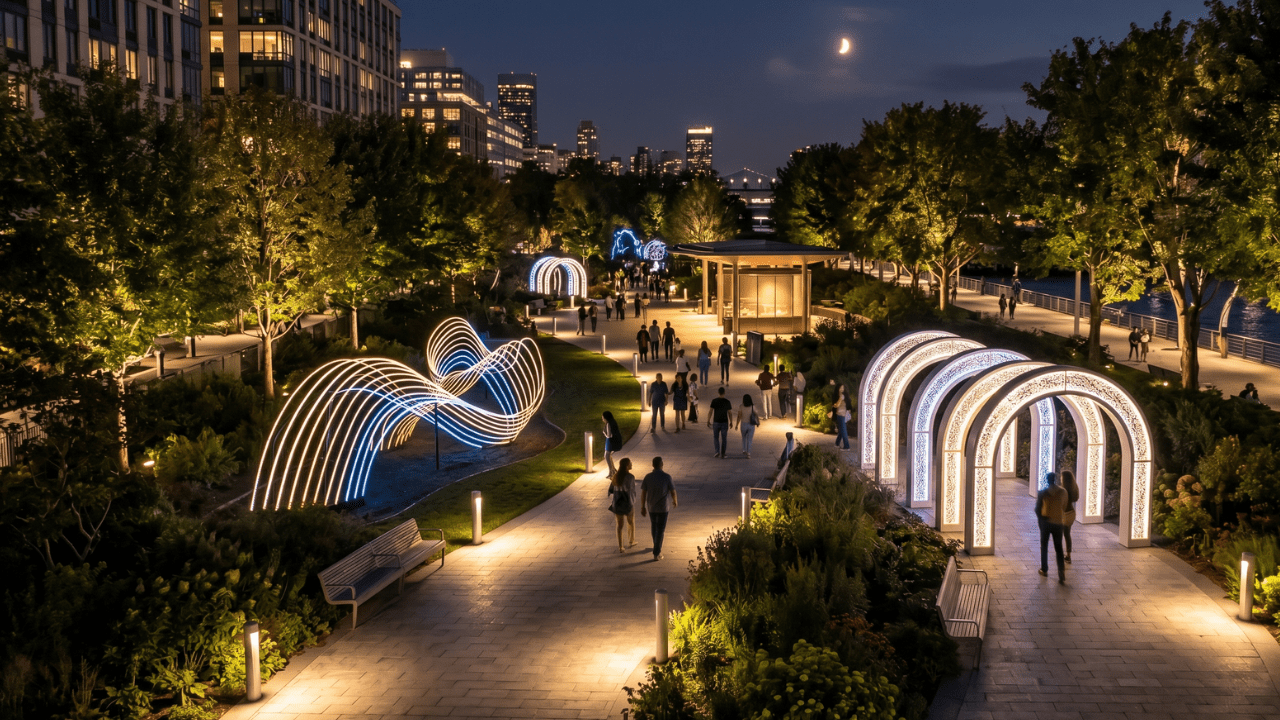
Parks and public spaces are no longer being designed only for daytime use. Cities, communities, event planners, and cultural organizations are increasingly using light installations to make outdoor spaces more active, welcoming, and memorable after sunset. What was once a simple need for visibility has become a creative design strategy that supports safety, placemaking, tourism, and community life.
After dark, people experience public spaces differently. A walkway that feels ordinary in daylight can feel uncertain at night if it is poorly lit. A plaza that feels empty after sunset can become lively when lighting adds atmosphere, visibility, and a reason to stay. This is why modern light installations are transforming parks and public spaces into evening destinations rather than empty spaces that people avoid.
This article explains how lighting is changing the nighttime identity of parks, why thoughtful design matters, and how communities can use artistic and functional lighting without creating glare, energy waste, or unnecessary light pollution.
Why Parks Need Better After-Dark Design
Public spaces are most successful when people feel comfortable using them at different times of the day. In many cities, work schedules, hot daytime temperatures, and family routines mean that evening hours are often the best time for recreation. Lighting helps extend the practical life of a park beyond sunset.
Good after-dark design is not only about adding brightness. It is about making paths visible, entrances easy to understand, seating areas more comfortable, and gathering points more inviting. When the lighting plan supports how people actually move through a place, parks can feel more open, useful, and inclusive.
Research and public health evaluations show that people are more likely to use outdoor spaces when they feel safe and welcome. A successful nighttime park usually combines lighting with programming, staff presence, clear visibility, maintenance, and community activity.
From Basic Illumination to Creative Light Installations
Traditional park lighting often focused on poles, fixtures, and basic path visibility. Modern light installations go further by adding identity and emotion. They may include illuminated art, projected patterns, glowing arches, interactive pathways, color-changing trees, seasonal displays, or subtle architectural lighting around plazas and fountains.
The best installations do not make a park look like a shopping center. Instead, they highlight the natural and cultural character of the space. A wooded trail may use warm low-level lighting to protect the atmosphere. A civic plaza may use sculptural light features to create a central gathering point. A waterfront promenade may use reflection, movement, and color to connect the design to water.
Creative lighting can also help visitors remember a place. When people photograph a glowing garden, a lit bridge, or a seasonal installation, the public space gains visibility online and becomes part of the city’s identity.
How Light Installations Improve Safety and Visibility
One of the strongest reasons for lighting parks after dark is visibility. People need to see steps, path edges, seating, signs, slopes, cyclists, and other users. Poor lighting can create blind spots, confusing transitions, and areas where people feel unsure about entering.
Thoughtful light installations can improve perceived safety by making routes clearer and reducing harsh contrast between bright and dark areas. A path should not be so dim that people cannot see ahead, but it should also not be so bright that glare makes vision worse. Balanced lighting is usually safer than extreme brightness.
Lighting also works best when it supports natural surveillance. Open sightlines, visible entrances, and active gathering areas help people feel connected to others in the space. In this way, lighting becomes part of a wider public-space strategy rather than a standalone solution.
Creating a Stronger Sense of Place
Light has the power to change the emotional character of a public space. Warm lighting can make a plaza feel calm and intimate. Colorful artistic lighting can make a park feel festive and playful. Carefully lit trees, sculptures, bridges, and water features can create a nighttime identity that is completely different from the daytime experience.
A strong sense of place matters because people return to public spaces that feel special. When lighting supports the story of a park, visitors do not only walk through it; they remember it. This can help local governments, tourism boards, and event organizers create more meaningful community experiences.
For example, a simple lawn can become a family-friendly evening picnic area with soft perimeter lighting. A quiet pathway can become a romantic walking route with low-level warm lights. A central plaza can become a cultural stage with temporary projection mapping and seasonal installations.
Turning Parks Into Evening Destinations
Light installations can help parks become destinations after dark. Evening markets, outdoor concerts, art walks, cultural festivals, movie nights, winter displays, and holiday events all depend on lighting to create atmosphere and guide movement.
When a park has an appealing nighttime experience, people may stay longer and explore nearby restaurants, shops, and local attractions. This can support small businesses and create more activity in areas that may otherwise become quiet after sunset.
Cities are also using lighting to make public spaces more flexible. A park can feel calm on a regular weekday evening, festive during a seasonal event, and dramatic during a temporary art installation. This flexibility makes lighting a valuable tool for both everyday use and special programming.
Where a Park Light Show Fits Into Public Space Strategy
A well-planned park light show can do more than entertain visitors. It can introduce people to a park they may not normally visit, support seasonal tourism, and create a shared community memory. The most effective shows are designed around the space itself, not forced into it.
For a public park, the goal should be more than bright colors. Designers should think about visitor flow, seating, accessibility, queueing, emergency access, neighborhood impact, noise, glare, energy use, and how the lighting affects wildlife. A beautiful installation should still respect the surrounding environment.
Temporary light shows can also be a useful testing tool. If visitors respond well to a seasonal installation, city planners may use that feedback to improve permanent lighting, signage, pathways, or event areas in the future.
Smart Lighting and Energy Efficiency
Modern light installations are increasingly connected to smart lighting systems. These systems may use timers, dimming schedules, motion sensors, remote monitoring, or programmable color settings. This allows lighting to support activity when people are present and reduce output when the space is quiet.
Energy efficiency matters because parks can be expensive to operate. LED technology, careful fixture placement, and targeted lighting can reduce wasted energy while improving the visitor experience. The goal is not to light every inch of a park. The goal is to light the right places at the right time and at the right level.
Smart controls also make it easier to adjust lighting for events. A city can use brighter settings during a community festival, softer settings on normal evenings, and reduced lighting after park closing hours. This flexibility helps balance safety, operating cost, and environmental responsibility.
Designing With Wildlife and Night Skies in Mind
Public-space lighting should respect the natural environment. Parks often include trees, birds, insects, bats, water features, and habitat areas. Excessive blue-rich light, upward spill, and all-night brightness can affect wildlife behavior and reduce the quality of the night sky.
Responsible lighting principles recommend using light only where it is needed, aiming it carefully, keeping brightness low enough for the task, controlling when it is on, and using warmer color temperatures where possible. These principles are especially important in parks because the goal is to invite people without overwhelming the landscape.
Good design uses shielding, downward aiming, warm tones, and dimming. It also avoids lighting sensitive habitat areas unless there is a clear safety or operational need. The best public spaces after dark feel welcoming to people while still protecting the character of the night.
Accessibility and Inclusive Nighttime Spaces
Lighting can make parks more inclusive when it helps different users move comfortably. Families with children, older adults, runners, cyclists, wheelchair users, and people with low vision may all depend on clear path edges, visible signs, and predictable transitions between light and shadow.
Inclusive lighting also means listening to the community. Some people may want brighter paths for running. Others may be concerned about glare near homes, light entering windows, or impacts on quiet areas. A strong public-space lighting plan balances these needs through consultation, testing, and careful design.
Accessibility should be considered from the start. Lighting should help people identify entrances, restrooms, ramps, steps, transit connections, emergency points, and exits. It should also avoid harsh glare that can make surfaces harder to read.
Planning Considerations Before Installing Park Lighting
Before installing a permanent or temporary light installation, planners should begin with a clear purpose. Is the project designed to improve safety, support evening exercise, attract visitors, host events, create public art, or improve wayfinding? A clear purpose helps prevent over-lighting and unnecessary spending.
Next, planners should study how people use the space. Main paths, entrances, parking areas, plazas, playground edges, restrooms, and event lawns may need different lighting levels. A single lighting approach rarely works for the entire park.
Maintenance is also important. Beautiful fixtures can quickly become a problem if they are difficult to clean, repair, or replace. Public-space lighting should be durable, weather-resistant, vandal-resistant where needed, and supported by a realistic maintenance plan.
Common Mistakes to Avoid
One common mistake is assuming that brighter lighting is always better. Excessive brightness can create glare, waste energy, disturb nearby residents, and reduce the comfort of the space. Another mistake is placing lighting without considering how people actually walk, gather, and leave the park.
Poor color choices can also reduce quality. Very cold light may feel harsh in natural settings, while overly colorful lighting may distract from the landscape if used every night. Artistic lighting should be intentional, not random.
Finally, planners should avoid treating lighting as a one-time decoration. Successful nighttime public spaces require programming, maintenance, safety planning, signage, and community involvement. Lighting is powerful, but it works best as part of a complete public-space strategy.
The Future of Parks After Dark
The future of after-dark public spaces will likely combine art, technology, sustainability, and public health. Parks may use interactive installations that respond to movement, low-energy LEDs that adapt to activity levels, projection art for cultural storytelling, and temporary displays that bring visitors back throughout the year.
As cities become more crowded and evening recreation becomes more important, parks will need to serve people beyond daylight hours. Light installations can help meet that need when they are designed with care.
The most successful projects will not simply make parks brighter. They will make parks more useful, more beautiful, more inclusive, and more respectful of the nighttime environment.
Final Thoughts
Light installations are transforming parks and public spaces after dark by changing how people see, use, and remember outdoor places. They improve visibility, support evening activity, create cultural experiences, and help communities reconnect with shared spaces after sunset.
However, good lighting requires balance. Designers must consider safety, energy efficiency, glare, accessibility, wildlife, maintenance, and the character of the place. When these elements work together, lighting becomes more than decoration. It becomes a tool for public life.
For publishers, planners, and event organizers, the key lesson is simple: the best nighttime spaces are not the brightest spaces. They are the most thoughtful ones.
Frequently Asked Questions (FAQs)
What are light installations in parks?
Light installations are planned lighting features used to improve visibility, atmosphere, wayfinding, public art, and after-dark activity in parks or public spaces. They can include pathway lighting, illuminated sculptures, projection mapping, seasonal displays, and smart LED systems.
How do light installations make public spaces safer?
They can improve visibility, reduce confusing dark spots, guide people along safe routes, and make entrances or gathering areas easier to understand. Safety is strongest when lighting is combined with good design, maintenance, programming, and community presence.
Are park light shows good for tourism?
Yes, when planned well. A seasonal or cultural light show can attract visitors, encourage social sharing, support nearby businesses, and give a park a stronger nighttime identity.
Can outdoor lighting harm wildlife?
Yes, poorly designed lighting can affect nocturnal species, migration, insects, and habitat behavior. Warmer, shielded, lower-level, and time-controlled lighting can reduce negative impacts.
What is the best color temperature for park lighting?
Many responsible outdoor lighting recommendations prefer warmer light where possible because it can reduce harsh glare and limit blue-rich light. The right choice depends on the park use, safety needs, local standards, and environmental context.
Should every area of a park be lit after dark?
No. The best strategy is to light key routes, entrances, activity zones, and safety-critical areas while protecting quiet habitat areas and avoiding unnecessary glare or energy use.
How can cities save energy with public-space lighting?
Cities can use LEDs, smart controls, timers, dimming, motion sensors, targeted fixtures, and careful placement to reduce wasted light while still supporting safe and attractive nighttime use.



Keep Exploring Zingyzon.com
Read more Zingyzon SEO, digital marketing, online earning, business, and technology guides for Australia, USA, and global readers.