
Sofa Seat Depth Guide for Short People
A beautiful sofa can still be uncomfortable if your feet cannot reach the floor or your back cannot rest against […]
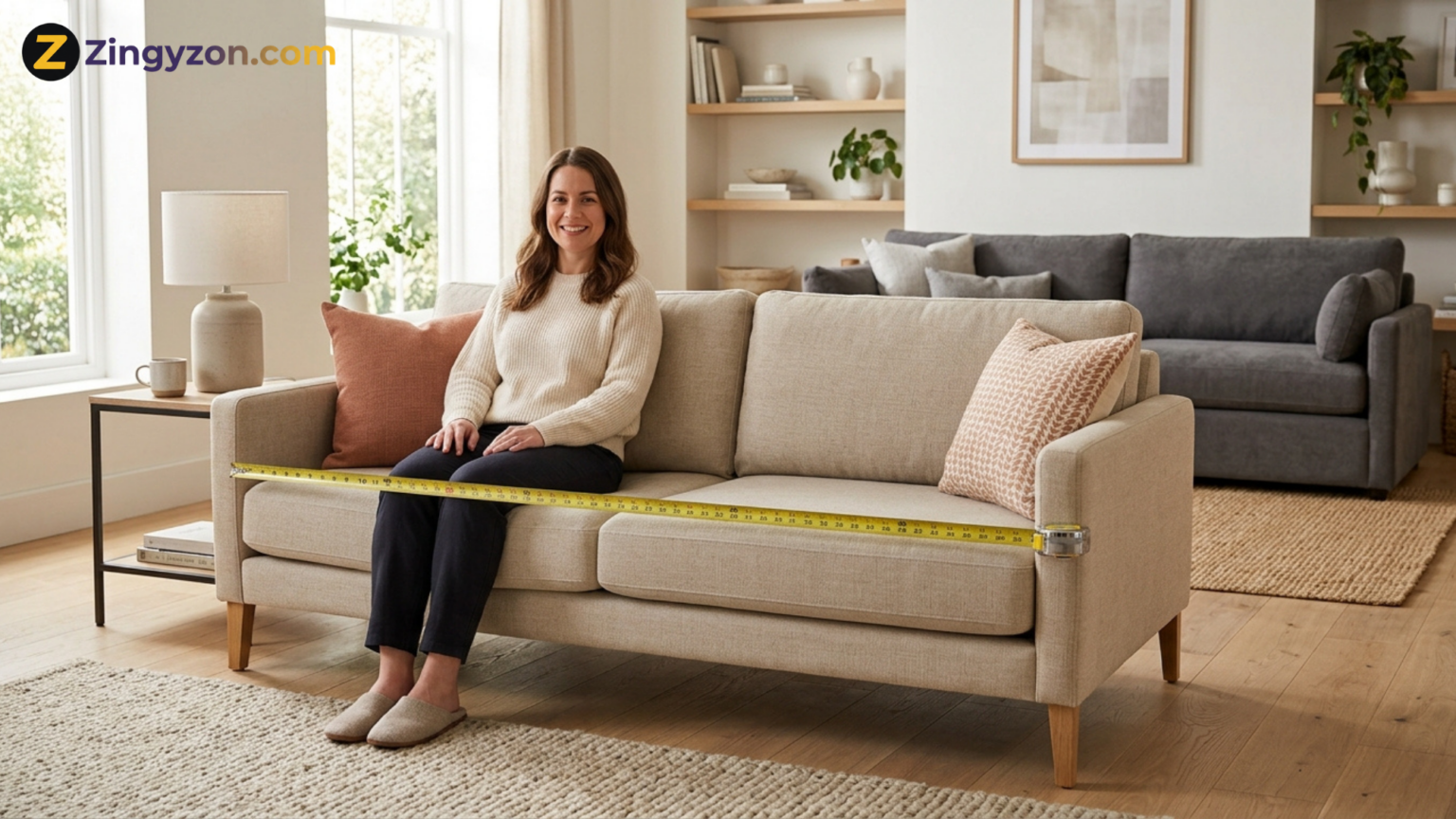
A beautiful sofa can still be uncomfortable if your feet cannot reach the floor or your back cannot rest against the back cushion. This is a common problem for shorter adults because many modern sofas are designed with deep seats intended for lounging rather than upright sitting.
That is why understanding sofa seat depth matters.
For many shorter people, a sofa with a relatively shallow seat can feel more supportive than an oversized deep couch. Instead of sliding forward, curling your legs underneath you, or adding several cushions behind your back, the right sofa lets you sit naturally with your back supported and your feet comfortably positioned.
However, height alone does not determine the perfect sofa size. Two people of the same height can have different leg lengths and body proportions.
This sofa seat depth guide for short people explains how seat depth works, what measurements to consider, how seat height affects comfort, how to test a sofa correctly, and what to do if the sofa you already own is too deep.
You can also explore more practical home and furniture-related advice on ZingyZon.com.
What Is Sofa Seat Depth?
Sofa seat depth is the usable distance from the front edge of the seat cushion to the point where your back rests against the sofa.
This is different from the overall depth of the sofa.
A sofa may have an overall depth of 36, 38, or even 40 inches because that measurement also includes the backrest, frame, and cushions. What matters most for sitting comfort is the usable seat depth.
For example, two sofas may both have an overall depth of 38 inches, but one may provide a 20-inch seat while another provides a 24-inch seat because their back cushions and frames are designed differently.
When comparing sofas online, always look specifically for a measurement labeled:
- Seat depth
- Inside seat depth
- Usable seat depth
- Seating depth
Do not assume that overall sofa depth tells you how far you will sit from the back cushion.
What Is the Best Sofa Seat Depth for Short People?
For many shorter adults, a seat depth of approximately 19 to 21 inches is a useful starting range.
Around 20 inches is commonly considered a relatively shallow sofa seat and can make it easier for someone with shorter legs to sit upright with back support.
Seats around 21 to 22 inches move toward a more standard or medium depth and may still be comfortable depending on your leg length, cushion softness, and preferred sitting position.
Once the usable seat becomes considerably deeper, shorter users may find that they cannot simultaneously place their back against the cushion and their feet flat on the floor.
A simple reference is:
| Seat Depth | General Feel for a Shorter Person |
|---|---|
| 18–19 inches | Very shallow and upright |
| 19–21 inches | Often a useful range for shorter adults |
| 21–22 inches | Medium; can work depending on proportions |
| 23–24 inches | Often more relaxed and lounge-oriented |
| 25+ inches | Deep seating; may require pillows for shorter users |
These numbers are a starting point rather than a universal rule.
Your individual leg length matters more than the number on your height chart.
Why Deep Sofas Can Be Uncomfortable for Short People
Imagine sitting on a deep sofa and moving all the way back until your spine touches the back cushion.
If the seat is longer than your thighs, the front edge may reach your calves instead of ending near the back of your knees. Your feet may then hang above the floor.
To put your feet down, you naturally slide toward the front of the sofa.
But now your lower back is no longer supported.
You may compensate by:
- Slouching
- Rounding your lower back
- Sitting sideways
- Tucking your feet underneath your body
- Crossing your legs constantly
- Adding pillows behind your back
- Sitting near the edge of the sofa
Occasionally sitting this way while relaxing is not necessarily a problem. The issue is that you should not be forced into an awkward position every time you use your sofa.
A well-proportioned sofa gives you options rather than forcing one sitting posture.
How to Measure Your Ideal Sofa Seat Depth
The easiest way to estimate your ideal seat depth is to measure your own seated body position.
You will need:
- A firm chair
- A measuring tape
- Your normal indoor footwear or bare feet
- Another person to help if possible
Sit with your back comfortably against the chair.
Bend your knees naturally and place your feet flat on the floor.
Now measure from the back of your buttocks to the crease behind your knee.
This measurement represents the approximate length of your seated thigh.
Your sofa’s usable seat should generally allow some clearance before the back of your knee rather than pressing directly into it.
Remember that sofas are softer than dining chairs. Cushions compress, your hips may sink slightly, and thick back cushions reduce usable depth.
For that reason, physical testing is preferable whenever possible.
The Simple Sofa Comfort Test
If you are shopping in a furniture store, forget about appearance for a minute and perform this quick test.
Sit all the way back with your spine against the sofa’s back cushion.
Then check three things.
1. Can Your Feet Reach the Floor?
Your feet should be able to rest naturally instead of dangling.
2. Is There Excessive Pressure Behind Your Knees?
The front edge of the cushion should not dig uncomfortably into the back of your legs.
3. Is Your Back Supported?
You should not need to slide several inches forward simply to place your feet down.
If you pass all three checks, the sofa’s proportions are likely much closer to what your body needs.
Seat Height Matters Too
Seat depth receives most of the attention, but sofa seat height is equally important for shorter people.
Seat height is measured from the floor to the top of the seat cushion.
Many sofas fall somewhere around 15 to 20 inches in seat height, with approximately 17 to 18 inches being common.
For a shorter person, an extremely high seat combined with a deep seat can create the most uncomfortable combination.
Your feet may not reach the floor even when sitting toward the front edge.
However, choosing the lowest sofa available is not automatically the answer.
Very low seating can make standing up more difficult and may create an overly reclined posture.
The goal is to find a height that allows your feet to make comfortable contact with the floor while maintaining a natural knee position.
Seat Depth vs. Seat Height: Which Is More Important?
Both measurements work together.
A shallow sofa with an excessively high seat may still leave your feet unsupported.
A low sofa with an excessively deep seat may still force you to slide forward.
Think of the sofa as a complete seating system rather than evaluating one number.
For shorter users, a combination such as a moderate-to-shallow seat depth with a comfortable medium or slightly lower seat height often deserves consideration.
But always test the actual sofa because cushion firmness can change how those measurements feel.
Cushion Firmness Changes the Effective Seat Depth
Two sofas with identical published dimensions can feel surprisingly different.
Why?
Because cushions compress.
A soft sofa may allow your hips to sink several inches into the seat. When that happens, your body moves lower and sometimes farther backward.
That changes how both the seat height and seat depth feel.
A firmer cushion generally keeps you closer to the sofa’s measured dimensions.
This is particularly important when buying online.
If you are choosing between two sofas with similar dimensions, read information about:
- Cushion firmness
- Foam density
- Down or fiber filling
- Seat suspension
- Back cushion thickness
- Removable versus fixed cushions
Shorter buyers who prefer upright sitting often find structured cushions easier to use than extremely soft, oversized lounge cushions.
Back Cushion Thickness Is Easy to Overlook
One of the most overlooked sofa measurements is back cushion thickness.
Suppose a sofa frame provides 25 inches of internal depth.
That sounds very deep.
But if the back cushion is six inches thick, the usable sitting depth may feel much closer to 19 inches.
The opposite can also happen.
A sofa may look compact from the outside but use a thin backrest, leaving a surprisingly deep seating area.
That is why you should never judge a sofa by overall measurements alone.
Ask specifically for the seat depth measured from the front of the seat cushion to the front surface of the back cushion.
Sofa Seat Depth by Sitting Style
Not every short person wants an upright sofa.
Your preferred sitting style matters just as much as height.
If You Sit Upright
Look toward the shallower end of the range.
A seat around 19 to 21 inches may provide better support and help your feet stay grounded.
If You Like to Curl Up
A slightly deeper seat can be useful because it gives you room to fold your legs onto the sofa.
If You Frequently Lie Down
Total sofa length and cushion width may matter more than achieving the shallowest possible seat.
If Two People Share the Sofa
A medium-depth sofa with movable back cushions may provide the best compromise.
The shorter person can add a lumbar or back cushion, while a taller person can remove it when they want extra depth.
Good furniture should work with your lifestyle, not simply match a measurement chart.
For more ideas about creating comfortable and practical living spaces, browse the Home & Garden guides on ZingyZon.
What Sofa Style Is Best for Short People?
Certain sofa designs naturally work better for shorter users.
Traditional Sofas
Traditional sofas often have relatively upright backs and moderate seat depths.
They can be an excellent choice if you sit rather than lounge.
Mid-Century Modern Sofas
Many mid-century designs use compact frames, firmer cushions, and shallower seats.
However, some also have low seat heights, so check both measurements.
Apartment Sofas
Apartment-sized sofas are designed for smaller rooms.
Their compact overall dimensions sometimes come with shallower seats, although this is not guaranteed.
Loveseats
A loveseat can have the same seat depth as a full-size sofa, so do not assume smaller width means a shallower seat.
Always check specifications.
Deep Modular Sofas
Large modular and cloud-style sofas often prioritize lounging.
They can be extremely comfortable for curling up but may require additional pillows if you are short and want an upright posture.
What to Look for When Buying a Sofa Online
Buying furniture online is convenient, but it removes the ability to test the sofa before purchasing.
For shorter buyers, dimensions therefore become extremely important.
Check these specifications before ordering:
- Seat depth
- Seat height
- Overall sofa depth
- Overall width
- Back height
- Arm height
- Cushion thickness
- Cushion firmness
- Leg height
- Weight capacity
- Return policy
Read customer reviews from people who mention their height whenever possible.
A review saying “very comfortable” is not especially useful without context. A six-foot-three buyer and a five-foot-one buyer may experience the same sofa completely differently.
Pay particular attention to comments such as:
- “My feet touch the floor.”
- “Too deep for me.”
- “Perfect for petite people.”
- “I needed a pillow behind my back.”
- “Lower than expected.”
Photos uploaded by customers can also reveal proportions that product photography hides.
How to Fix a Sofa That Is Too Deep
You may already own a sofa that you love but find uncomfortable.
Fortunately, replacing it is not always necessary.
Add a Firm Back Cushion
A thick lumbar or square cushion effectively reduces usable seat depth.
For example, adding a four-inch cushion can turn a very deep sitting area into something much more manageable.
Use a Supportive Throw Pillow
Place the pillow behind your lower and middle back rather than simply decorating the corner of the sofa.
The goal is to bring the backrest toward you.
Add an Ottoman or Footstool
If you enjoy the deep seat but your feet do not reach the floor, a footstool can provide support.
This works particularly well for relaxed TV watching.
Replace Overly Soft Back Cushions
Flattened back cushions can increase the effective depth of an older sofa.
Re-stuffing or replacing them may bring your sitting position forward.
Consider Custom Cushion Inserts
If the sofa frame is worth keeping, an upholsterer may be able to create thicker back cushions or firmer seat inserts.
This can be less expensive than replacing a quality sofa.
Should Short People Avoid Deep Sofas Completely?
No.
Deep sofas are not inherently bad for short people.
The real question is how you plan to use the sofa.
If you love curling up, reading, watching movies, or sitting with your legs folded underneath you, a deeper sofa might be exactly what you want.
Problems arise when you want conventional upright seating but choose a sofa whose dimensions require a lounging posture.
A household can also use accessories to make a deeper couch work for multiple body sizes.
Removable cushions are especially helpful because they let each person adjust the usable depth.
Best Sofa Setup for Couples With Different Heights
Furniture shopping becomes more complicated when one partner is short and the other is tall.
A shallow seat may suit the shorter person but feel restrictive to the taller person.
A very deep sofa may solve the taller person’s problem while making the shorter person’s feet dangle.
A useful compromise is a medium-depth sofa with removable or adjustable cushions.
The shorter user can add a firm pillow behind the back, reducing effective seat depth.
The taller user can remove it and use the full seat.
A sectional with different seating zones can also work. One portion can provide upright seating while a chaise handles lounging.
Personalized comfort is useful in other areas of the home too. If you are interested in how adjustable support works in bedroom furniture, read ZingyZon’s adjustable mattress comparison guide.
Common Mistakes Short People Make When Buying a Sofa
Choosing Based Only on Appearance
A stylish sofa is not useful if you never feel comfortable sitting on it.
Check measurements before color, fabric, or decorative details finalize your decision.
Looking Only at Overall Depth
Overall sofa depth and usable seat depth are not the same measurement.
Ignoring Seat Height
A shallow seat can still be uncomfortable if it sits too high off the ground.
Testing the Sofa for Only a Few Seconds
Sit for several minutes.
Try your normal positions.
Sit upright, lean back, cross your legs, and imagine using the sofa for an entire evening.
Assuming Softer Means More Comfortable
Extremely soft cushions can reduce support and change the effective seat height.
Comfort depends on fit as much as softness.
Buying Without Checking Returns
Online sofa purchases can be difficult and expensive to return.
Review return periods, restocking fees, pickup costs, and packaging requirements before ordering.
Quick Checklist Before Buying
Before paying for a sofa, ask:
- Is the usable seat depth around the range that suits my legs?
- Can I sit with my back supported?
- Can my feet rest comfortably?
- Does the cushion press behind my knees?
- Is the seat height comfortable?
- Are the cushions too soft or too firm for me?
- Can the back cushions be removed or repositioned?
- Can I add a lumbar pillow if necessary?
- Does my taller partner also fit comfortably?
- Will the sofa fit through my doors and hallway?
- Is there a reasonable return policy?
If most of these answers are positive, you are much more likely to enjoy the sofa after the excitement of buying it wears off.
Frequently Asked Questions
What is a good sofa seat depth for a short person?
A seat depth of roughly 19 to 21 inches is a useful starting point for many shorter adults. Around 20 inches is typically considered relatively shallow. Your leg length, cushion softness, and preferred posture should ultimately determine the best size.
Is a 24-inch sofa seat too deep for a short person?
It can be. A 24-inch seat is relatively deep for upright sitting and may prevent a shorter person from keeping both their back supported and feet on the floor. However, it may be comfortable if you prefer lounging or curling your legs onto the sofa.
Is a 20-inch seat depth comfortable?
A 20-inch seat depth can be very comfortable for shorter adults and people who prefer upright seating. It provides less distance between the front edge and back cushion than many modern deep-seat sofas.
What seat height is best for short people?
There is no single perfect height, but many standard sofas fall around 17 to 18 inches. The most important test is whether you can sit naturally with your feet supported without excessive pressure behind your thighs.
How do I know if my sofa is too deep?
Sit with your back fully against the back cushion. If your feet cannot comfortably reach the floor and you must slide forward to support them, the seat may be too deep for your body proportions.
Can pillows make a deep sofa suitable for a short person?
Yes. A firm back or lumbar pillow can reduce effective seat depth by moving your sitting position forward while maintaining back support. This is one of the easiest ways to adapt an existing deep sofa.
Are shallow sofas less comfortable?
Not necessarily. A shallow sofa may actually be more comfortable for upright sitting, especially for shorter people. Deep sofas are often better suited to lounging. Comfort depends on body proportions and intended use.
Should petite people buy low sofas?
Not automatically. A lower seat can help some shorter people reach the floor, but extremely low sofas can be harder to stand up from. Seat depth, seat height, cushion firmness, and body proportions should be evaluated together.
What is the difference between sofa depth and seat depth?
Overall sofa depth measures the entire piece from the front edge to the furthest point at the back. Seat depth measures only the usable sitting area between the front of the cushion and the backrest.
How can I measure sofa seat depth before buying online?
Check the manufacturer’s specifications for “seat depth” or “inside seat depth.” If the measurement is unclear, ask the retailer whether it is measured from the front edge of the seat cushion to the front of the back cushion.
Final Thoughts
Finding the right sofa when you are shorter than average becomes much easier once you stop focusing only on style and start looking at the measurements that control comfort.
For many shorter adults, a sofa seat depth around 19 to 21 inches is a sensible place to begin. Around 20 inches provides a relatively shallow, upright sit, while deeper sofas increasingly favor lounging.
However, a number alone cannot tell you whether a sofa will be comfortable.
Seat height, cushion firmness, back cushion thickness, leg length, posture, and how you normally relax all affect the experience.
The most important test is simple: sit with your back comfortably supported and see whether your feet can rest naturally without the front of the cushion pressing awkwardly behind your knees.
If they can, you are probably close to the right dimensions.
And if you already own a deep sofa, do not assume you need to replace it. A firm back cushion, lumbar pillow, footstool, or thicker back cushions can often transform an uncomfortable couch into a much better fit.
Measure first, test whenever possible, and choose a sofa for the body that will actually use it—not simply for how good it looks in a showroom photograph.
Keep Exploring Zingyzon.com
Read more Zingyzon SEO, digital marketing, online earning, business, and technology guides for Australia, USA, and global readers.