
Replica Watches Guide: Risks, Authenticity Checks, and Safer Alternatives
Luxury watches attract buyers through their craftsmanship, history, engineering, and distinctive designs. Unfortunately, their popularity has also created a large […]
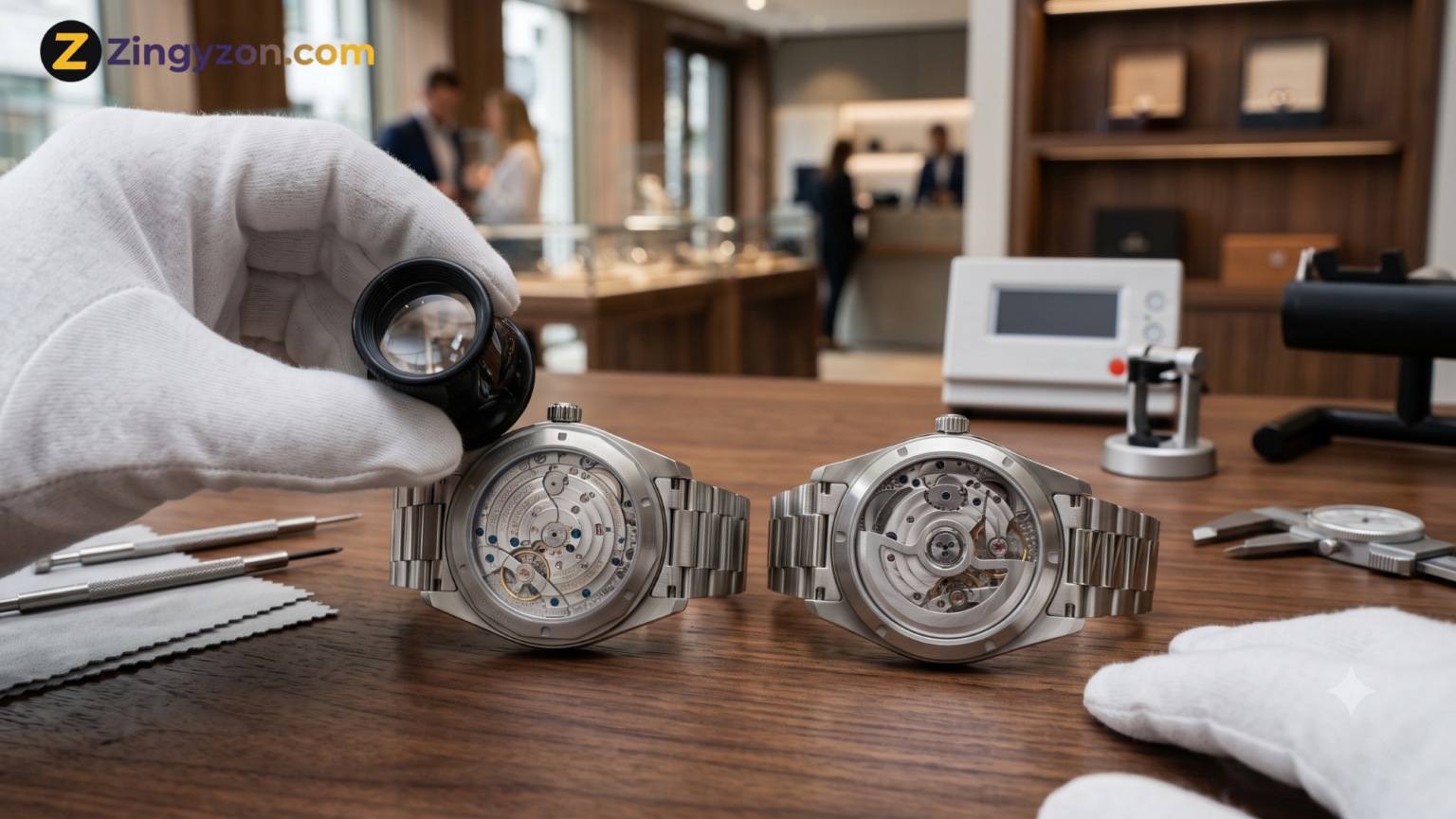
Luxury watches attract buyers through their craftsmanship, history, engineering, and distinctive designs. Unfortunately, their popularity has also created a large market for replica watches, clone watches, and products advertised as “super clones.”
These terms are often presented as though they describe affordable alternatives to luxury timepieces. In practice, many such products copy protected brand names, logos, model designs, packaging, and serial-number formats. That can make them counterfeit goods rather than legitimate alternatives.
A seller may claim that a watch uses premium materials, a highly accurate movement, or an appearance that is nearly identical to the original. Those claims can be difficult to verify, particularly when the seller operates through an anonymous website, social media account, messaging application, or overseas marketplace.
This guide explains what replica and clone watches are, how they differ from legal homage watches, the risks buyers should understand, and how to find safer alternatives without paying the full retail price of a new luxury watch.
What Are Replica Watches?
The phrase “replica watch” generally refers to a watch designed to imitate an existing branded model. The imitation may copy the dial layout, case shape, bracelet, bezel, engravings, packaging, and brand logo of the original product.
Not every inspired design is automatically counterfeit. The central issue is whether the product uses protected branding or is presented in a way that makes buyers believe it was produced or authorised by the original manufacturer.
A legitimate watch inspired by a classic design may use its own brand name and avoid copying protected logos. A counterfeit watch typically carries another company’s trademark despite not being manufactured or approved by that company.
Consumers researching replica watches should therefore look beyond visual similarity. The branding, seller’s claims, origin, warranty, documentation, and after-sales support are equally important.
Customs and consumer-protection agencies warn that counterfeit products can involve poor materials, unreliable quality, unsafe components, online-security risks, and links to broader illegal trade.
What Are Clone and Super Clone Watches?
“Clone watch” is usually a marketing term rather than a recognised quality standard. It may describe anything from a low-cost imitation to a more detailed counterfeit that attempts to reproduce the weight, dimensions, movement appearance, dial texture, and packaging of a genuine luxury watch.
The term “super clone” is often used to suggest that the imitation is almost impossible to distinguish from the authentic model. However, there is no independent certification system that guarantees what “super clone” means.
One seller may use the term for a watch with an inexpensive movement and decorative finishing. Another may use it for a more detailed imitation. In both cases, the label comes from the seller rather than an authorised testing body.
Marketing language surrounding clone watches should be treated cautiously. Claims such as “one-to-one,” “Swiss-grade,” “AAA quality,” “mirror copy,” and “identical to genuine” do not establish authenticity, legal status, durability, or material quality.
A watch can appear convincing in carefully edited photographs while using low-quality internal parts, inaccurate coatings, weak seals, or an unreliable movement.
Replica Watches vs. Homage Watches
Replica and homage watches are not necessarily the same.
A replica usually attempts to pass as a product from an established brand. It may display that brand’s logo, name, model reference, warranty markings, or other protected identifiers.
An homage watch takes inspiration from a popular design but is sold under its own manufacturer’s identity. It may use a familiar case shape, dial arrangement, or colour combination without pretending to be made by the original luxury brand.
For example, several legitimate manufacturers produce dive watches with rotating bezels, luminous markers, and steel bracelets. Those general characteristics are not limited to one company. Problems arise when a product copies protected branding or deliberately misrepresents its origin.
A lawful homage watch gives buyers a similar visual style while remaining transparent about who made it. It may also provide a genuine warranty, identifiable manufacturer, replacement parts, and customer support.
This makes homage watches a more responsible option for shoppers who appreciate luxury-watch aesthetics but do not want to purchase counterfeit merchandise.
Why People Consider Replica Watches
Price is the most obvious attraction. A genuine luxury watch can cost thousands or even tens of thousands of dollars, while an imitation may be advertised for a small fraction of that amount.
Some buyers are interested in the appearance of a famous model but do not care about its movement, investment value, craftsmanship, or brand history. Others may want to test how a particular size or design looks before considering a genuine purchase.
Social pressure can also influence buying decisions. Luxury watches are sometimes presented as symbols of achievement, status, and financial success. A buyer may therefore view a replica as an easy way to create the same impression.
UK Intellectual Property Office research has repeatedly identified lower prices as a major motivation for purchasing counterfeit goods. Its category research has also found counterfeit purchasing within the watch and smartwatch market.
The initial saving, however, should be weighed against product reliability, lack of protection, customs risks, personal-data exposure, repair difficulties, and the possibility of receiving something very different from the advertised item.
Legal and Customs Risks
Counterfeit laws differ between countries, so buyers should check the rules that apply where they live. The legal position may also differ between manufacturing, advertising, selling, importing, and possessing a counterfeit product.
In the United Kingdom, official guidance states that counterfeit products are illegal to sell. Border and intellectual-property authorities can also detain goods suspected of infringing trademarks and other protected rights.
In the United States, Customs and Border Protection regularly seizes shipments of counterfeit watches carrying unauthorised luxury-brand trademarks. Recent enforcement notices have reported seizures involving brands such as Rolex, Cartier, Patek Philippe, Hublot, Richard Mille, and others.
This means an international order may be intercepted before reaching the customer. A buyer may lose the product and the money paid for it, while obtaining a refund from an anonymous or offshore seller may be difficult.
Quality and Material Concerns
A genuine watch manufacturer normally publishes information about case materials, water resistance, movement specifications, servicing, warranty coverage, and quality-control procedures.
Counterfeit sellers may copy these claims without using equivalent components or testing methods.
A watch marked “stainless steel” may use an unknown alloy or only a thin surface coating. A crystal advertised as sapphire may be mineral glass. Decorative movement parts may imitate the appearance of an authentic calibre without providing the same accuracy, durability, or serviceability.
Water-resistance markings are another concern. A dial or case back may display a depth rating even when the watch has not undergone reliable pressure testing. Wearing such a watch while swimming or washing could lead to immediate moisture damage.
An EUIPO study identified potentially dangerous chemicals and toxic heavy metals in connection with counterfeit watches, particularly in straps and cases. U.S. Customs and Border Protection has also warned that cheap metals used in counterfeit watches may cause skin reactions.
These findings do not mean every imitation watch causes harm. They do show why unverified materials and absent quality controls should not be dismissed as minor concerns.
Online Shopping and Data-Security Risks
The danger may extend beyond the physical product.
Counterfeit websites can disappear quickly, operate without a verifiable business address, or request payment through methods that offer limited buyer protection. Some use copied product photographs, false reviews, fabricated countdown timers, or unrealistic discount claims.
A customer may submit their name, address, phone number, card details, and account password to a seller whose identity cannot be confirmed.
CBP has warned that illegitimate websites selling counterfeit goods may expose consumers to malware, ransomware, payment fraud, or compromised personal information. UK guidance similarly notes that purchasing fake products may involve sharing personal data that can later be misused.
Before buying any watch online, confirm that the website provides:
- A verifiable company name and physical address
- Clear returns and refund terms
- Secure payment options with buyer protection
- Independent reviews from established platforms
- A written warranty identifying the responsible business
- Accurate product photographs and specifications
- Responsive customer-service channels
A padlock symbol in the browser only indicates an encrypted connection. It does not prove that the business or products are legitimate.
How to Identify a Potential Counterfeit Watch
No single visual test can authenticate every watch. High-quality counterfeits may copy serial-number formats, certificates, boxes, tags, and movement decorations.
The safest approach is to consider the complete transaction.
An Unrealistically Low Price
A highly desirable watch offered far below its normal market value deserves careful examination. Genuine watches can be discounted, but rare models do not usually appear at a tiny fraction of their established resale value without a reason.
Unclear Seller Identity
Be cautious when a seller provides only a messaging-app number, uses a recently created social profile, or refuses to share verifiable business information.
Copied or Inconsistent Photographs
Reverse-image searches can reveal whether pictures were taken from an authorised dealer, auction listing, manufacturer, or another seller. Ask for current photographs showing the actual watch, its condition, and a handwritten date.
Poor Documentation
A warranty card or certificate does not automatically prove authenticity. Counterfeiters can reproduce paperwork. Check whether serial numbers, reference numbers, dates, and dealer details match the watch and the manufacturer’s systems.
Mechanical and Cosmetic Errors
Incorrect fonts, uneven printing, rough bracelet edges, misaligned markers, unusual date magnification, poor finishing, and an inaccurate movement can indicate a fake.
However, visual inspection alone is not enough for expensive purchases. Professional authentication is safer than relying on online photographs or a checklist.
Why Serial Numbers Are Not Enough
Many buyers believe that entering a serial number online proves a watch is genuine. It does not.
A counterfeiter can copy a valid serial number from an authentic watch and place it on multiple imitations. Boxes, cards, receipts, QR codes, and hang tags can also be reproduced.
Serial-number consistency is useful, but it should form only one part of a broader authentication process. The case, movement, dial, bracelet, reference configuration, service history, documentation, and seller must all be assessed together.
For a high-value watch, ask an authorised service centre, respected watchmaker, specialist dealer, or established authentication provider to inspect the physical item.
Safer Alternatives to Replica Watches
Buyers do not need to choose between an expensive new luxury watch and an illegal counterfeit.
Buy a Genuine Pre-Owned Watch
The pre-owned market offers authentic watches at many price levels. Older models, smaller sizes, less-hyped references, and watches without full packaging may cost considerably less than new retail examples.
Official UK guidance notes that genuine second-hand products can offer authentic quality and craftsmanship at lower prices and may retain value better than counterfeit items.
Choose a seller that provides authentication, a return period, condition details, and a meaningful warranty.
Choose a Legitimate Homage Watch
An homage model can offer the proportions or style you like without using a false brand identity. Research the manufacturer’s movement, warranty, customer service, and independent reviews before ordering.
Explore Microbrands
Independent microbrands often produce distinctive mechanical and quartz watches at accessible prices. Many offer sapphire crystals, reliable movements, strong water resistance, original designs, and direct customer support.
Consider Affordable Established Brands
Established manufacturers produce genuine dress, dive, field, sports, and chronograph watches across a wide range of budgets. A well-made affordable watch provides honest branding and dependable servicing.
Save for the Authentic Model
For buyers emotionally attached to one specific luxury watch, saving gradually may provide greater long-term satisfaction than purchasing an imitation that cannot offer the original craftsmanship, history, warranty, or resale value.
Readers can explore more consumer, lifestyle, and shopping information on Zingyzon.
How to Buy a Pre-Owned Luxury Watch Safely
Research the exact model reference before contacting sellers. Compare dial variations, case dimensions, movement type, bracelet style, production period, and current market pricing.
Ask the seller for detailed images of the dial, case, case back, clasp, bracelet, reference markings, warranty card, and accessories. For high-value purchases, request an inspection period or authentication condition in writing.
Use a payment method with appropriate buyer protection. Avoid irreversible transfers to unknown sellers simply because they offer an additional discount.
A trustworthy seller should be willing to explain:
- The watch’s ownership and service history
- Whether any parts have been replaced
- Whether polishing or restoration has occurred
- What authentication checks were completed
- What the warranty covers
- How returns and disputes are handled
When a deal creates pressure, secrecy, or uncertainty, walking away is often the safest decision.
Frequently Asked Questions
Are replica watches legal?
The answer depends on the country and the activity involved. Laws concerning purchase, possession, sale, importation, and trademark infringement vary. Selling counterfeit products is illegal in many jurisdictions, and imported items may be seized by customs authorities.
Is a super clone better than a normal replica?
“Super clone” is an unregulated marketing term. It does not guarantee a particular movement, material, accuracy level, safety standard, or manufacturing quality.
Are homage watches counterfeit?
A genuine homage watch is sold under its own brand and does not pretend to be produced by another company. It may take design inspiration from a classic model, but it should not use unauthorised trademarks or false documentation.
Can a jeweller identify a counterfeit watch?
An experienced watchmaker or specialist may identify many counterfeits, but advanced imitations can require movement inspection, reference research, and brand-specific expertise. For expensive purchases, use a recognised authentication service or authorised centre.
Can counterfeit watches be repaired?
Some independent watchmakers may service generic movements, but parts availability and construction quality can make repairs difficult or uneconomical. Authorised brand service centres will not treat a counterfeit as a genuine product.
Are online authenticity checks reliable?
Photographs and serial-number checks can identify obvious warning signs, but they cannot guarantee authenticity. A physical inspection by a qualified professional provides stronger protection.
Final Thoughts
Replica and clone watches may appear to offer luxury styling at an affordable price, but the purchase can involve more than a compromise in craftsmanship. Buyers may face misleading product claims, unreliable materials, weak warranties, data-security concerns, customs seizure, and limited options when something goes wrong.
The term “super clone” should not be treated as proof of quality. It is a seller-created label without a universal technical standard.
Genuine pre-owned watches, transparent homage models, reputable microbrands, and affordable established manufacturers provide safer ways to enjoy watch design without supporting counterfeit trade.
Before spending money, investigate the product, verify the seller, use protected payment methods, and seek professional authentication for valuable watches. A genuine timepiece within your budget will usually provide greater confidence, support, and long-term satisfaction than an imitation carrying someone else’s name.



Keep Exploring Zingyzon.com
Read more Zingyzon SEO, digital marketing, online earning, business, and technology guides for Australia, USA, and global readers.