
Hidden Bottleneck: Why Your Electrical Panel Can’t Keep Up Anymore
By a electrical industry contributor. Your home’s electrical panel is the unsung hero of modern life, but it was likely […]
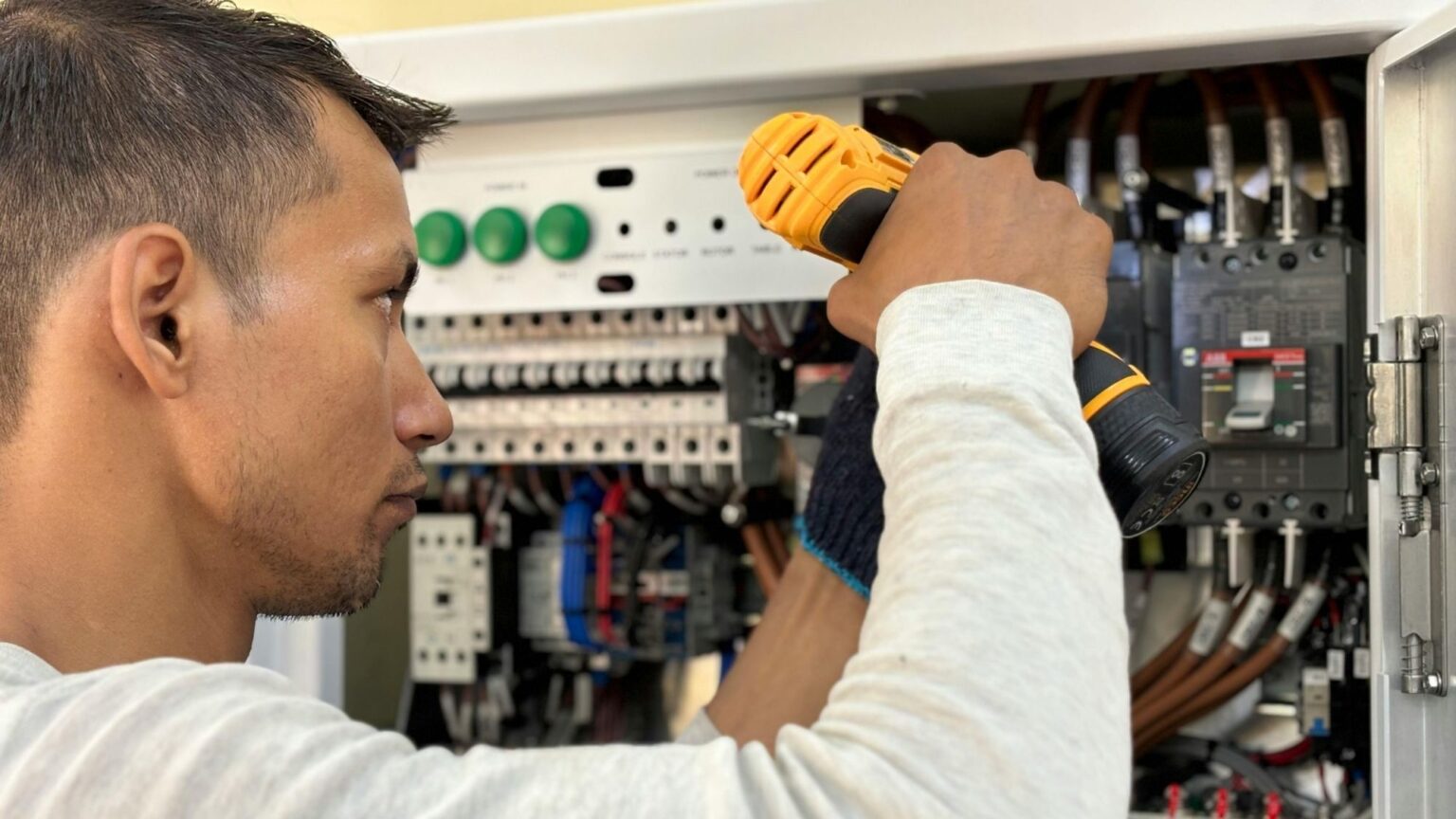
By a electrical industry contributor.
Your home’s electrical panel is the unsung hero of modern life, but it was likely designed for a different era. Decades ago, it managed a refrigerator, some lights, and a television. Today, you’re asking it to power high-draw appliances like heat pumps, induction cooktops, and electric vehicle chargers. This mismatch creates a performance bottleneck that manifests as flickering lights or frequently tripped breakers.
Many homes are unprepared for this shift. According to a study from the Lawrence Berkeley National Laboratory, an estimated 55% of single-family homes still operate on 100-amp panels, a capacity that is easily overwhelmed by today’s energy demands. Ignoring these limits isn’t just an inconvenience; it can strain your entire electrical system. Understanding the scope of modern electric panel upgrade services is the first step toward ensuring your home can safely and reliably power your life, both now and in the future.
Quick answer: An electrical panel upgrade replaces your old breaker box with a new one that has a higher amperage capacity and meets current safety codes. It is not just a repair but a fundamental improvement to your home’s infrastructure, necessary for safely adding major appliances like EV chargers or transitioning away from natural gas.
What’s inside
· Why Is My Current Panel No Longer Enough?
· What Separates a Quality Upgrade from a Risky One?
· What Does the Upgrade Process Actually Involve?
· Frequently Asked Questions About Panel Upgrades
· Is an Upgrade a Cost or an Investment?
Why Is My Current Panel No Longer Enough?
Your panel is no longer enough because the total electrical demand from modern appliances now regularly exceeds the capacity and safety features of older systems.
Most electrical panels installed before the 2000s were designed for a much simpler load. They could easily handle a refrigerator, lighting, and a few outlets. Today, homeowners are adding high-draw equipment like heat pumps, induction cooktops, and Level 2 EV chargers. Each of these can consume as much power as an entire older home. Running them simultaneously on a panel with insufficient capacity creates a system-wide bottleneck.
This capacity issue is widespread. A detailed analysis by the Lawrence Berkeley National Laboratory found that 55% of U.S. single-family homes are still equipped with 100-amp panels. While sufficient for the past, this size is often inadequate for a home adding even one major electric appliance. The push for home electrification is accelerating, placing even more strain on this aging infrastructure.
When your home tries to pull more amperage, or electrical current, than the main breaker is rated for, the breaker trips. This is a critical safety function designed to shut off power and prevent the circuit wiring from overheating. Frequent tripping is a clear signal that your daily usage is pushing the system to its absolute limit. It’s not just an inconvenience; it’s a warning that the system is under constant stress, which can degrade components over time.
❝ A key principle electricians follow is the “80% rule.” For safety and code compliance, a circuit should not be loaded beyond 80% of its maximum rating for continuous loads, which are those running for three hours or more. For a 100-amp panel, this means your continuous demand should not exceed 80 amps.
Beyond raw capacity, modern electrical codes have introduced safety requirements that older panels lack. The National Electrical Code (NEC), published by the National Fire Protection Association, now mandates technologies like Arc-Fault Circuit Interrupters (AFCIs). These devices are designed to detect dangerous electrical arcs, a common cause of electrical fires, and shut the circuit down before a fire can start. Many panels installed 20 or 30 years ago do not support these essential safety devices. An upgrade isn’t just about adding power; it’s about bringing your home’s electrical backbone up to modern safety standards.
What Separates a Quality Upgrade from a Risky One?
A quality upgrade is distinguished by meticulous planning and transparent documentation, while a risky job often cuts corners on safety and code compliance.
The most critical step, and one that is often skipped in low-ball quotes, is the load calculation. This is a formal assessment of your home’s total potential electrical demand, from the air conditioner to the last light bulb. It is not a guess; it is a requirement of the National Electrical Code to ensure the new panel and service wiring are sized correctly for your specific needs. Before you review any numbers, ask the electrician if a formal load calculation is part of their process and if you can see the final report.
Another non-negotiable element is the electrical permit. A permit filed with your local building department ensures the work will be inspected by a neutral third-party official. This inspector’s job is to verify that the installation is safe and meets all current codes. Working without a permit might seem cheaper, but it leaves you with no independent verification of safety and can cause significant issues with insurance or when you eventually sell your home.
Finally, scrutinize the materials list on the quote. It should specify the brand of the panel and the circuit breakers. All components should be new and UL-listed. A common but dangerous shortcut is installing “foreign” breakers, using breakers from one manufacturer in a panel from another. While they may physically click into place, they have not been tested to work together and can fail to trip when needed, creating a serious fire hazard. Professionals are also trained to adhere to strict safety protocols, as outlined by agencies like the Occupational Safety and Health Administration (OSHA), to prevent accidents during installation.
Use this table to compare the quotes you receive.
| Evaluation Point | A Low-Price Quote Might… | A Professional Quote Should… |
| Load Calculation | Skip it or just guess at the size | Include a formal calculation |
| Permitting | Suggest doing it without one | Itemize the permit and inspection fees |
| Materials | Use generic terms like “200A panel” | Specify the brand and model number |
| Safety Devices | Omit or upcharge for AFCI/GFCI breakers | List all code-required safety breakers |
A detailed, transparent quote that includes these elements is a strong indicator of a professional and safe installation. It shows the contractor is focused on a correct, code-compliant outcome rather than simply winning the job on price alone.
What Does the Upgrade Process Actually Involve?
A panel upgrade is a carefully orchestrated, full-day project that involves disconnecting utility power, replacing core electrical hardware, and passing a mandatory safety inspection.
The process begins before any tools are touched. Your electrician coordinates with the local utility company to schedule a “disconnect and reconnect.” On the day of the work, the utility provider will shut off all power to your home at the meter base. This is a complete outage affecting everything from your lights to your refrigerator, so you will need to plan accordingly. This step is non-negotiable for safety and is a key difference between a professional job and an unauthorized one.
With the power safely off, the electrician removes the cover and breakers from your old panel. They disconnect every circuit and remove the old box from the wall. This is also a moment of discovery. The condition of the wall behind the panel is inspected for any signs of moisture, rot, or pest damage that might need to be addressed before the new, often larger, panel is installed.
❝ Many homeowners assume the upgrade is just the box itself. But if you’re moving from 100 amps to 200 amps, the main wires feeding your house from the utility, the service entrance conductors, are likely too small. Replacing them is a significant part of the job and a key factor in the total cost.
The new panel is mounted, and the new, thicker service entrance wires are connected. Then comes the most time-consuming part: reconnecting every individual circuit in your home to a new breaker in the new panel. A hallmark of quality work is meticulous organization. Each wire is cut to the correct length, routed neatly, and connected to a clearly labeled breaker. Ask if the quote includes a clean, typed panel schedule, which is the map inside the door. A messy, unlabeled panel makes future troubleshooting difficult and is a sign of rushed work.
Finally, the electrician ensures the entire system is properly grounded and bonded. This involves connecting the panel to a grounding electrode system, such as a copper rod driven into the earth or the home’s metal water pipes. This provides a safe path for stray electrical current, protecting both people and equipment. Once the work is complete, a city or county inspector will arrive to verify that every connection is tight, every component is correct, and the installation meets all code requirements. Only after it passes inspection will the utility company restore power.
Frequently Asked Questions About Panel Upgrades
How much should a 200-amp panel upgrade cost? The total cost is driven by several factors beyond the panel itself. Labor typically accounts for the largest portion, followed by the cost of materials like the panel, breakers, and potentially a new, larger service entrance cable running from the utility meter. You should also account for local permit fees and any minor cosmetic repairs to drywall or siding that may be needed after the installation.
Who is qualified to upgrade an electrical panel? Only a licensed electrician is qualified to perform a panel upgrade. This credential means they have passed rigorous state-level exams on electrical code and theory, and they are required to carry both general liability and worker’s compensation insurance. A general contractor or handyman, unless they also hold an electrical license, is not legally permitted or insured to do this high-risk work.
What’s the cost difference between a panel upgrade and a full home rewire? A panel upgrade and a whole-home rewire are vastly different projects with dramatically different costs. The panel upgrade is a focused, one-day replacement of the main service equipment. A full rewire is a major renovation that can take weeks, involving opening up walls in nearly every room to replace old, unsafe wiring, and its cost can be ten times higher or more.
Will I be without power during the entire process? Yes, you should plan to be without power for most of a full workday, typically six to eight hours. For safety, the utility company must shut off power to the home before the old panel can be removed. It’s wise to charge all your electronic devices the night before and make arrangements if you work from home.
Is a panel upgrade required to install a Level 2 EV charger? An upgrade is often necessary, but not always. The requirement is determined by a formal load calculation performed by your electrician. If your current panel lacks the spare capacity to safely handle the large, continuous electrical load of a Level 2 charger, then an upgrade is required to prevent overloading your system. This is a common scenario in homes with older 100-amp service.
Is an Upgrade a Cost or an Investment?
Your home’s electrical panel is more than a box with switches. It is the central hub for your entire electrical system, and its condition dictates the safety and capability of your home. Viewing an upgrade solely as a cost misses its fundamental purpose. This is not a simple appliance replacement; it is a foundational improvement to your home’s infrastructure that directly impacts safety and future readiness.
The most reliable tool you have for making a decision is the quote itself. A detailed proposal that specifies a load calculation, itemizes permit fees, and names the exact materials is not an upsell. It is evidence of a professional process. A vague, low-price offer that omits these details is a significant red flag, suggesting shortcuts that could compromise the integrity and safety of the work.
Ultimately, the choice is not just between different prices, but between different standards. A properly executed panel upgrade provides the capacity for modern living and the robust safety features required by current electrical codes. It is a long-term investment in your home’s safety, ensuring your electrical system can support you reliably for decades to come.
About the author
Table Mountain Electric is an electrical contracting company serving the Denver Metro Area. With over 24 years of experience, its licensed electricians handle residential and commercial projects, focusing on electrical panel upgrades, EV charger installations, and wiring for home remodels. The company provides services to homeowners and businesses, emphasizing safety and adherence to current electrical codes in all installations. The team is based in Denver, Colorado, and works throughout the surrounding communities.


Keep Exploring Zingyzon.com
Read more Zingyzon SEO, digital marketing, online earning, business, and technology guides for Australia, USA, and global readers.