
Shower Niche Height and Placement
A shower niche may look like a small feature, but getting its height and location wrong can become annoying every […]
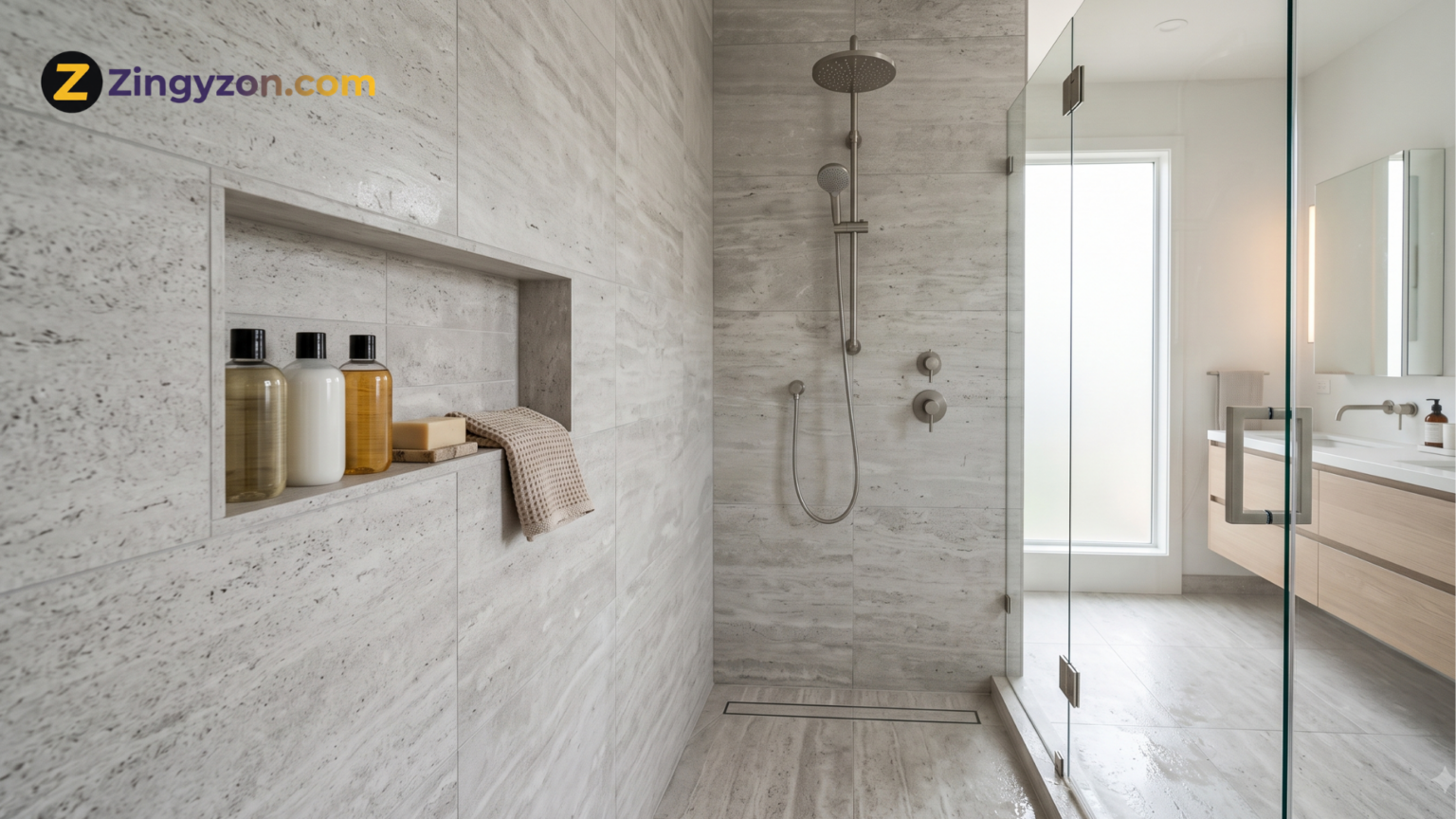
A shower niche may look like a small feature, but getting its height and location wrong can become annoying every single day. Place it too low and you will constantly bend down for shampoo. Put it too high and shorter family members may struggle to reach it. Install it on the wrong wall and water can hit your bottles every time you shower.
That is why shower niche height and placement should be decided before tile installation begins.
For most standard residential showers, a practical starting point is to position the main shower niche roughly 48 to 60 inches above the finished shower floor, with many installations working comfortably around the middle of that range. However, this is a design guideline rather than a universal rule.
Niche location should ultimately depend on the people using the bathroom, shower layout, plumbing, tile pattern, wall construction, and whether accessibility is important.
Manufacturers such as Schluter note that a shower niche can technically be installed at different height levels, which means the best position is largely determined by how the shower will actually be used.
In this guide, we will break down the ideal shower niche height, placement options, dimensions, tile considerations, accessibility concerns, and common mistakes so you can plan the feature properly before construction begins.
What Is the Standard Shower Niche Height?
There is no single mandatory height that works for every bathroom.
For a typical standing shower, consider the following range:
Recommended general range: 48–60 inches from the finished shower floor to the usable area of the niche.
A niche around 48 to 54 inches high can work well when several people of different heights use the same bathroom. A slightly higher position may work better for taller adults.
The important thing is not to choose a height simply because it looks good in a drawing.
Stand inside the unfinished shower and imagine reaching for shampoo, conditioner, soap, and body wash. Your hand should reach the shelf naturally without requiring you to stretch upward or bend significantly.
If you are renovating for a family, think about everyone who will use the shower rather than designing around only the tallest person in the house.
The same principle applies to many practical home upgrades. Good design should solve an everyday problem rather than simply follow a trend. You can find more examples in our guide to smart lifestyle upgrades for a more comfortable modern home.
How Do You Measure Shower Niche Height?
Measure niche height from the finished shower floor, not necessarily from the unfinished subfloor.
That distinction matters because the shower pan, mortar, tile, and other materials can slightly change the final floor elevation.
For example, if you decide that the bottom of your niche should sit 50 inches above the floor, make that measurement based on where the completed shower floor will actually be.
Before framing begins:
- Determine the finished shower floor level.
- Mark your preferred niche height.
- Check the height against the main users.
- Compare the mark with the planned tile layout.
- Confirm that plumbing or electrical components are not occupying the wall cavity.
- Check whether wall studs require adjustment or additional blocking.
Taking these steps early is much easier than trying to move a niche after waterproofing and tiling have started.
Best Shower Niche Placement
Height is only half of the decision. You also need to determine where to place the shower niche horizontally.
In many bathrooms, the best position is on a wall that is easy to reach but does not receive the strongest direct spray from the shower head.
A side wall is often a practical choice.
If possible, avoid positioning the niche directly beneath the shower head where water continuously hits shampoo bottles, soap containers, and the niche surface.
Instead, choose a wall where you can reach products comfortably while standing in your normal shower position.
Also think about what someone sees when entering the bathroom.
Some homeowners prefer the niche to become a design feature with contrasting tile. Others prefer a cleaner appearance and place it on a less visible side wall.
Neither approach is wrong.
The best shower niche placement balances usability, waterproofing, wall construction, and appearance.
Should a Shower Niche Go on the Plumbing Wall?
It can, but the plumbing wall is not always the easiest option.
The wall containing the shower valve and pipes may already have limited cavity space. Cutting into that area can interfere with supply lines, valve bodies, or other plumbing components.
Before selecting that wall, confirm what is behind it.
A nearby side wall with an empty stud cavity is often simpler.
If your preferred niche location contains plumbing, moving the niche a few inches or choosing another wall may save considerable work.
Never cut a stud, pipe, waterproofing component, or structural member simply to achieve a perfectly centered niche without first confirming that the modification is appropriate.
Shower Niche Height for Shampoo Bottles
Tall shampoo and conditioner bottles need more vertical space than people sometimes expect.
A niche that looks beautifully proportioned when empty can quickly feel cramped once actual products are placed inside.
For a single open niche, approximately 12 to 16 inches of usable internal height works for many common bathroom products, although you should measure the bottles you regularly buy before finalizing dimensions.
If you use pump bottles, oversized containers, or salon-size products, allow additional clearance above them so the pump can be used comfortably.
A larger niche can also be divided with a shelf.
For example:
- Upper shelf for shampoo and conditioner
- Lower shelf for soap, razors, or smaller products
Planning around real products makes the niche much more useful than choosing its dimensions purely for appearance.
Shower Niche Height for a Bathtub and Shower Combination
A tub-and-shower combination needs slightly different thinking because users may shower while standing and bathe while sitting.
If the niche will mainly serve standing shower users, a conventional mid-wall position can still work.
If you want bathers to reach soap or shampoo from inside the tub, consider a slightly lower shelf or a larger vertical niche with two levels.
The lower shelf can serve someone sitting in the bathtub while the upper shelf remains convenient for shower users.
Before choosing a lower placement, make sure water management and waterproofing details are properly planned.
A niche should improve storage without creating an area where water is allowed to sit.
Shower Niche Height for Children
Bathrooms shared with children need flexibility because children grow quickly.
Placing the only niche extremely low may work today but become inconvenient later.
Instead, consider:
- One larger vertical niche with multiple shelves
- A standard-height primary niche plus lower temporary storage
- An adjustable or removable storage solution until children are taller
A multi-level niche is particularly useful in family bathrooms because adults and children can each have reachable storage.
It also prevents the shower floor from filling with shampoo bottles, toys, soap, and other items.
Accessible Shower Niche Placement
Accessible bathrooms require more careful planning.
For accessible showers, the priority is not simply following the usual standing-user niche height. Products need to be reachable from the intended seated or mobility-aid position without forcing someone to stretch dangerously.
U.S. Access Board guidance for accessible shower compartments places shower controls within defined accessible reach areas. Depending on shower type, controls are commonly required no higher than 48 inches above the shower floor, and the Board specifically recommends keeping shelves and soap dispensers within reach from the shower seat.
That does not automatically mean every private residential niche must be exactly 48 inches high. It does show why accessibility should be planned around actual reach rather than ordinary standing-shower conventions.
If the bathroom is being designed for an older adult, wheelchair user, or someone with limited mobility, coordinate the niche with:
- Shower seat position
- Grab bars
- Controls
- Handheld shower
- Entry clearance
- User reach
For a bathroom that must meet a specific accessibility code, always confirm the applicable local requirements before construction.
Horizontal vs. Vertical Shower Niche
Both layouts can work beautifully, but they solve different problems.
Horizontal Shower Niche
A horizontal niche creates a long storage area across the shower wall.
It works particularly well for:
- Couples sharing a shower
- Families with several products
- Large walk-in showers
- Minimalist modern bathrooms
A long niche can visually align with large-format tiles and make the shower feel wider.
The downside is that creating a very wide opening may involve more complicated framing.
Vertical Shower Niche
A vertical niche is narrower but taller.
It works well when stud spacing limits the available width and when multiple shelves are wanted.
A vertical layout is useful for:
- Smaller showers
- Individual bathrooms
- Separating products
- Creating one high and one low shelf
For many bathrooms, a vertical niche located between studs offers a practical balance between storage and construction simplicity.
How Big Should a Shower Niche Be?
There is no perfect size, but common shower niches often fall somewhere around 12 inches wide by 12 inches high or larger.
A 12 × 12 niche can hold basic toiletries, while larger households may benefit from a 12 × 24 vertical niche or a wider horizontal design.
Before choosing dimensions, gather the products normally kept in your shower and place them together.
This simple test tells you far more than selecting a niche size from a photograph.
Think about:
- Number of shampoo bottles
- Conditioner
- Body wash
- Face wash
- Razors
- Soap
- Children’s products
- Specialty hair products
Leave some empty space as well. A completely packed niche usually looks cluttered and is harder to clean.
If you are planning a larger bathroom renovation and trying to control costs, our guide to home improvement ideas on a budget includes additional practical ways to improve bathrooms and storage without unnecessarily replacing everything.
Plan the Niche Around Your Tile Layout
One detail that makes a huge visual difference is tile alignment.
Do not frame the niche first and think about tile later.
Ideally, niche dimensions should coordinate with the tile size and grout lines.
For example, if large-format tile is being used, you may be able to position the niche so its upper and lower edges align with horizontal grout joints.
This gives the installation a cleaner, more intentional appearance and can reduce awkward narrow tile cuts.
Before construction, make a simple elevation drawing showing:
- Shower floor
- Tile courses
- Niche opening
- Shower valve
- Shower head
- Bench or seat
- Glass enclosure
Moving the niche an inch or two during planning may dramatically improve the finished tile pattern.
Shower Niche Waterproofing Matters More Than Height
People spend a lot of time debating shower niche height, but poor waterproofing is a much bigger problem than choosing a niche that is two inches too high.
A niche creates additional corners, seams, transitions, and horizontal surfaces inside a wet area.
Those areas need to be waterproofed correctly.
Prefabricated waterproof niche systems can simplify the process. Installation instructions from Schluter, for example, require the niche to be properly supported and integrated with the surrounding waterproofing system.
The bottom surface should also be detailed so water moves toward the shower instead of collecting at the back of the niche.
Standing water can encourage soap buildup, staining, and difficult cleaning.
If you are not confident with shower waterproofing, this is one area where professional installation can be worth the money.
Where Should You Avoid Placing a Shower Niche?
Certain locations can create unnecessary problems.
Try to avoid placing the niche:
Directly Behind Strong Water Spray
Continuous spray keeps products and surfaces wetter than necessary.
Where Plumbing Fills the Wall Cavity
Always check the wall before cutting.
On an Exterior Wall Without Proper Planning
Exterior walls may contain insulation and other assemblies that should not be casually altered.
Where a Grab Bar May Be Needed
Think about future accessibility, particularly in bathrooms intended for long-term use.
Too Close to the Shower Floor
A very low niche requires frequent bending and receives more splash.
Extremely High on the Wall
A shelf is not useful if everyday products cannot be reached comfortably.
Good placement should feel almost invisible during daily use—you reach for something naturally without thinking about it.
Common Shower Niche Placement Mistakes
1. Choosing Height Before Considering the User
A standard measurement means little if everyone using the shower is significantly taller or shorter.
2. Ignoring Bottle Height
Pump bottles frequently need more clearance than expected.
3. Forgetting Tile Alignment
Poor planning can leave tiny strips of tile around the niche.
4. Installing It Where Water Hits Constantly
This creates additional cleaning and keeps containers wet.
5. Making the Niche Too Small
A beautiful niche that holds only two bottles does not solve a storage problem.
6. Overbuilding the Niche
The opposite problem also happens. An enormous niche can dominate a small shower and create more surfaces to clean.
7. Treating Waterproofing as an Afterthought
Every penetration and corner inside the wet area needs careful detailing.
8. Forgetting Future Needs
If you plan to stay in the home long-term, consider grab bars, shower seating, and accessible reach before deciding where permanent features should go.
For more practical bathroom and home improvement ideas, you can continue exploring Zingyzon.com.
Quick Shower Niche Height and Placement Guide
For a typical residential shower, use these numbers as planning starting points rather than rigid rules:
| Feature | Practical Starting Point |
|---|---|
| Main niche height | About 48–60 inches above finished floor |
| Family-friendly area | Around the middle of that range |
| Basic niche size | Around 12 × 12 inches or larger |
| Larger vertical niche | Around 12 × 24 inches |
| Best location | Easily reached side or back wall |
| Avoid | Direct heavy spray and obstructed wall cavities |
| Accessible design | Position according to seated reach and applicable accessibility requirements |
Always measure using the finished shower floor as your reference point.
Final Thoughts
The best shower niche height and placement is the position that feels natural for the people using the bathroom while also working with the wall framing, plumbing, tile layout, waterproofing, and overall shower design.
For most ordinary standing showers, starting somewhere around 48 to 60 inches above the finished floor gives you a sensible range to test.
From there, adjust the position based on your height, family needs, bottle dimensions, and shower layout.
Do not be afraid to move the niche slightly to align with your tiles or avoid plumbing. A difference of an inch or two is rarely important ergonomically, but it can make a big difference visually.
Most importantly, plan before waterproofing and tiling begin.
A well-positioned shower niche becomes one of those bathroom features you barely think about because it simply works. A badly positioned one reminds you of the mistake every time you reach for shampoo.
Frequently Asked Questions About Shower Niche Height and Placement
What is the standard height for a shower niche?
A practical starting range for a standard standing shower is approximately 48 to 60 inches above the finished shower floor. The exact height should be adjusted according to the people using the shower and the overall bathroom layout.
Is 48 inches too low for a shower niche?
Not necessarily. A niche beginning around 48 inches can be comfortable for many users and may work especially well in shared or family bathrooms. Test the position physically before construction.
Can a shower niche be installed at any height?
A niche can technically be installed at many different heights when wall construction allows it. Manufacturer guidance also recognizes flexibility in niche height. The best location should be based on reach, storage needs, waterproofing, plumbing, and tile layout.
Should a shower niche be centered on the wall?
It does not have to be. Centering may look attractive, but alignment with studs, plumbing, tile joints, and the user’s standing position is often more important than perfect symmetry.
Should a shower niche be opposite the shower head?
It can be, especially if that position keeps the niche away from heavy direct spray. However, the best wall depends on the shower layout and how easily products can be reached.
How deep should a shower niche be?
The available depth normally depends on the wall cavity and niche system being used. It should provide enough usable space for toiletries without compromising the wall or waterproofing assembly.
Is a horizontal or vertical shower niche better?
Horizontal niches provide more side-by-side storage and suit wide showers. Vertical niches fit more easily between studs and allow multiple shelves. The better choice depends on your wall construction and storage needs.
Should the shower niche match the tile?
It can. Matching tile creates a clean, seamless appearance, while contrasting tile makes the niche a feature. Either option works when the niche edges and grout joints are carefully planned.
Can I put a shower niche on an exterior wall?
It may be possible, but exterior walls often contain insulation and assemblies important to the building envelope. The wall should be evaluated before creating a recessed opening.
When should shower niche placement be decided?
Ideally, decide before wallboard, waterproofing, and tile installation. Early planning allows the niche to coordinate properly with framing, plumbing, tile courses, shower controls, and other permanent features.
Keep Exploring Zingyzon.com
Read more Zingyzon SEO, digital marketing, online earning, business, and technology guides for Australia, USA, and global readers.