
How to Mix Wood Tones in One Room
Wood brings warmth, texture, and natural character into a home. However, decorating with it can become confusing when your flooring, […]
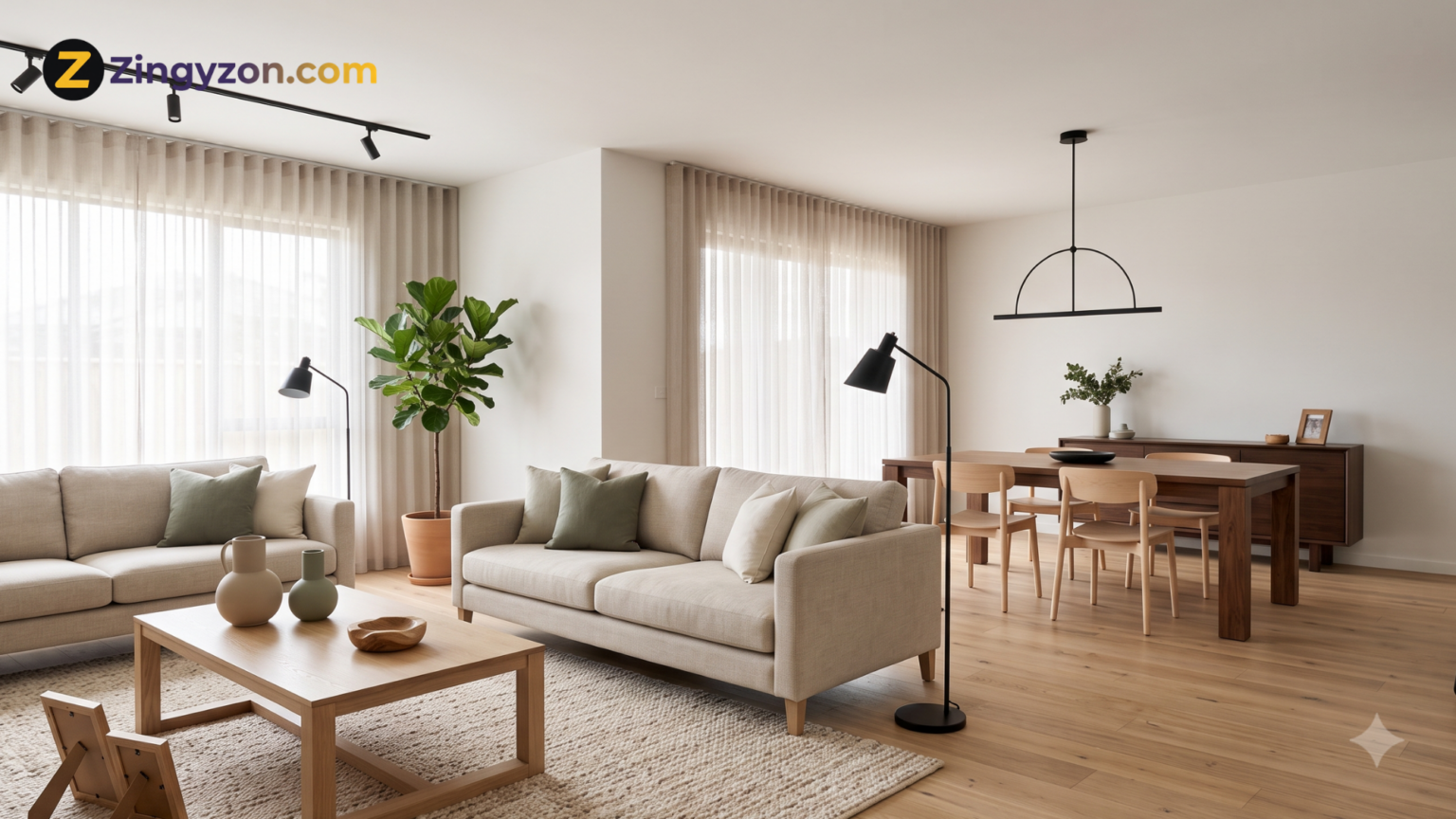
Wood brings warmth, texture, and natural character into a home. However, decorating with it can become confusing when your flooring, doors, cabinets, tables, chairs, and storage pieces are all different shades.
You may have light oak flooring, a dark walnut dining table, reddish cherry cabinets, and a pale wooden sideboard in the same space. At first, these finishes may appear unrelated. That does not mean you need to replace everything with a perfectly matching furniture set.
Learning how to mix wood tones in one room is mainly about creating visual relationships. The tones do not have to be identical, but they should feel intentionally selected and properly distributed.
A room containing only one matching wood finish can sometimes appear flat or overly coordinated. Mixing light, medium, and dark woods creates depth and makes a home feel as though it has developed naturally over time.
The key is to choose a dominant wood, understand undertones, repeat important finishes, and use color and texture to connect everything. This guide explains the complete process so you can confidently combine different wood colors without making your room feel crowded or disorganized.
Can You Mix Different Wood Tones in One Room?
Yes, different wood tones can be used successfully in the same room. In fact, combining several finishes often creates a more collected, layered, and personalized interior.
The goal is not to make every wooden surface match. Instead, look for similarities and contrasts that make sense together. Two woods may have different depths but share a warm golden undertone. Alternatively, one light and one dark wood may work together because their contrast appears intentional.
A mixed-wood room feels balanced when:
- One wood tone provides a clear visual foundation
- Other tones appear more than once
- Warm and cool undertones are considered carefully
- Dark and light pieces are distributed across the space
- Textiles and colors connect the different finishes
- The overall room follows a consistent decorating style
Before choosing new furniture, it can help to explore different home interior design styles and identify whether your room is modern, traditional, rustic, Scandinavian, farmhouse, industrial, or eclectic. Your preferred style will influence how much contrast and variety feels appropriate.
1. Start With a Dominant Wood Tone
Begin by identifying the wood finish that covers the greatest area or has the strongest visual impact.
The dominant tone may come from:
- Hardwood flooring
- Kitchen cabinets
- A large dining table
- Built-in shelving
- Wood-paneled walls
- A substantial bed frame
- A large entertainment unit
This finish becomes the starting point for the rest of the room. It does not mean every other piece must match it. It simply provides a stable reference when selecting additional furniture and accessories.
For example, if your room has light oak flooring, you might add a medium walnut coffee table and a dark wooden cabinet. The oak remains the dominant finish, while the deeper woods provide contrast and visual weight.
When the room does not contain wooden flooring or built-ins, choose the largest wooden furniture item as the dominant tone. In a bedroom, this may be the bed. In a dining room, it will usually be the table.
2. Identify Warm, Cool, and Neutral Undertones
The visible lightness or darkness of wood is only part of its color. You should also consider its undertone.
Wood tones generally fall into three broad groups.
Warm Wood Tones
Warm woods often contain yellow, orange, red, honey, or golden notes. Examples may include honey oak, cherry, mahogany, and some walnut finishes.
These woods can make a room feel cozy, welcoming, and traditional.
Cool Wood Tones
Cool woods may contain gray, taupe, ash, blue, or slightly green undertones. White oak, ash, and many gray-washed finishes can fall into this group.
They often work well in modern, Scandinavian, coastal, and minimalist interiors.
Neutral Wood Tones
Some finishes appear relatively balanced without a strong red, yellow, or gray cast. Neutral woods can act as a useful connection between warm and cool pieces.
To identify an undertone, compare the furniture against a plain white or neutral background. Place wood samples beside one another in the actual room rather than judging them separately in a store.
Undertones become especially important when the woods are similar in depth. Two medium-brown finishes may clash more noticeably if one looks orange and the other appears gray. Sherwin-Williams recommends considering undertones, contrast, and natural light when coordinating wood floors and surrounding colors.
You do not always have to use woods from only one temperature family. Warm and cool woods can be mixed, but the combination should be repeated and balanced rather than appearing accidental.
3. Repeat Each Important Wood Tone
Repetition is one of the easiest ways to make mixed wood finishes look intentional.
A wood tone that appears only once may seem disconnected. When the same or a similar finish appears in two or three locations, the eye begins to understand it as part of the room’s design.
For example, a dark walnut coffee table can be repeated through:
- A walnut picture frame
- A dark wooden lamp base
- A small side table
- A decorative bowl
- A shelf
- Chair legs
The pieces do not need to be produced from the exact same wood species. They only need to be visually related in color and depth.
Repeat finishes in small doses rather than buying a complete matching set. A large table and six identical chairs may feel heavier than a wooden table combined with upholstered or contrasting chairs.
A useful approach is to repeat every major tone at least twice. This creates connection while preserving the layered appearance that makes mixed wood rooms interesting.
4. Create Clear Contrast
Trying to match two wood finishes that are almost—but not completely—the same can look like a mistake. A clearer difference is often easier to style.
For example, combine:
- Light oak with dark walnut
- Pale ash with deep espresso
- Honey-toned wood with black-stained furniture
- Medium brown flooring with a light natural table
- Dark cabinetry with pale open shelving
Contrast helps each piece maintain its own identity. It is particularly useful when adding a new item to a room containing a wood finish that is difficult to match.
Rather than searching for a nearly identical table for existing flooring, choose one that is clearly lighter or darker. This makes the variation look deliberate.
However, contrast should still support balance. If the room has dark flooring and dark cabinets, adding several more heavy wood pieces may make it feel visually crowded. Pale wood, woven materials, glass, or upholstery can create relief.
5. Balance Wood Tones Across the Room
Distribution is as important as color.
Avoid placing all the dark wood furniture on one side of the room and all the light furniture on the other. This can make the space feel visually uneven.
Spread wood tones around the room so the eye moves naturally from one area to another. A dark cabinet on one wall may be balanced by a dark coffee table or framed artwork across the room.
Think of the space in terms of visual weight:
- Dark wood usually feels heavier
- Light wood feels more open
- Red or orange wood attracts attention
- Large furniture has more impact than small accessories
- Highly patterned grain creates more movement
In an open-plan room, repeat at least one wood tone between the connected areas. A dining table may relate to the living-room side tables, while kitchen stools may repeat the finish of a nearby console.
This does not require exact matching. A similar color family is usually enough to help the areas feel connected.
6. Let the Wood Flooring Act as a Foundation
Wood flooring is usually the largest wood surface in a room, but your furniture does not need to match it exactly.
Furniture that is too similar to the floor can visually disappear into it. A coffee table in the same shade as the flooring may lack definition, particularly when both have similar grain patterns.
Use contrast to separate furniture from the floor. A light rug can distinguish a dark table from medium-toned flooring, while a patterned rug can separate pale furniture from light oak boards.
The direction, grain, plank width, and finish of flooring also influence the room. Modern flooring often combines natural variation rather than displaying one perfectly consistent shade. You can learn more about how flooring affects an interior in this guide to modern wood flooring trends.
If the flooring has several visible shades, use them as a ready-made palette. Select furniture that repeats one of the lighter, medium, or darker colors already present in the boards. This creates a connection without requiring a perfect match.
7. Use Rugs to Separate Similar Woods
A rug creates a visual break between wooden furniture and wood flooring.
This is particularly helpful when:
- The furniture and flooring are close in color
- Both surfaces have active grain patterns
- The room contains several wood finishes
- A dining set appears too heavy
- You want to define a seating area
Choose a rug that contrasts with the wood while relating to the room’s wider color palette. Cream, beige, muted blue, soft green, charcoal, and patterned rugs can all help organize mixed finishes.
Texture also matters. Wool, jute, cotton, and low-pile rugs introduce softness against hard wooden surfaces.
Ensure the rug is large enough for the furniture arrangement. A very small rug can make a room feel disconnected, while a properly scaled one creates a clear foundation for multiple pieces.
8. Connect Wood Tones With Textiles
Curtains, cushions, bedding, upholstery, and rugs can act as bridges between different woods.
For a room containing warm honey oak and dark walnut, consider fabrics with cream, rust, olive, tan, or muted gold. These shades relate naturally to both finishes.
For gray-washed oak and black-stained furniture, use cool neutrals, blue, charcoal, or soft green.
Textiles do not need to copy the exact color of the wood. Their purpose is to create a surrounding palette in which all the finishes feel comfortable.
Patterned fabrics can be especially useful because one design may contain several related browns, creams, and accent colors. This makes it easier to combine furniture collected at different times.
9. Add a Unifying Paint Color
Wall color strongly influences how wood tones appear.
Warm whites, creamy neutrals, beige, muted green, and earthy shades can complement golden or reddish woods. Cooler whites, pale gray, blue-gray, and certain green tones may work well with ash, white oak, or gray-washed finishes.
Lighting can cause both wall colors and wooden finishes to appear warmer or cooler at different times of day. Test paint and wood samples together under daylight and artificial lighting before making a final decision.
A neutral wall color is often the easiest choice when the room already contains several strong wood tones. However, neutral does not always mean plain white. A soft warm or cool neutral selected according to the wood undertones can create a more cohesive result.
Dark paint can also work well. Deep green, navy, charcoal, and earthy brown can create an elegant background for mixed woods, especially in rooms with good lighting.
10. Mix Grain Patterns Carefully
Wood color is only one part of its appearance. Grain pattern also affects how busy or calm a room feels.
Some woods have straight, subtle grain, while others display strong knots, waves, or dramatic color changes.
When one large item has a highly visible grain, keep several surrounding pieces simpler. For example, a live-edge dining table can remain the main feature when paired with plain upholstered chairs and a quiet wood sideboard.
If every item has strong grain, carved details, and a different finish, the room may feel visually overloaded.
You can still mix wood species, but vary their intensity. Let one or two pieces provide movement and use calmer finishes elsewhere.
11. Vary the Materials and Finishes
A room containing many wooden pieces needs other materials to prevent it from feeling heavy.
Combine wood with:
- Linen or cotton upholstery
- Metal lighting
- Glass tabletops
- Stone accessories
- Woven baskets
- Ceramic objects
- Leather seating
- Painted furniture
- Natural greenery
Different surface finishes also create variety. Matte, distressed, polished, raw, and stained woods reflect light differently.
However, avoid introducing too many competing finishes. One rustic table, one polished cabinet, and one painted piece can feel collected. A room where every object has a completely different treatment may feel unplanned.
Metal can act as a useful neutral. Black, aged brass, bronze, and brushed nickel can connect different woods without adding another timber color.
12. Use a Simple Wood-Tone Ratio
There is no fixed mathematical rule for mixing wood, but a simple visual ratio can help.
Try using:
- About 60% dominant wood tone
- About 30% secondary wood tone
- About 10% accent wood tone
This is only a styling guide, not a strict requirement.
For example, a living room may have dominant light oak flooring, medium walnut furniture as the secondary tone, and small black-stained wooden accessories as the accent.
The ratio prevents every finish from competing equally. One tone leads, another supports it, and the third adds depth.
Wood-Tone Combinations That Work Well
Light Oak and Walnut
Light oak creates an airy foundation, while walnut adds warmth and depth. This pairing works well in modern, Scandinavian, and transitional rooms.
White Oak and Black Wood
The contrast feels clean and graphic. Use black in smaller amounts through chairs, frames, shelving, or table legs.
Honey Oak and Dark Brown
Dark brown can make older honey oak look more intentional. Cream textiles and muted green accents help connect the two.
Cherry and Neutral Oak
Cherry has noticeable red undertones, so pair it with quieter, neutral-toned oak rather than another competing orange-red finish.
Gray-Washed Wood and Natural Timber
A neutral natural wood can keep gray finishes from making the room feel cold. Repeat both tones and add warm textiles.
Mixed Vintage Woods
Vintage furniture does not need to match. Connect different pieces through similar hardware, repeated colors, coordinated textiles, or one consistent wall color.
How to Mix Wood Tones in Different Rooms
Living Room
Use the floor or largest storage piece as the dominant tone. Add contrast through coffee tables, side tables, and chair frames. A large rug will prevent multiple wooden items from visually merging.
Bedroom
Let the bed frame lead the palette. Bedside tables do not have to match the bed, but they should repeat another detail in the room. Bedding, curtains, and lamps can connect the finishes.
Dining Room
A dining table and chairs do not have to form a matching set. Upholstered chairs, painted chairs, or a darker wood finish can make the arrangement feel more collected. Repeat the chair color through a sideboard, frame, or light fixture.
Kitchen
Treat cabinets and flooring as the major fixed woods. Introduce one contrasting finish through stools, shelves, or a dining table. Keep countertops and backsplash materials relatively calm if the wood already provides strong variation.
Home Office
A desk, shelf, and filing cabinet can be different finishes when their undertones are related. Use a rug, desk chair, and organized accessories to create a clear visual connection.
Common Mistakes When Mixing Wood Tones
Trying to Match Everything
Perfect matching is unnecessary and can make a room resemble a showroom set. Aim for coordination rather than duplication.
Using Several Almost-Identical Finishes
Slightly different medium browns can look like a failed match. Use clearer contrast or separate them with fabric, metal, or painted surfaces.
Ignoring Undertones
Two woods may have the same depth but clash because one appears red and the other gray. Compare finishes together before purchasing.
Introducing a Wood Tone Only Once
An isolated finish can appear accidental. Repeat it through at least one smaller item or accessory.
Grouping Dark Furniture Together
Several dark pieces in one area create visual heaviness. Spread them around the room and balance them with lighter materials.
Forgetting About Lighting
A wood finish viewed in a bright store may look very different in a dim room. Check samples during both daytime and evening.
Adding Too Many Grain Patterns
Strong grain on the floor, table, cabinets, and shelves can overwhelm a space. Allow one surface to lead and keep others quieter.
Budget-Friendly Ways to Improve Mixed Wood Furniture
You do not need to replace your furniture to create a better combination.
Try these practical changes:
- Add a rug between furniture and flooring
- Replace hardware with one consistent metal
- Paint one mismatched wooden piece
- Use runners or placemats on a dining table
- Repeat a wood tone through inexpensive frames
- Add neutral cushions and curtains
- Move dark pieces to opposite sides of the room
- Introduce baskets or natural woven accessories
- Refinish only the most distracting item
Sometimes rearranging the furniture is enough. View the room from the entrance and check whether the dark and light tones feel evenly distributed.
Frequently Asked Questions
How many wood tones can you mix in one room?
Most rooms can comfortably include two or three main wood tones. More may work in eclectic or vintage interiors when the finishes are repeated and connected through color, texture, and balanced placement.
Do all wood undertones have to match?
No. Similar undertones are easier to combine, but warm and cool woods can coexist when the contrast is intentional and both temperatures appear elsewhere in the room.
Should wood furniture match wood flooring?
Furniture does not need to match the flooring. A lighter or darker finish often creates better definition. Rugs can also separate similar tones.
Can you mix oak and walnut furniture?
Yes. Light or medium oak and darker walnut create attractive contrast. Repeat each finish at least once and use textiles to connect them.
Can you mix dark and light wood furniture?
Yes. Mixing dark and light woods creates depth. Spread both tones across the room so one area does not feel excessively heavy.
Is it okay to mix wood furniture with painted furniture?
Yes. Painted furniture can provide a visual break between several wood finishes. Black, cream, white, muted green, and deep blue often work well.
How do you mix wood tones in a small room?
Use one dominant light or medium wood and add darker tones in smaller amounts. Keep the wall color calm, limit strong grain, and use a rug to define the furniture.
Can dining chairs be a different wood from the table?
Yes. Contrasting chairs can make the dining set feel more interesting. Connect the chair finish with another item such as a sideboard, frame, or nearby shelving.
What colors look best with mixed wood tones?
Cream, warm white, beige, muted green, blue, charcoal, rust, and earthy neutrals work with many mixed-wood rooms. The best choice depends on whether the woods have warm or cool undertones.
How can you make mismatched wood furniture look intentional?
Repeat each finish, distribute the tones evenly, add a unifying wall color, coordinate the hardware, and use textiles containing shades that relate to the different woods.
Final Thoughts
Understanding how to mix wood tones in one room gives you more freedom to decorate with furniture you already own and pieces you genuinely like.
Begin with the dominant wood, identify its undertone, and add one or two clearly different supporting finishes. Repeat each important tone, balance light and dark pieces throughout the room, and use rugs, textiles, paint, metal, and stone to connect the overall design.
Do not aim for a perfect match. A successful mixed-wood interior should feel coordinated, not identical. Natural variation is part of what makes wood beautiful.
For more practical home design, improvement, and lifestyle inspiration, explore zingyzon.com.
With thoughtful contrast and repetition, different wood finishes can make a room feel warmer, richer, and more personal rather than mismatched.
Keep Exploring Zingyzon.com
Read more Zingyzon SEO, digital marketing, online earning, business, and technology guides for Australia, USA, and global readers.