
How to Choose Trail Running Shoes for an Ultra Race
Choosing shoes for a short trail run is relatively simple. You need reasonable comfort, suitable grip, and enough protection for […]
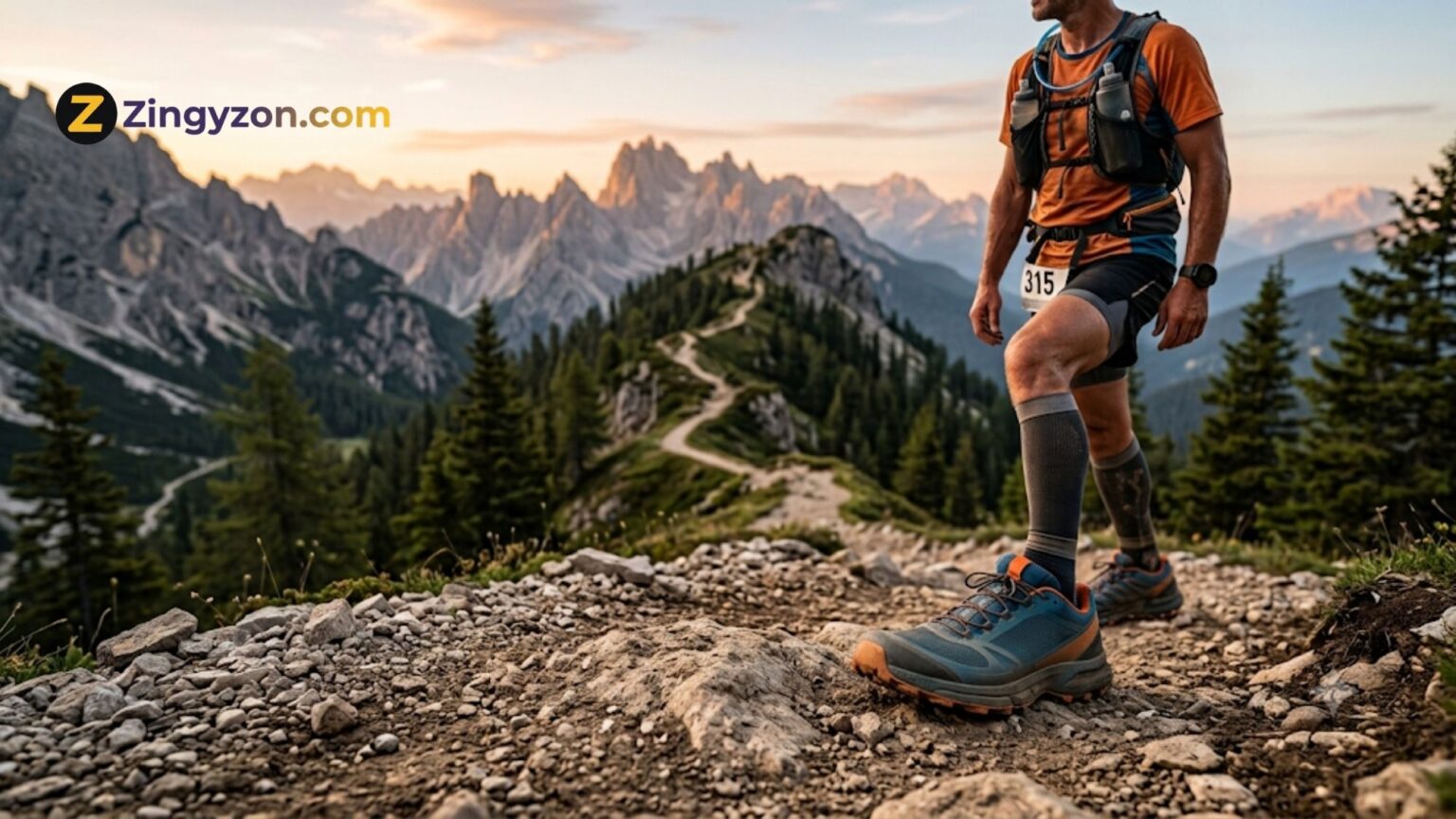
Choosing shoes for a short trail run is relatively simple. You need reasonable comfort, suitable grip, and enough protection for the route. Choosing trail running shoes for an ultra race is different because small problems can become serious after several hours on your feet.
A toe that lightly touches the front of the shoe during a short training run may become painful on a long descent. A heel that moves only slightly can cause blisters after repeated climbing. A soft, comfortable midsole may begin to feel unstable when your legs become tired, while an aggressively lugged outsole may feel awkward if much of the race takes place on smooth, hard-packed trails.
There is no single best ultramarathon shoe for every runner. The right choice depends on your feet, running style, race distance, terrain, elevation, weather, expected pace, and personal preference.
Research into ultramarathon footwear also suggests that the effects of cushioning, stiffness, and other shoe technologies are highly dependent on the individual runner and the environment. A feature that helps one athlete may not produce the same result for another.
The goal is therefore not to find the most advanced or expensive shoe. It is to find a shoe that remains comfortable, secure, protective, and predictable when both you and the trail begin to deteriorate.
Start With the Specific Ultra Race
Before looking at brands, colours, or technical features, study the course.
An ultra race can take place on dry desert tracks, wet forest trails, rocky mountain paths, soft mud, snow, gravel roads, or a combination of several surfaces. Shoes designed for one environment may perform poorly in another.
Review the following course details:
- Total distance
- Elevation gain and loss
- Technical difficulty
- Surface type
- Expected weather
- Number and length of descents
- Stream crossings
- Road or pavement sections
- Aid-station locations
- Time of year
- Likely finishing time
A 50-kilometre race on smooth woodland paths may require a very different shoe from a 100-mile mountain event with loose rock, mud, and long technical descents.
Some manufacturers organise their footwear by intended distance, terrain, cushioning, stability, width, and heel-to-toe drop. For example, runners comparing a specialised trail running shoe can filter options for distances ranging from shorter trail events to races of 100 kilometres or more.
Use these categories as a starting point, but do not assume that a shoe labelled for ultramarathons will automatically suit your feet.
Fit Is More Important Than Technology
An ultra shoe can have an advanced foam, premium outsole, carbon plate, or precision lacing system, but none of those features will compensate for poor fit.
The shoe should hold the heel and midfoot securely while allowing enough room around the toes. Your foot should not slide forward on descents, but your toes should also not feel compressed.
When trying on shoes, check whether:
- Your heel remains secure while walking uphill
- Your foot does not slide during downhill movement
- Your toes can spread naturally
- The upper does not press against the sides of your feet
- The tongue does not create pressure on the top of your foot
- The arch area feels comfortable
- The shoe bends in a natural place for your foot
- There are no seams or overlays rubbing sensitive areas
Do not buy a particular size simply because you wear that size in another brand. Running-shoe dimensions can vary between manufacturers and even between models from the same company.
Try shoes with the socks you plan to wear during the ultra. If you use insoles, orthotics, toe socks, or thicker winter socks, bring those as well.
Allow for Foot Swelling
Feet can swell during prolonged running, especially in warm weather or during races lasting many hours. A shoe that feels perfectly fitted at the starting line may become restrictive later.
However, automatically buying a shoe one full size larger is not always the right solution. Too much space can allow the foot to move, increasing friction and instability.
Instead, look for adequate space in the toe box and confirm that the upper can accommodate some expansion without becoming tight.
Try shoes later in the day, when your feet may be slightly larger than they are in the morning. Better still, test the fit after a long training session, because this gives you a more realistic idea of how the shoe may feel during the race.
Your longest training runs should reveal whether the shoe becomes tight around the forefoot, presses on your toes, or allows excessive movement after several hours.
Choose the Right Toe-Box Shape
Toe-box width is not only about comfort. It can affect stability, descending confidence, and blister risk.
A wide toe box allows the toes to spread, which many runners appreciate during long races. However, a shoe that is too wide may allow the forefoot to slide sideways on technical terrain.
A narrow toe box may create a precise and secure feeling, but it can become uncomfortable as the feet swell. It may also place pressure on the toes during long descents.
The ideal shape should follow your foot rather than forcing your foot to match the shoe.
Runners with broad forefeet, bunions, toe sensitivity, or a history of damaged toenails should pay particular attention to the front of the shoe. A model offered in regular and wide versions may make it easier to find an appropriate balance between space and security.
Match the Outsole to the Terrain
The outsole is the rubber section that contacts the ground. Its compound and lug pattern determine how the shoe interacts with mud, rock, gravel, roots, and other surfaces.
Deep lugs
Deep, widely spaced lugs can dig into mud and soft ground. The spacing may also help the outsole release mud rather than collecting it underneath the shoe.
However, very aggressive lugs can feel uncomfortable or inefficient on hard-packed ground and road sections.
Moderate lugs
Moderate lugs are often suitable for mixed terrain, including gravel, woodland trails, dry dirt, and occasional road sections. They may provide a useful compromise for races containing several surface types.
Closely spaced or shallow lugs
Shallower tread can feel smoother and more efficient on firm trails, but it may struggle in deep mud or loose conditions.
Rubber quality matters as much as lug depth. Wet rock, wooden bridges, and roots can be slippery even when a shoe looks aggressive. Some trail-shoe collections use specialist compounds such as Vibram Megagrip across models designed for mixed and technical terrain.
Test the outsole on conditions similar to those expected on race day. A dry-weather test cannot tell you how the shoe will behave on wet stone.
Balance Cushioning With Stability
Ultra runners often want more cushioning because they expect to spend many hours on their feet. Cushioning can reduce the harsh feeling of repeated impacts and may improve comfort during long runs.
More cushioning, however, is not always better.
A very soft or high shoe can feel unstable on uneven ground, particularly when your ankles and lower legs become tired. A firmer shoe may provide better ground control but feel less forgiving during long sections of hard trail.
The right amount of cushioning depends on:
- Your body weight
- Your running technique
- Race distance
- Surface hardness
- Technical difficulty
- Personal preference
- Lower-leg strength
- Previous training experience
Research indicates that cushioning and footwear stiffness can influence loading, running economy, and fatigue responses, but results vary considerably between runners and conditions. This is another reason to test shoes during long, race-specific training rather than choosing them from specifications alone.
For technical mountain races, look for cushioning combined with a broad, stable platform. For smoother ultras, you may prefer a softer and more responsive ride.
Understand Heel-to-Toe Drop
Heel-to-toe drop is the difference in height between the heel and forefoot inside the shoe.
A higher-drop shoe places the heel further above the forefoot. Some runners find this comfortable for long distances, particularly if they are accustomed to traditional running shoes.
A low-drop shoe creates a flatter platform and may feel more natural to runners who already train in low-drop footwear. However, changing suddenly to a much lower drop can increase stress on the calves and Achilles tendon.
There is no universally correct drop for an ultra race.
Choose a drop that is close to what your body already tolerates. The weeks before an ultramarathon are not the right time to make a dramatic change in footwear geometry.
Introduce a new drop gradually through shorter runs before using it for long-distance training.
Look for Protection Without Excessive Rigidity
Ultra courses may contain sharp stones, roots, loose gravel, and repeated impacts. Trail shoes often include protective features such as:
- Toe bumpers
- Reinforced sidewalls
- Rock plates
- Durable overlays
- Protective heel structures
- Tightly woven upper materials
A rock plate can help reduce the discomfort caused by sharp stones pressing through the outsole. However, a very rigid plate may reduce flexibility and ground feel.
The toe bumper should protect the front of the foot without pressing against the toes. This is particularly important during long descents, when the foot may repeatedly move towards the front of the shoe.
Protection should make you more confident, not make the shoe feel heavy and restrictive.
Make Sure the Heel Is Secure
Heel movement is one of the most common warning signs of a poor fit.
If the heel lifts repeatedly, friction can create blisters. A loose heel may also reduce confidence on steep descents and technical corners.
Before rejecting a shoe, experiment with the lacing system. A runner’s knot or heel-lock lacing technique may improve security. However, laces should not be tightened so firmly that they create pressure on the top of the foot.
Some shoes use alternative adjustment systems designed to distribute tension and provide a more precise hold. The Kailas FUGA EX3, for example, sits within a technical trail range that includes different fitting and outsole configurations.
Regardless of the system used, the heel must remain secure without causing numbness, pressure, or discomfort.
Consider Breathability, Drainage, and Waterproofing
Waterproof shoes may sound ideal for wet races, but the decision is not always simple.
A waterproof membrane can help keep out rain, wet grass, mud, and shallow moisture. It may be valuable in cold conditions where keeping the feet warm is a priority.
However, water can still enter through the top of the shoe during a deep stream crossing. Once inside, a waterproof shoe may drain and dry more slowly than a breathable non-waterproof model.
In warm conditions, a breathable upper may help release heat and moisture. For races with repeated river crossings, fast drainage may be more useful than waterproofing.
Choose according to the course:
- Cold rain or snow may favour waterproof protection.
- Warm, humid conditions may favour breathability.
- Frequent water crossings may favour drainage and quick-drying materials.
- Dry desert races may require ventilation and protection from dust or sand.
Test the shoe with wet socks before race day. You need to know whether the upper stretches, becomes heavy, or creates rubbing when soaked.
Do Not Ignore Shoe Weight
Lightweight shoes can feel fast and agile, but the lightest shoe is not always the best choice for an ultra.
Reducing weight may involve using less rubber, cushioning, upper structure, or protection. On a smooth 50-kilometre course, this may be acceptable. On a rocky 100-mile race, extra protection and durability may be worth carrying.
The important question is not, “How light is this shoe?” It is, “Does this shoe provide everything I need without unnecessary weight?”
A slightly heavier shoe that remains stable and comfortable may save more energy than a lighter shoe that forces you to slow down on technical terrain.
Test the Shoe on Long Descents
Many trail shoes feel comfortable while running uphill or on flat ground. Problems often appear during descents.
Downhill running pushes the foot towards the front of the shoe and increases the need for control. Before choosing your race shoe, test it on sustained descents similar to those on the course.
Check for:
- Toes hitting the front
- Toenail pressure
- Heel movement
- Sideways sliding
- Laces loosening
- Instability during turns
- Excessive movement inside the toe box
A shoe that fails on descents is unlikely to become more comfortable after ten or fifteen hours of racing.
Train in the Complete Race Setup
Shoes do not work independently from the rest of your equipment.
Test them with:
- Race-day socks
- Insoles or orthotics
- Gaiters
- Ankle supports
- Trekking poles
- Your hydration vest
- Your planned pack weight
Gaiters may prevent sand, stones, and trail debris from entering the shoe. Socks affect moisture, warmth, friction, and the available space inside the shoe.
Even your hydration vest matters because additional load can slightly change your running mechanics and the way your feet interact with the ground.
For more practical sports, fitness, outdoor, and lifestyle guidance, readers can explore zingyzon.com.
Never Race in Untested Shoes
An ultra race should not be the first long run in a new pair of shoes.
The shoes should be tested through a gradual progression:
- Wear them around the house to check the basic fit.
- Complete a short, easy trail run.
- Test them on climbs and descents.
- Run in wet or muddy conditions if relevant.
- Use them during a medium-distance trail run.
- Complete at least one long race-specific session.
- Test them with your full race equipment.
You do not necessarily need hundreds of miles in the shoes, but you need enough experience to understand how they behave after several hours.
Avoid beginning the race in shoes with a heavily worn outsole or compressed midsole. At the same time, do not save a completely new pair for race morning.
Consider Using More Than One Pair
For longer ultras, especially 100-mile events, some runners place a second pair in a drop bag or leave it with their crew.
Changing shoes may be useful when:
- The first pair becomes soaked
- Your feet swell significantly
- The terrain changes later in the race
- You develop pressure in a particular area
- The shoes become filled with mud or sand
- You simply benefit psychologically from a fresh pair
The second pair should also be thoroughly tested. It may help to choose a slightly roomier model for the later stages, but it must still hold the foot securely.
Do not rely on a shoe change as an excuse to begin the race in unsuitable footwear.
Common Mistakes When Choosing Ultra Shoes
Buying based only on appearance
Colour and design should come after fit, grip, comfort, and stability.
Copying an elite runner
A sponsored athlete may have different biomechanics, experience, pace, and support than you.
Choosing the softest shoe available
Soft cushioning may feel impressive in a shop but unstable on technical terrain.
Ignoring the outsole
A comfortable shoe with unsuitable traction can become dangerous in mud or on wet rock.
Buying too much extra space
Some swelling room is helpful, but excessive volume can cause sliding and friction.
Changing drop before the race
A dramatic change can place unfamiliar stress on the feet and lower legs.
Testing only on easy trails
Race shoes should be tested on the climbs, descents, surfaces, and weather expected during the event.
Assuming waterproof is always better
Waterproof footwear can be useful, but breathability and drainage may matter more in warm or waterlogged races.
A Final Ultra Shoe Checklist
Before committing to your race shoes, confirm that:
- The heel is secure
- The toes have appropriate room
- The width matches your foot
- The outsole suits the course
- Cushioning remains comfortable over long runs
- The platform feels stable when tired
- The drop is familiar
- The upper does not create pressure
- The shoe drains or protects from water as needed
- The toe bumper does not restrict the toes
- The shoe works with your socks and gaiters
- You have tested it on long descents
- You have completed a race-specific long run in it
- There are no repeated hot spots, blisters, or numbness
If several small concerns appear during training, do not assume they will disappear during the race. Ultra running usually magnifies footwear problems rather than solving them.
Frequently Asked Questions
Should ultra-running shoes be a size larger?
Not automatically. They should provide enough space for some swelling without allowing excessive movement. Shoe sizing differs between brands, so focus on actual fit rather than a fixed sizing rule.
Are maximum-cushion shoes best for ultramarathons?
They can be comfortable for long distances, but they must also be stable enough for the terrain. Some runners prefer moderate cushioning for greater control and ground feel.
Can I use road-running shoes for an ultra trail race?
Road shoes may work on very smooth, dry, non-technical routes, but they usually provide less traction, protection, and trail-specific stability. Study the course before deciding.
Are waterproof shoes suitable for an ultra?
They may be useful in cold and persistently wet conditions. In warm races or events with deep water crossings, breathable and fast-draining shoes may be more practical.
How long before the race should I buy my shoes?
Buy them early enough to complete several race-specific training sessions, including at least one long run. Avoid both heavily worn shoes and completely untested shoes.
Should I carry spare shoes?
A spare pair may be useful during very long races, particularly when conditions are wet, feet are likely to swell, or the terrain changes significantly.
Conclusion
Choosing trail running shoes for an ultra race is not about finding the model with the most cushioning, deepest lugs, or newest technology. It is about finding the shoe that works with your feet and remains dependable across the specific demands of the course.
Begin with the race terrain and weather. Prioritise fit, heel security, toe room, and long-distance comfort. Match the outsole to the surface, balance cushioning with stability, and choose a familiar heel-to-toe drop.
Most importantly, test the shoes during long runs, technical descents, wet conditions, and full race-kit sessions. A shoe that feels good for twenty minutes in a shop has not yet proved that it can support you through an ultramarathon.
The best ultra shoe is the one you stop thinking about while running. It should protect your feet, grip the trail, remain stable as fatigue develops, and allow you to focus on pacing, nutrition, navigation, and reaching the finish line.



Keep Exploring Zingyzon.com
Read more Zingyzon SEO, digital marketing, online earning, business, and technology guides for Australia, USA, and global readers.