
The Ideal Bedroom Temperature and Humidity for Better Sleep
You can buy a supportive mattress, invest in comfortable pillows, switch off your phone before bed, and follow a consistent […]
You can buy a supportive mattress, invest in comfortable pillows, switch off your phone before bed, and follow a consistent evening routine, yet still wake up feeling restless. One commonly overlooked reason is the environment inside your bedroom.
Temperature and humidity can influence how easily you fall asleep, how comfortable you remain during the night, and how often you wake up. A bedroom that is too warm may leave you sweating and turning over repeatedly. A room that is too cold can make it difficult to relax, while excessive humidity may create a damp, heavy atmosphere.
Creating the right sleep environment does not mean turning your bedroom into a perfectly controlled laboratory. It means finding a temperature and humidity range that supports your body’s natural sleep process while remaining comfortable for your personal needs.
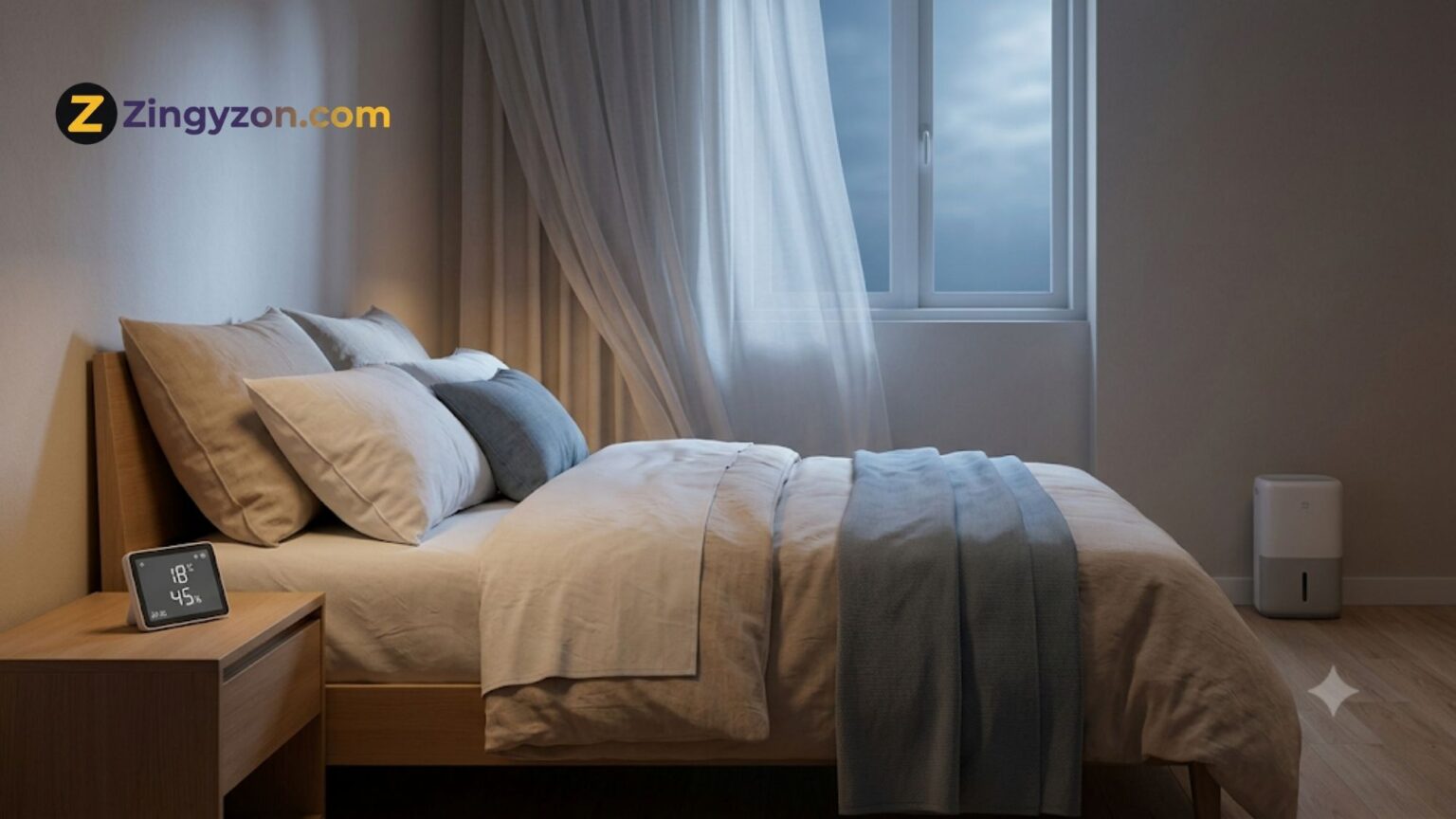
For most adults, a bedroom temperature of approximately 16°C to 19°C, or 60°F to 67°F, is a practical starting point. Indoor relative humidity should generally remain between 30% and 50%.
However, the ideal bedroom temperature and humidity may vary depending on your age, climate, bedding, health, clothing, personal preferences, and whether you share the room with another person.
Quick Guide to the Best Bedroom Conditions
| Bedroom factor | Recommended starting range |
|---|---|
| Temperature | 16°C to 19°C |
| Temperature in Fahrenheit | 60°F to 67°F |
| Relative humidity | 30% to 50% |
| Common comfortable humidity target | Around 40% to 50% |
| Airflow | Gentle and consistent |
| Bedding | Breathable and suitable for the season |
These figures should be treated as useful starting points rather than strict rules. Your bedroom should feel cool, fresh, and comfortable without making you shiver or overheat.
Why Bedroom Temperature Matters for Sleep
Your body temperature changes naturally throughout the day. As bedtime approaches, your internal temperature begins to fall. This change is connected to your circadian rhythm, the internal system that helps regulate when you feel alert and when you feel sleepy.
A slightly cool bedroom supports this natural temperature reduction. When the room is excessively warm, your body may find it more difficult to release heat. This can leave you feeling uncomfortable and may contribute to more frequent awakenings.
The National Sleep Foundation recommends keeping the bedroom cool and identifies approximately 60°F to 67°F as a helpful temperature range for sleep.
Your room should not necessarily feel cold when you enter it. The goal is to create an environment that allows your body to remain comfortably cool underneath appropriate bedding.
What Is the Best Temperature for Sleep?
For most healthy adults, the best temperature for sleep is generally considered to be between 16°C and 19°C.
Some people may prefer a room closer to 19°C, while those who naturally sleep hot may feel more comfortable at 16°C or 17°C. A useful starting point is approximately 18°C. You can then adjust the temperature by one degree at a time based on how well you sleep.
Cleveland Clinic also identifies 15°C to 19°C as a general adult sleeping range and explains that an uncomfortably hot or cold bedroom can increase the likelihood of waking during the night.
The number shown on your thermostat is not the only factor that matters. Your actual comfort can also be affected by:
- The thickness of your duvet
- Your mattress material
- Your sleepwear
- Air circulation
- The number of people in the room
- Whether bedroom windows receive direct sunlight
- Your age and health
- Hormonal changes
- Outdoor weather conditions
For example, a bedroom set to 18°C may still feel too warm if you are using heavy winter bedding during summer.
Why a Hot Bedroom Can Disrupt Sleep
Sleeping in an overheated bedroom can be uncomfortable because your body is already trying to lower its internal temperature.
A room that is too warm may result in:
- Sweating during the night
- Difficulty falling asleep
- Frequent position changes
- Waking to remove bedding
- Feeling thirsty
- Damp pillows or sheets
- Restless or fragmented sleep
Research and sleep-health guidance indicate that overly warm environments are associated with greater wakefulness and disruption of important sleep stages.
High temperatures can become even more uncomfortable when combined with high humidity. Sweat needs to evaporate from your skin to help cool your body. In humid conditions, evaporation becomes less effective, which can leave you feeling hot, sticky, and unable to settle.
People experiencing hot flushes, night sweats, fever, hormonal changes, or heat sensitivity may need additional cooling measures. These can include lighter bedding, breathable clothing, improved ventilation, or a lower thermostat setting.
Can a Bedroom Be Too Cold?
Although a cool bedroom usually supports sleep, colder is not always better.
When the room is uncomfortably cold, your body has to work harder to maintain a suitable temperature. Cold hands, feet, or exposed skin can make it difficult to relax. You may also wake during the night to search for another blanket or adjust the heating.
Signs that your bedroom may be too cold include:
- Shivering in bed
- Cold hands and feet
- Tense muscles
- Difficulty becoming comfortable
- Waking because of the temperature
- Condensation forming on windows or cold surfaces
Before increasing the heating significantly, consider whether your bedding and sleepwear are suitable for the season. It is often easier to add a breathable layer than to overheat the entire room.
Older adults, babies, young children, and people with certain medical conditions may have different temperature requirements. Families should follow appropriate professional guidance when setting sleeping conditions for babies or medically vulnerable individuals.
What Is the Ideal Bedroom Humidity?
Relative humidity describes how much moisture is present in the air compared with the maximum amount the air could hold at that temperature.
For most homes, an indoor relative humidity level between 30% and 50% is considered a healthy and manageable range. The US Environmental Protection Agency recommends keeping indoor humidity within this range and notes that high humidity can increase the likelihood of mould.
For sleep comfort, many people find that a level around 40% to 50% feels balanced. However, the best setting depends on the climate and the individual.
Humidity levels also interact with temperature. A room at 19°C with high humidity may feel warmer and more uncomfortable than another room at the same temperature with balanced humidity.
How High Humidity Affects Your Bedroom
Excessive humidity can make a bedroom feel warm, heavy, and poorly ventilated. Even when the thermostat displays a reasonable temperature, high moisture levels may prevent the room from feeling fresh.
Common signs of excessive bedroom humidity include:
- Condensation on windows
- A musty smell
- Damp bedding
- Mould around windows or walls
- Peeling paint or wallpaper
- Clothes feeling damp inside wardrobes
- A sticky feeling on the skin
- Persistent moisture on cold surfaces
High humidity can also encourage mould growth when moisture remains on surfaces. Mould can damage walls, furniture, fabrics, and personal belongings. It may also be particularly concerning for people with allergies, asthma, or respiratory sensitivities.
Do not simply cover visible mould with paint. Identify and correct the cause of the moisture, such as poor ventilation, a leak, drying wet clothes indoors, or an ineffective bathroom extractor fan.
How Low Humidity Can Affect Sleep Comfort
Very dry air can also make sleeping uncomfortable. Low humidity is particularly common during winter when central heating is used for long periods.
Possible signs of very dry bedroom air include:
- A dry nose or throat
- Dry or itchy skin
- Cracked lips
- Irritated eyes
- Static electricity
- Waking with a dry mouth
- Nasal discomfort
Before using a humidifier, measure the actual humidity level. Adding moisture without checking the room can create excessive humidity and lead to condensation.
Humidifiers also require regular cleaning. A poorly maintained device can collect mineral deposits or unwanted biological growth. Follow the manufacturer’s cleaning, water, and filter instructions carefully.
How to Measure Bedroom Temperature and Humidity
The easiest way to monitor your sleeping environment is to use a digital thermometer and hygrometer. Many affordable devices measure both temperature and relative humidity.
Place the device:
- Near the bed but not directly beside your face
- Away from radiators and heaters
- Away from open windows
- Out of direct sunlight
- Away from humidifiers or dehumidifier outlets
- At approximately sleeping height
Check the readings at bedtime, during the night if you wake up, and again in the morning. A single daytime reading may not accurately represent the conditions you experience while sleeping.
Smart sensors can also record temperature and humidity changes throughout the night. These readings may help you identify patterns, such as humidity rising after windows are closed or temperature increasing when the heating system activates.
How to Reduce Excess Bedroom Humidity
Begin with simple methods before purchasing additional equipment.
Open windows when outdoor conditions allow, use extractor fans in bathrooms and kitchens, fix leaks promptly, and avoid drying large amounts of wet laundry inside the bedroom.
Additional ways to control moisture include:
- Improve ventilation
Allow fresh air to circulate during the day. Even opening windows for a short period may help release trapped moisture when outdoor air is drier.
- Use bathroom and kitchen extractor fans
Steam created during showers and cooking can travel into other areas of the home. Extractor fans should release moist air outdoors rather than into a loft or another enclosed space.
- Keep furniture away from cold exterior walls
Leaving a small gap can improve air circulation and reduce hidden condensation behind wardrobes or large furniture.
- Check for water leaks
Inspect windows, ceilings, plumbing, roofs, and exterior walls if damp patches continue to appear.
- Control indoor laundry drying
Dry clothes outdoors or use a properly ventilated tumble dryer when possible. If laundry must be dried indoors, use a well-ventilated room rather than the bedroom.
- Use suitable equipment
When ventilation and moisture control are not enough, you may need to invest in a dehumidifier. Choose a model suitable for the room size, use an appropriate target humidity, and clean the filter according to the manufacturer’s instructions.
A dehumidifier should not be used to hide a serious structural problem. Persistent dampness, water damage, or widespread mould may require professional inspection.
How to Increase Humidity Safely
When the bedroom humidity consistently falls below approximately 30%, a carefully used humidifier may improve comfort.
Select a device designed for the size of your room and avoid positioning it directly beside the bed. Use a hygrometer to prevent the humidity from becoming too high.
To operate a humidifier safely:
- Change the water regularly
- Do not allow stagnant water to remain in the tank
- Clean the device as instructed
- Replace filters when required
- Use the recommended type of water
- Keep the surrounding area dry
- Stop using it if condensation appears
You may also be able to reduce dryness by lowering excessive heating, improving air circulation, or adjusting the duration of your heating schedule.
Choose Bedding That Supports Temperature Control
Your bedding creates a small climate around your body. Even when the room temperature is suitable, heavy or poorly breathable bedding can trap heat and moisture.
Breathable materials may help air move more freely and allow moisture to escape. Cotton, linen, and certain moisture-managing fabrics can be useful, depending on personal preference.
During warmer months, consider:
- Lightweight sheets
- A lower-tog duvet
- Loose, breathable sleepwear
- A ventilated pillow
- Removing unnecessary throws and blankets
During colder months, use layers rather than one extremely heavy covering. Layers can be added or removed easily during the night.
Your mattress can also affect temperature. Some dense foam materials retain more body heat than naturally ventilated or specially designed cooling surfaces. A breathable mattress protector may help, but it should not significantly change the feel or support of the mattress.
Improve Airflow Without Creating Discomfort
Good airflow can make a bedroom feel fresher, but air should not blow uncomfortably across your face throughout the night.
A ceiling fan or portable fan may help circulate air during warmer weather. Use a low setting and position portable fans securely.
When using air conditioning, avoid setting the temperature extremely low. Sudden differences between indoor and outdoor temperatures can feel uncomfortable, and direct cold airflow may cause stiffness or dryness for some sleepers.
Ventilation is also important because temperature control alone does not remove all indoor pollutants or moisture. Keep air-conditioning filters clean and maintain heating, ventilation, and cooling systems according to their instructions.
For more practical home-comfort and lifestyle guidance, readers can explore zingyzon.com.
Adjust the Bedroom for Each Season
The ideal bedroom temperature and humidity may require different strategies throughout the year.
Summer
Close curtains or blinds during the hottest part of the day. Ventilate the room when outdoor temperatures fall, use lighter bedding, and reduce heat-producing electronics.
In humid climates, air conditioning or dehumidification may be more helpful than a fan alone.
Winter
Avoid overheating the bedroom. Use suitable bedding and sleepwear while keeping the room comfortably cool. Monitor humidity because prolonged heating can make the air excessively dry.
Open windows briefly when conditions allow to release stale air and moisture, but avoid leaving the room so cold that condensation forms on surfaces.
Spring and Autumn
Changing outdoor temperatures can make bedroom conditions unpredictable. Use layered bedding and monitor overnight readings rather than relying only on daytime weather.
What If You Share the Bedroom?
Couples often have different temperature preferences. One person may sleep hot while the other feels cold.
Instead of setting the entire room to one extreme, try:
- Separate duvets
- Different duvet weights
- Layered blankets on one side
- Breathable sleepwear for the warmer sleeper
- Socks or an additional light layer for the colder sleeper
- A fan directed away from the colder sleeper
- Dual-zone mattress temperature systems
Separate bedding can be particularly effective because each person can control their own level of insulation without repeatedly changing the thermostat.
Create Your Personal Sleep-Environment Test
Rather than changing everything at once, run a simple experiment over one or two weeks.
Start by recording your bedroom temperature and humidity each night. Note whether you felt too hot, too cold, damp, dry, or comfortable. Also record how often you remember waking.
Adjust the room temperature by approximately one degree and keep other factors reasonably consistent. After several nights, compare the results.
Next, test bedding weight, sleepwear, airflow, or humidity control. Changing one factor at a time makes it easier to understand what is actually helping.
When Bedroom Adjustments Are Not Enough
Temperature and humidity can affect sleep comfort, but they are not the only causes of poor sleep.
Speak with an appropriate healthcare professional if you regularly experience:
- Severe night sweats
- Persistent insomnia
- Loud snoring or breathing interruptions
- Ongoing daytime sleepiness
- Repeated morning headaches
- Unexplained fever
- Symptoms that continue despite improving the bedroom environment
A comfortable room can support healthy sleep, but it cannot diagnose or treat an underlying sleep disorder or medical condition.
Frequently Asked Questions
Is 18°C a good bedroom temperature?
Yes. Approximately 18°C is a useful starting point for many adults because it falls within the commonly recommended range of 16°C to 19°C.
Is 60% humidity too high for a bedroom?
A reading of 60% is above the generally recommended 30% to 50% range. Occasional short increases may occur, but consistently high humidity should be investigated and controlled.
Is 30% humidity too dry?
Thirty per cent is near the lower end of the recommended indoor range. Some people may experience dryness at this level, particularly during winter. Measure the room consistently before adding moisture.
Should I leave a window open while sleeping?
An open window may improve ventilation when outdoor air is clean, dry, quiet, and at a comfortable temperature. However, it may not be suitable during extreme weather, high outdoor humidity, heavy pollution, or security concerns.
Should a dehumidifier run all night?
This depends on the model and the room conditions. Many modern units include a humidistat and switch off when the selected humidity level is reached. Always follow the manufacturer’s operating and safety instructions.
Conclusion
The ideal bedroom temperature and humidity can make your sleep environment feel calmer, fresher, and more comfortable.
For most adults, begin with a bedroom temperature between 16°C and 19°C and relative humidity between 30% and 50%. Monitor the room with a thermometer and hygrometer, then adjust the temperature, bedding, airflow, and moisture level based on how you actually sleep.
Avoid making the bedroom excessively cold or warm. Control condensation, fix leaks, use ventilation, and select humidity equipment only when measurements show it is necessary.
Small adjustments can make a meaningful difference. The goal is not to achieve one perfect number but to create a stable, cool, breathable environment that helps your body relax and remain comfortable throughout the night.



Keep Exploring Zingyzon.com
Read more Zingyzon SEO, digital marketing, online earning, business, and technology guides for Australia, USA, and global readers.