
How AI Receptionists Are Revolutionizing HVAC Services
HVAC companies depend heavily on phone calls. When a customer’s air conditioner stops working during a heatwave or a furnace […]
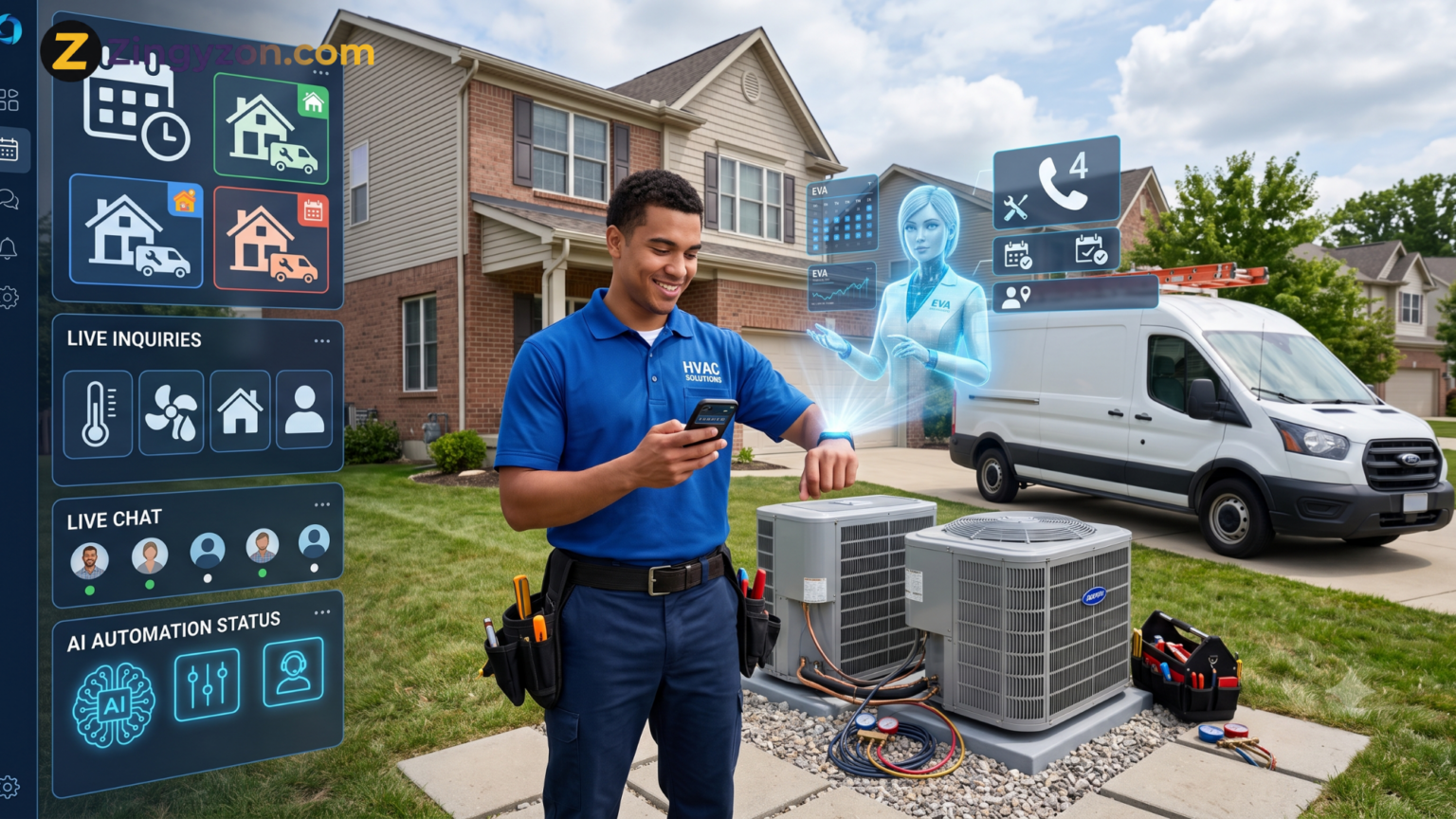
HVAC companies depend heavily on phone calls. When a customer’s air conditioner stops working during a heatwave or a furnace fails on a cold night, that customer usually wants immediate help. They are unlikely to leave several messages and wait patiently for a callback.
They often call the next company on the search results page.
This creates a serious problem for HVAC contractors. Technicians spend much of their day driving, working on equipment, climbing into roof spaces, or speaking with customers on-site. Small companies may not have a full-time receptionist, while larger companies can still struggle with high call volumes during seasonal peaks.
AI receptionists are changing how HVAC businesses manage this challenge.
Modern AI voice systems can answer calls, speak naturally with customers, collect service details, identify urgent requests, book appointments, send confirmations, route calls, and update business software. Unlike a traditional voicemail box, they can communicate with a caller in real time.
This does not mean artificial intelligence can repair a heat pump or diagnose every technical fault over the phone. Its main value is handling the communication and administrative work that happens before and after the technician visits.
As voice technology becomes faster and more capable, AI receptionists are moving from an experimental tool to a practical part of HVAC business operations.
What Is an AI Receptionist for an HVAC Company?
An AI receptionist is a voice-based software system that answers business phone calls and communicates with customers using artificial intelligence.
It is different from a basic automated phone menu. Traditional systems usually ask callers to “press one for sales” or “press two for service.” An AI receptionist allows callers to explain their needs in normal language.
For example, a homeowner might say:
“My air conditioner is running, but no cold air is coming from the vents.”
The system can identify the call as a cooling repair request, ask follow-up questions, collect the address, check appointment availability, and create a booking.
A properly configured AI Receptionist for HVAC business can be trained around common heating and cooling call flows. These may include AC breakdowns, furnace failures, maintenance requests, installation estimates, thermostat problems, unusual noises, water leaks, and poor airflow.
HVAC-focused AI systems may also transfer complicated calls to a human employee while providing the collected information and conversation context. ElevenLabs describes its HVAC answering system as capable of handling common questions and simple tasks before transferring complex matters to staff.
Why Missed Calls Are Expensive for HVAC Companies
Phone calls are often high-intent leads. A person calling an HVAC company usually has an active problem, not a general interest in heating and cooling.
The value of a single call can be significant. It may lead to:
- A routine maintenance visit
- An emergency repair
- A new air conditioner installation
- A furnace replacement
- A commercial service agreement
- An indoor air quality upgrade
- A long-term customer relationship
When the call goes unanswered, the business may lose more than one small repair. It may lose years of future maintenance, replacement, and referral revenue.
Missed calls are especially common when:
- Technicians are already working with customers
- Office staff are handling other calls
- The business is closed for the day
- Demand rises during extreme weather
- A small contractor is working alone
- Calls arrive during weekends or holidays
- Employees are taking lunch or attending meetings
Voicemail does not fully solve the problem. Customers facing an uncomfortable or urgent situation may not want to wait for a callback.
AI phone reception gives HVAC businesses a way to respond immediately, even when every human employee is busy.
24/7 Call Answering Without a Night Shift
Heating and cooling systems do not fail only during business hours.
A furnace may stop working at midnight. An air conditioner may fail on a Sunday afternoon. A commercial freezer or ventilation system may develop a problem during a holiday.
Hiring employees to answer calls around the clock can be expensive, especially for smaller contractors. Outsourced answering services can help, but their agents may have limited knowledge of the company’s pricing, service areas, scheduling rules, or emergency procedures.
An AI receptionist can remain available 24 hours a day.
It can provide a consistent greeting, gather customer information, explain basic policies, and follow the same approved process on every call.
This allows HVAC businesses to capture after-hours opportunities without requiring a receptionist to remain awake overnight.
However, availability should not be confused with unlimited authority. The system should have clear rules about what it can promise. It should never guarantee an arrival time, repair result, price, or emergency response unless that information is confirmed by the company’s scheduling system.
Faster Appointment Booking
One of the most valuable AI receptionist functions is automatic appointment scheduling.
A customer can call, describe the issue, provide contact details, and select an available time without waiting for an office employee.
The AI system may connect with a calendar, customer relationship management platform, or field-service management system. It can then check available time slots and create a booking based on the company’s rules.
For example, the system may consider:
- Customer location
- Type of HVAC service
- Technician availability
- Estimated job duration
- Service area
- Emergency priority
- New or existing customer status
- Residential or commercial equipment
- Required skills or certifications
Some home-service voice platforms advertise integrations with scheduling and dispatch tools such as ServiceTitan, Housecall Pro, Jobber, and Zendesk. The exact integrations vary by provider and should be confirmed before purchase.
Automatic booking can shorten the path between a customer’s first call and a confirmed job. It also reduces the amount of time office employees spend moving appointments between phone calls, calendars, and dispatch systems.
Identifying Urgent HVAC Calls
Not every HVAC request has the same level of urgency.
A customer asking about annual maintenance can usually wait for a normal appointment. A caller reporting no heating during freezing weather may need faster attention. Gas smells, smoke, electrical burning, carbon monoxide alarms, and serious water leaks may require immediate safety instructions or emergency services.
An HVAC AI receptionist can be programmed to listen for urgent phrases and follow an approved escalation process.
For example, it may classify calls involving:
- No heat during dangerously low temperatures
- No cooling for elderly or medically vulnerable occupants
- Burning smells
- Smoke from equipment
- Suspected gas leaks
- Carbon monoxide alarms
- Flooding near electrical equipment
- Commercial system failure
- Complete loss of ventilation in a critical facility
HVAC-specific AI providers market emergency detection and technician dispatch as core functions. AgentZap, for example, states that its HVAC system can identify issues such as no heat or AC failure before scheduling or dispatching the request.
The system should not attempt to provide complex technical or safety advice beyond approved scripts. For high-risk situations, it should clearly advise the caller to move to safety, contact the relevant emergency service, or speak with a qualified human.
Better Lead Qualification
HVAC companies receive calls from many types of customers. Some are ready to book immediately. Others are checking prices, calling from outside the service area, seeking a type of work the company does not offer, or trying to sell products.
AI receptionists can ask qualifying questions before sending the request to a dispatcher or salesperson.
Useful questions may include:
- What type of property is it?
- What is the service address?
- Is the system heating, cooling, or both?
- What problem are you experiencing?
- When did the issue begin?
- Is the system still operating?
- What type of equipment is installed?
- Is this an emergency?
- Are you an existing customer?
- Do you own or manage the property?
- Are you looking for a repair or replacement quote?
The answers help the business decide how to handle the request.
A properly qualified lead gives the technician more information before arriving. It may also help the company send the right employee, vehicle, tools, and replacement parts.
This reduces unnecessary back-and-forth communication and may improve first-visit preparation.
Consistent Customer Service
Human receptionists provide valuable judgment and empathy, but service quality can vary when the office becomes busy.
An employee may forget to ask for an email address, fail to confirm a postcode, or enter the wrong appointment type. New team members may also require time to learn the company’s call-handling process.
An AI receptionist follows the workflow it has been given.
It can consistently:
- Introduce the company
- Ask required questions
- Confirm contact information
- Repeat addresses and booking times
- Explain service areas
- Share approved business hours
- Send confirmation messages
- Record call summaries
- Apply the correct lead category
Consistency is particularly useful for HVAC companies with several branches, service areas, or call handlers.
The AI can use the same service standards across every call while applying different rules for residential repairs, commercial customers, maintenance plans, and installation enquiries.
Support During Seasonal Call Surges
HVAC call volumes are closely connected to the weather.
The first major heatwave of summer can generate a sudden flood of AC repair calls. A cold snap can create the same pressure for heating companies.
A human office team may manage normal call levels well but become overwhelmed when dozens of customers call within a short period.
AI receptionists can handle several conversations without making every caller wait in a long queue. They can collect requests, create appointments, and identify which cases require immediate human attention.
This gives HVAC companies a form of flexible call capacity.
Instead of hiring and training temporary employees for short seasonal peaks, the business can use AI for the first stage of call handling while the existing team focuses on dispatch, customers, technicians, and complex cases.
The result is not simply fewer missed calls. It may also reduce stress on office staff during the busiest weeks of the year.
Automatic Call Summaries and Customer Records
After each conversation, an AI receptionist can create a structured summary.
The summary might include:
- Customer name
- Phone number
- Email address
- Service location
- Equipment type
- Reported problem
- Urgency level
- Preferred appointment
- Access instructions
- Existing customer status
- Call outcome
This information can be sent to the office team, added to a CRM, entered into dispatch software, or delivered through email or text.
Voice AI platforms increasingly support integrations that move call information into calendars, customer-management tools, spreadsheets, messaging systems, and other business software.
Accurate summaries can save staff from replaying entire call recordings. They also help technicians understand the situation before contacting or visiting the customer.
However, businesses should still review important details. Speech recognition can misunderstand names, addresses, equipment models, and technical terms, especially when the caller has a strong accent or is speaking in a noisy location.
Outbound Follow-Ups and Maintenance Reminders
AI voice tools are not limited to answering incoming calls.
They can also support approved outbound communication, including:
- Maintenance reminders
- Appointment confirmations
- Technician arrival updates
- Estimate follow-ups
- Customer satisfaction calls
- Membership renewal reminders
- Seasonal tune-up campaigns
- Missed-call callbacks
- Rescheduling notifications
Regular maintenance is an important source of repeat business for HVAC companies. Yet office teams may not have enough time to call every customer whose service is due.
AI can help contact customers in a structured way and connect interested callers to the booking process.
Businesses must follow local telemarketing, consent, privacy, and automated-calling laws. Customers should not receive unwanted marketing calls simply because the technology makes them easy to send.
Lower Administrative Pressure
Reception and dispatch work involves many repetitive tasks.
Employees may spend hours answering the same questions:
- Do you service my area?
- Are you open today?
- Do you repair heat pumps?
- How soon can someone come?
- Do you offer financing?
- Can I reschedule my appointment?
- Do you provide commercial service?
- What brands do you work on?
AI can answer approved routine questions and leave human employees with more time for work that requires judgment.
Office staff can focus on:
- Handling upset customers
- Managing unusual emergencies
- Coordinating technician routes
- Preparing estimates
- Solving payment problems
- Communicating with suppliers
- Supporting large commercial clients
- Managing complex warranty claims
In this model, AI is not simply replacing a receptionist. It is removing repetitive pressure from the team so human employees can spend more time on difficult and valuable interactions.
Reporting on AI use in the home-service industry suggests that companies are using it to support customer contact and booking while still keeping humans involved in more complex work.
A More Natural Alternative to Phone Menus
Many customers dislike traditional interactive voice response systems.
Long menus force callers to listen to several options, press buttons, and repeat information after reaching an employee.
Modern AI voice systems are designed to allow more natural conversations. The caller can describe the issue without knowing which department or menu option is correct.
Real-time voice systems normally combine speech recognition, a language model, business tools, and speech generation. Research into enterprise voice agents shows that streaming these components can reduce response delay and create more natural call timing.
The quality still varies between providers. Some systems interrupt callers, pause awkwardly, misunderstand technical language, or sound unnatural.
Before adopting AI phone answering for HVAC, contractors should test the system using realistic calls rather than relying only on a polished sales demonstration.
What an HVAC AI Receptionist Should Not Do
AI receptionists have clear limits.
They should not:
- Diagnose dangerous technical faults with certainty
- Tell customers to open electrical or gas equipment
- Promise a repair price without enough information
- Guarantee that a technician will arrive at an unconfirmed time
- Hide important emergency warnings
- Collect unnecessary sensitive information
- argue with upset customers
- Continue handling a call when human escalation is needed
- Claim to be human when disclosure is legally or ethically required
A customer experiencing a gas smell, fire, carbon monoxide alert, or electrical danger needs clear safety guidance, not a long automated troubleshooting conversation.
The system must have rules for transferring or escalating calls to trained employees.
AI should handle predictable communication. Human staff should remain available for emergencies, complaints, unusual requests, vulnerable customers, and decisions involving significant risk.
Privacy, Security, and Customer Trust
Phone calls may contain personal information such as names, addresses, payment details, tenant information, access instructions, and equipment records.
HVAC businesses must understand how an AI provider stores, processes, and protects that data.
Before choosing a system, ask:
- Are calls recorded?
- Where is customer data stored?
- How long are recordings kept?
- Can recordings be deleted?
- Is customer data used to train AI models?
- Which employees can access call records?
- Does the service support local privacy laws?
- Are integrations secured?
- Is payment information handled safely?
- Does the system tell callers they are speaking with AI?
Customers may accept AI support more easily when the business is honest about how the system works.
A simple introduction such as “You are speaking with our virtual scheduling assistant” avoids misleading the caller while keeping the conversation professional.
How to Choose an AI Receptionist for an HVAC Business
Not every voice AI tool is suitable for a service contractor.
A useful HVAC system should offer:
Natural Call Quality
The voice should be clear, responsive, and capable of handling interruptions, different accents, background noise, and incomplete sentences.
Custom HVAC Workflows
The system should understand the company’s services, service areas, maintenance plans, emergency rules, brands, and booking requirements.
Calendar and CRM Integration
It should connect with the tools already used by the company or provide a reliable method for transferring booking information.
Human Call Transfer
Customers must be able to reach a person when the issue is complicated, urgent, or sensitive.
Clear Reporting
The platform should provide call recordings, transcripts, summaries, booking outcomes, and missed-opportunity reports.
Strong Security
Customer records and call data need appropriate protection and access controls.
Flexible Rules
The company should be able to change business hours, service areas, technician schedules, emergency procedures, and seasonal offers without rebuilding the entire system.
Transparent Pricing
Businesses should understand whether charges are based on minutes, calls, phone numbers, integrations, messages, or completed bookings.
A Practical Implementation Process
An HVAC company should not connect an AI receptionist to every call on the first day.
A safer rollout includes several steps.
First, document the existing call process. List common questions, service categories, emergency triggers, booking rules, service areas, and situations requiring a human.
Next, build the AI knowledge base using accurate company information. Avoid adding promises or policies that staff cannot support.
Test the system with different scenarios, including:
- A normal maintenance request
- An urgent no-cooling call
- A customer outside the service area
- A commercial enquiry
- A complaint
- A caller who changes the appointment time
- A person with a strong accent
- A noisy roadside call
- A gas or carbon monoxide concern
- A caller asking for a human
Start by using the AI after hours or as an overflow option. Review recordings, correct mistakes, and improve the scripts.
Only expand its role after the system handles common calls reliably.
Businesses can find more guides on AI, automation, and service technology at zingyzon.com.
Frequently Asked Questions
Can an AI receptionist book HVAC appointments?
Yes. An AI receptionist can collect customer details, check available times, and create appointments when connected to a compatible calendar or field-service platform.
Can AI answer HVAC calls after business hours?
Yes. One of the main benefits is 24/7 availability. The system can take repair requests, answer approved questions, schedule jobs, or alert an on-call employee.
Can an AI receptionist handle emergency HVAC calls?
It can detect approved emergency phrases and follow an escalation workflow. Dangerous situations should still be transferred to a trained person or directed to the relevant emergency service.
Will AI replace HVAC receptionists?
AI is more likely to handle repetitive calls, overflow, and after-hours enquiries. Human employees remain important for complex scheduling, complaints, emergencies, sales decisions, and sensitive customer interactions.
Can AI integrate with HVAC software?
Many providers support calendars, CRMs, and field-service tools. Compatibility varies, so businesses should confirm the exact integration and test data transfer before signing a contract.
Does an AI receptionist sound like a real person?
Modern systems can sound natural, but quality depends on the platform, internet connection, voice model, response speed, and configuration. Customers should still be informed when they are speaking with AI where required.
Is an AI answering service suitable for a small HVAC company?
It can be particularly useful for owner-operated and small HVAC businesses that cannot answer calls while technicians are working. The cost must still be compared with call volume and the value of booked jobs.
Conclusion
AI receptionists are changing the way HVAC businesses manage customer calls.
They can answer enquiries around the clock, book appointments, identify urgent requests, qualify leads, create summaries, send reminders, and support office teams during seasonal demand.
The biggest benefit is not simply automation. It is speed.
Customers with heating or cooling problems want an immediate response. An HVAC company that answers quickly has a better chance of earning the booking than one that sends every busy or after-hours caller to voicemail.
AI should not be treated as a complete replacement for experienced receptionists, dispatchers, or technicians. It works best as the first point of contact for routine calls and as a support tool for the human team.
Companies that introduce it carefully, test real call scenarios, protect customer data, and provide clear human escalation can improve both efficiency and customer service.
As voice AI continues to improve, the HVAC companies gaining the most value will not be those that automate every conversation. They will be those that use automation in the right places while keeping human judgment available when it matters most.



Keep Exploring Zingyzon.com
Read more Zingyzon SEO, digital marketing, online earning, business, and technology guides for Australia, USA, and global readers.