
Home Organization Ideas for Small Spaces
Small spaces can feel comfortable, stylish, and easy to manage when the home has a clear organization system. Many people […]
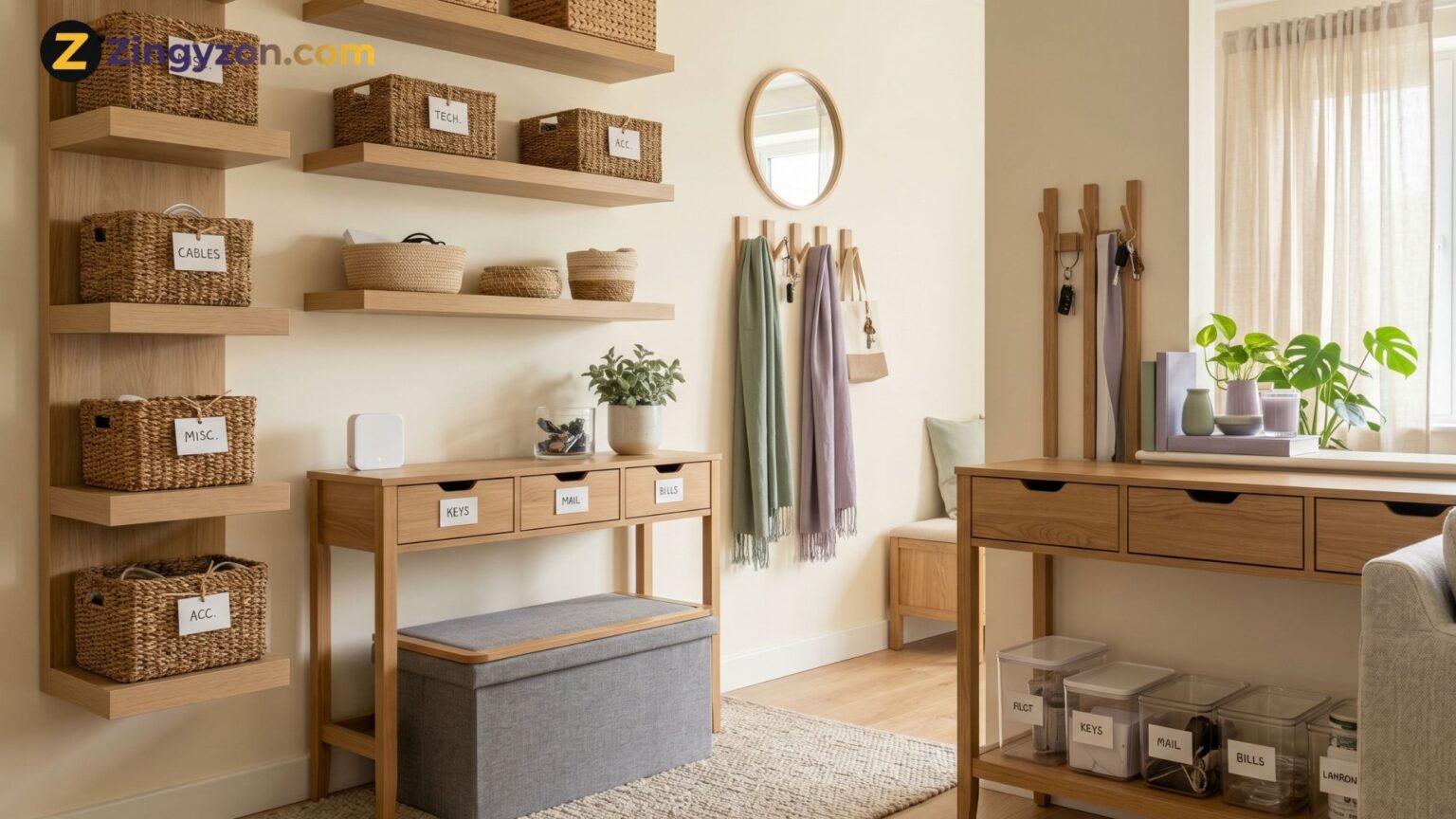
Small spaces can feel comfortable, stylish, and easy to manage when the home has a clear organization system. Many people think a small room needs fewer things only, but a practical layout matters just as much as decluttering. A compact home needs storage that works with daily habits, not storage that looks good for one day and then becomes messy again. For more home-focused guides, readers can also explore Zingyzon home categories for related ideas on modern living, home improvement, and smart lifestyle upgrades.
The goal is simple. Every item should have a place, every corner should serve a purpose, and every room should be easy to reset at the end of the day. These home organization ideas for small spaces can help apartments, small homes, studio rooms, shared bedrooms, compact kitchens, and narrow entryways feel more open and less stressful.
Start With Zones Instead of Random Storage
Small homes become harder to manage when items move from one room to another without a clear purpose. A better approach is to create zones. A reading zone needs books, a lamp, and maybe a small basket for blankets. A work zone needs chargers, documents, stationery, and a tray for daily items. A cleaning zone needs supplies in one safe and easy-to-reach place.
Zones make decisions faster because you do not need to wonder where things belong. When each zone has only the items needed for that activity, the room looks cleaner and works better. This method is especially useful in studio apartments where one room may work as a living room, bedroom, office, and dining space.
Use Vertical Storage to Save Floor Space
Walls are valuable in a small home. Tall shelves, wall hooks, pegboards, floating shelves, and over-door racks can move items off the floor without making the room feel crowded. Vertical storage is helpful for books, towels, kitchen tools, cleaning supplies, handbags, hats, and decorative baskets.
The best vertical storage still looks intentional. Use matching baskets or simple bins so shelves do not become visual clutter. Keep heavier items lower and lighter items higher. Leave some empty space between objects so the room feels clean instead of packed.
Choose Furniture With Hidden Storage
Small spaces need furniture that works harder. A storage ottoman can hold blankets, games, or seasonal items. A bed with drawers can replace an extra dresser. A coffee table with a lower shelf can hold trays, remotes, and magazines. A bench near the entrance can hide shoes while creating a place to sit.
Hidden storage is useful because it reduces visible clutter. It also helps the home stay guest-ready with less effort. The key is to avoid filling every hidden compartment with random items. Label or group items inside each compartment so the storage remains useful long-term.
Declutter Before Buying More Containers
Buying boxes before decluttering can create a bigger problem because clutter simply moves into nicer containers. Start by removing duplicates, broken items, expired products, old papers, unused cables, worn linens, and items that no longer match your routine. After that, choose containers based on what actually needs to stay.
This approach keeps the home realistic. You may discover that you need fewer baskets, fewer drawer dividers, and fewer storage bins than expected. A smaller number of useful containers usually works better than many containers that are difficult to maintain.
Create a Simple Daily Reset System
A small space can look messy quickly because every surface is visible. A daily reset prevents clutter from building up. Spend a few minutes returning items to zones, clearing counters, folding throws, placing shoes in their basket, and putting dishes away. This routine does not need to feel like deep cleaning. It is simply a small reset that protects the organization system.
The reset becomes easier when the home has fewer decision points. If keys always go in one tray, bags always go on one hook, and cleaning cloths always stay in one container, the home becomes easier to manage even on busy days.
Best Small-Space Organization Areas to Fix First
- Entryway: Use hooks, a slim shoe rack, a small tray for keys, and one basket for daily accessories.
- Kitchen counters: Keep only daily-use appliances outside and store extra tools in labeled drawers or bins.
- Bedroom closet: Use shelf dividers, matching hangers, under-bed storage, and a donation bag for unused clothing.
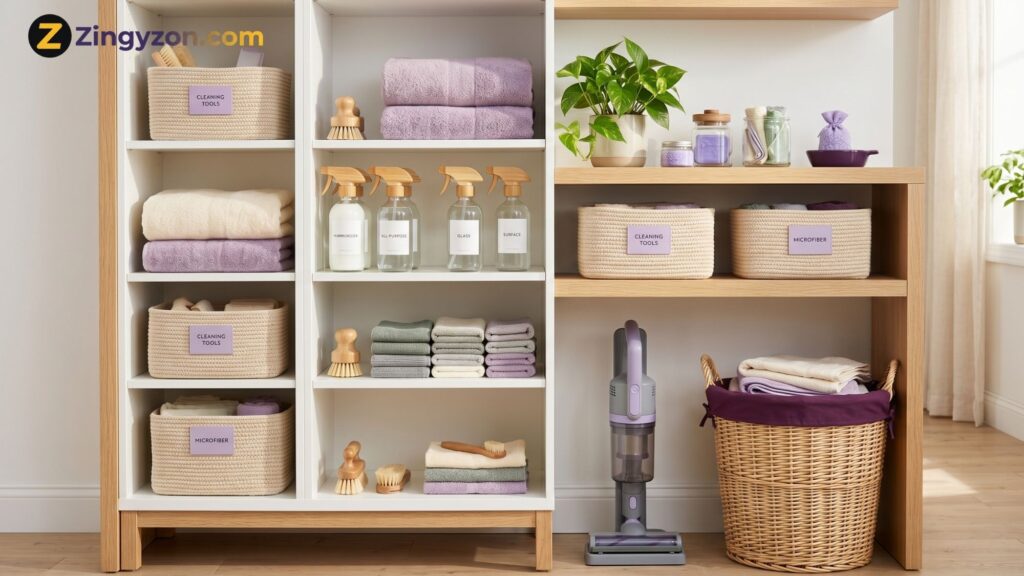
- Bathroom cabinet: Group skincare, hair tools, cleaning supplies, and extra towels in separate containers.
- Living room: Use closed storage for remotes, chargers, toys, blankets, and paperwork.
Use Internal Links to Build a Helpful Home Content Cluster
Readers who want broader home inspiration can start with the Zingyzon home page. For related comfort and lifestyle upgrades, they can read Smart Lifestyle Upgrades for a More Comfortable Modern Home. Readers interested in practical home categories can also browse Home & Garden on Zingyzon. These internal links help readers move naturally between cleaning, organization, decor, appliances, and smart home topics.
Keep Cleaning Products Organized and Safe
Organization is not only about looks. Cleaning products should be stored safely, clearly labeled, and kept away from children, pets, food, and heat sources. Do not mix products unless the product label clearly says it is safe. Keep cleaning sprays, disinfectants, detergents, sponges, and cloths in separate groups so the right item is easy to find.
For a healthier cleaning routine, clean surfaces first before disinfecting them. Dirt and dust can make disinfecting less effective, so a simple clean-first habit makes the process more practical. Safer product choices also matter, especially in small spaces where ventilation may be limited.
Quick Home Organization Checklist
| Step | Action |
| 1 | Choose one small area, such as an entryway shelf, drawer, or bathroom cabinet. |
| 2 | Remove everything from that area and wipe the surface clean. |
| 3 | Keep only items used regularly or genuinely needed. |
| 4 | Group similar items together before choosing containers. |
| 5 | Use labels so everyone in the home knows where items belong. |
| 6 | Reset the area for five minutes at the end of each day. |
Final Thoughts
Small spaces do not need complicated systems. They need simple zones, smart vertical storage, furniture with hidden storage, safe cleaning habits, and a routine that fits real life. When every item has a home, the entire space feels lighter, cleaner, and easier to enjoy. These home organization ideas for small spaces can help readers create a home that looks better, works better, and stays easier to manage every week.
FAQs
What is the easiest way to organize a small home?
Start with one high-use area, remove clutter, group similar items, and assign every item a clear place. Small daily resets help the system last.
How can I make a small room look less cluttered?
Use closed storage, wall shelves, matching baskets, fewer visible items, lighter colors, and furniture with hidden storage.
Should I clean or organize first?
Remove clutter first, then clean the surface, and then organize only the items that need to stay.
What storage is best for small spaces?
Vertical shelves, under-bed boxes, over-door racks, storage ottomans, slim cabinets, drawer dividers, and labeled baskets are useful for small homes.
Keep Exploring Zingyzon.com
Read more Zingyzon SEO, digital marketing, online earning, business, and technology guides for Australia, USA, and global readers.