
Heating and Cooling Tips for Home Comfort in Every Season
Keeping a home comfortable is not only about buying a heater or turning on an air conditioner. A comfortable home […]

Keeping a home comfortable is not only about buying a heater or turning on an air conditioner. A comfortable home depends on smart temperature control, steady airflow, clean filters, insulation, shade, humidity balance, and daily habits that reduce pressure on heating and cooling systems. When these small details work together, every room can feel better without wasting energy.
These heating and cooling tips for home comfort are useful for families, renters, homeowners, and anyone who wants a more balanced indoor environment. The goal is simple. Your home should feel warm in winter, cool in summer, and pleasant during the changing seasons. For more lifestyle and home improvement guides, you can also explore Zingyzon.com.
Start With the Rooms You Use Most
The best heating and cooling plan should begin with the rooms your family uses every day. Living rooms, bedrooms, kitchens, and home offices often need more attention than hallways or storage areas. If one room is always too hot or too cold, the problem may be poor airflow, weak insulation, direct sunlight, blocked vents, or a thermostat that does not read the room correctly.
Walk through the home during different times of the day and notice where comfort changes. A sunny room may overheat in the afternoon. A basement may stay cold even when the upstairs feels warm. A bedroom above a garage may need better sealing or insulation. This simple room-by-room check helps you avoid guessing and makes every upgrade more useful.
Use Your Thermostat More Intelligently
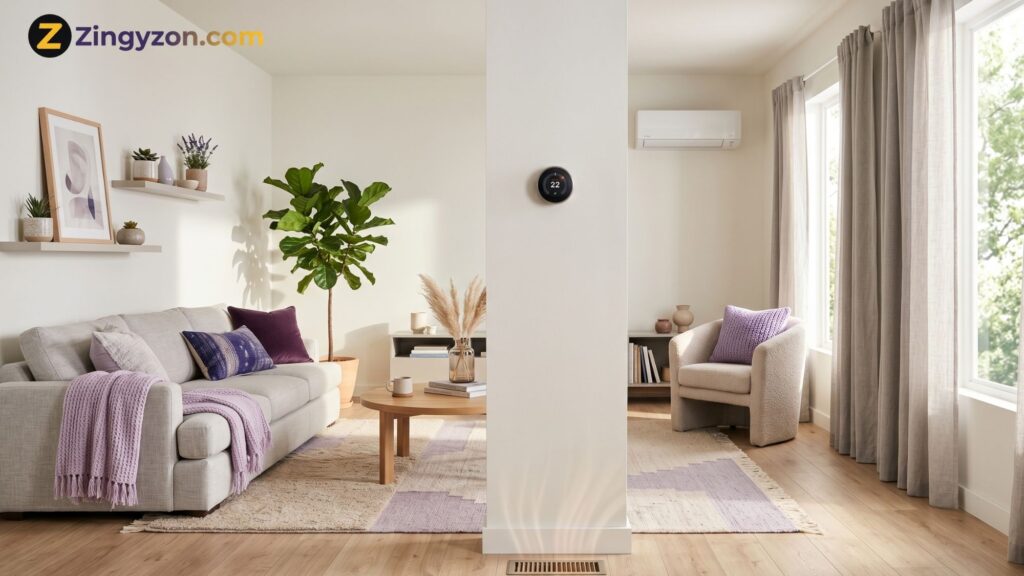
Your thermostat controls the way your heating and cooling system responds. A smart or programmable thermostat can help your home adjust temperature around your routine instead of running at one setting all day. ENERGY STAR explains that smart thermostats are Wi-Fi enabled devices that adjust heating and cooling temperature settings for better performance, and certified models are tested for energy-saving performance.
A good schedule can also reduce waste while you are sleeping or away from home. The U.S. Department of Energy says households can save as much as 10% a year on heating and cooling by turning the thermostat back 7 to 10 degrees Fahrenheit for eight hours a day from its normal setting. This does not mean the home should feel uncomfortable. It means the system should work harder only when comfort is actually needed.
Keep Air Moving Without Overworking the System
Air movement can make a room feel more comfortable even when the thermostat setting stays the same. Ceiling fans, portable fans, open interior doors, clean vents, and well-placed return grilles can help warm or cool air move more evenly. In summer, a fan can make a room feel cooler because moving air helps the body release heat. In winter, gentle air circulation can reduce cold pockets and help warm air spread across the room.
Make sure furniture, curtains, rugs, and storage boxes are not blocking supply vents or return vents. A blocked vent can create uneven temperatures and force the system to work harder. If a room has weak airflow even when the vents are clear, the ductwork, filter, fan speed, or insulation may need attention.
Change Filters and Maintain Equipment
Heating and cooling equipment performs better when it is clean. ENERGY STAR recommends changing air filters regularly, tuning up HVAC equipment yearly, installing a smart thermostat, and sealing heating and cooling ducts as practical steps for efficient comfort. Dirty filters restrict airflow, reduce performance, and can make the system run longer than necessary.
A seasonal checklist can help. Before summer, check air conditioner filters, outdoor units, vents, and thermostat settings. Before winter, check furnace filters, heating vents, safety clearances around heaters, and drafts near doors or windows. Regular maintenance also helps catch small issues before they become expensive repairs.
Improve Insulation, Curtains, and Door Seals
The building itself plays a major role in comfort. If warm air escapes in winter or hot air enters in summer, even a strong heating and cooling system will struggle. Start with easy upgrades such as weather stripping doors, sealing small gaps, using insulated curtains, adding draft stoppers, and closing curtains during harsh sun hours.
Windows can be a major comfort issue. In summer, light-colored curtains, blinds, or shades can reduce heat gain. In winter, heavier curtains can help reduce drafts near glass. Small improvements may not replace insulation, but they can make the home feel more stable and reduce daily discomfort.
Create Heating and Cooling Zones
Not every room needs the same temperature all day. A practical home comfort plan uses zones based on how each space is used. Bedrooms may need stronger cooling at night. A home office may need comfort during working hours. A guest room may not need the same level of heating or cooling when it is empty.
Zoning can be simple or advanced. Simple zoning includes closing doors, using curtains, adjusting vents carefully, and using small fans or space heaters safely in occupied areas. Advanced zoning may include smart thermostats, room sensors, dampers, or mini-split systems. For larger cooling spaces and industrial ideas, readers can also see Cooling Solutions for Warehouses and Factories on Zingyzon.
Do Not Ignore Humidity
Humidity changes how temperature feels. A room may feel hotter when humidity is high because sweat does not evaporate easily. A room may feel colder in winter when indoor air is too dry. Good heating and cooling comfort should include humidity balance, ventilation, and moisture control.
In humid seasons, bathroom fans, kitchen exhaust fans, dehumidifiers, and proper AC use can help. In dry seasons, indoor plants, careful humidifier use, and avoiding overheated air can make rooms feel more comfortable. Always keep moisture controlled because too much humidity can lead to mold, odor, and indoor air quality problems.
Use Safe Portable Heating and Cooling Products
Portable heaters, fans, air coolers, and small dehumidifiers can support comfort when they are used safely. A portable heater should be placed on a flat surface, away from curtains, bedding, furniture, and water. It should never be covered or left unattended. Fans should be placed where they improve airflow instead of pushing dust around the room.
Choose products according to room size and real need. A small bedroom may only need a compact fan or heater, while a larger living room may need better airflow and insulation before adding more equipment. Buying the biggest product is not always the best solution. The best product is the one that matches the room, climate, safety needs, and daily routine.
Seasonal Heating and Cooling Checklist
- Check thermostat schedules before hot and cold seasons begin.
- Replace or clean HVAC filters regularly.
- Keep vents and return grilles open and unblocked.
- Use curtains, blinds, or shades to manage sunlight and drafts.
- Seal gaps around doors and windows where possible.
- Use ceiling fans and portable fans to improve airflow.
- Schedule yearly HVAC maintenance when possible.
- Review each room separately instead of using one setting for the whole home.
For more home comfort and practical living ideas, readers can browse the Zingyzon Blog for related guides.
Final Thoughts
Good heating and cooling is about balance. A comfortable home needs the right temperature, clean airflow, smart scheduling, insulation, shade, humidity control, and safe product use. When these pieces are planned together, your home can feel better in every season.
Start with the simplest steps first. Check rooms, clear vents, improve curtains, set a better thermostat schedule, and keep filters clean. After that, consider smart thermostats, sealing, maintenance, or room-by-room upgrades. These heating and cooling tips for home comfort can help create a calmer, healthier, and more efficient living space.
FAQs
What are the best heating and cooling tips for home comfort?
The best tips include using a smart thermostat, keeping filters clean, improving insulation, sealing drafts, using curtains wisely, maintaining airflow, and checking each room separately for hot or cold spots.
How can I lower heating and cooling costs at home?
You can lower costs by using thermostat schedules, sealing air leaks, maintaining equipment, cleaning filters, improving shade in summer, reducing drafts in winter, and avoiding unnecessary heating or cooling in unused rooms.
Does a smart thermostat help with heating and cooling?
A smart thermostat can help because it adjusts temperature settings around your routine, supports scheduling, and can reduce waste when the home is empty or when people are sleeping.
Why is one room hotter or colder than the rest of the home?
Uneven room comfort can happen because of blocked vents, poor insulation, sunlight, drafts, duct issues, weak airflow, or room location. A room-by-room comfort check can help find the cause.
Keep Exploring Zingyzon.com
Read more Zingyzon SEO, digital marketing, online earning, business, and technology guides for Australia, USA, and global readers.