
Jackpot Slots From Humble Beginnings to Huge Winnings
Few casino games have changed as dramatically as jackpot slots. What began as a basic mechanical machine with three spinning […]
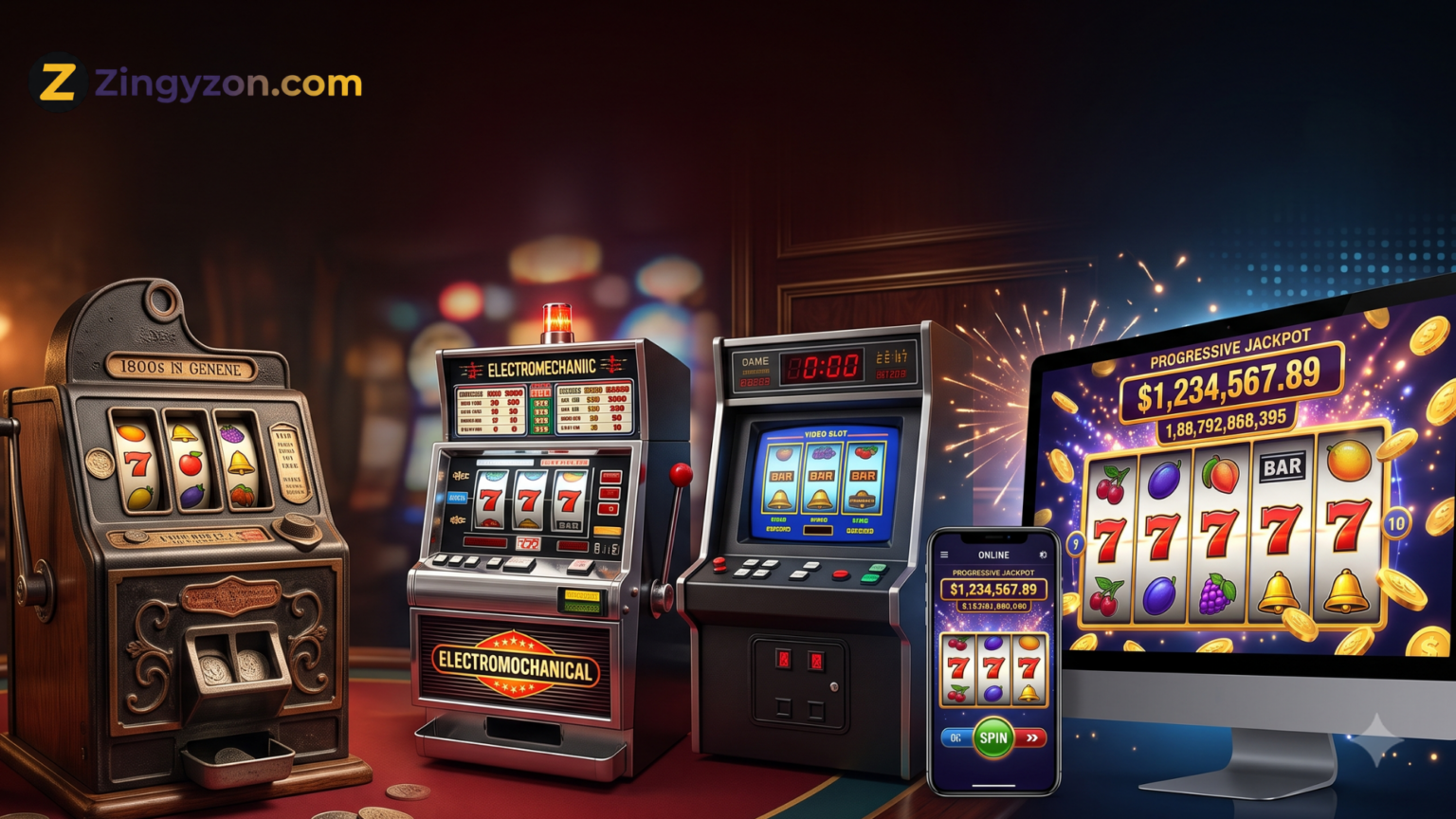
Few casino games have changed as dramatically as jackpot slots. What began as a basic mechanical machine with three spinning reels has developed into a global form of digital entertainment featuring cinematic graphics, interactive bonus rounds, linked prize pools, and headline-making prizes.
The appeal is easy to understand. A player presses a button, the reels spin, and a result appears within seconds. Most spins produce ordinary outcomes, while a rare combination or bonus event may unlock a much larger prize. That possibility has helped jackpot games remain popular across traditional casinos, desktop platforms, and mobile devices.
Modern slots are more complex than they first appear. Jackpots may be fixed or progressive, payout patterns can range from frequent small wins to rare large rewards, and every result is governed by probability rather than timing, lucky rituals, or betting systems. Understanding that background makes the experience easier to evaluate realistically.
The Mechanical Origins of Slot Machines
The story of jackpot slots begins in the late nineteenth century, when early gambling machines appeared in bars, saloons, and entertainment venues. Players inserted a coin, pulled a lever, and watched physical reels rotate inside a cabinet.
Charles Fey is closely associated with the development of the three-reel slot machine in San Francisco during the 1890s. His Liberty Bell design helped establish the basic format that influenced slot machines for decades. It used recognizable symbols and could make automatic payouts, an important improvement over machines that required an attendant to provide a prize. Museum sources describe the Liberty Bell as an early standard-setting, automatic-payout, three-reel machine.
These early machines offered limited combinations because the results depended on physical reels. The top prize was modest by modern standards, but the central idea was already present: a small stake could occasionally produce a much larger reward.
From One-Armed Bandits to Digital Reels
For much of the twentieth century, pulling a side lever remained part of the slot experience, giving the machines their “one-armed bandit” nickname. Over time, electrical components allowed designers to introduce lights, sounds, additional paylines, and more varied payout patterns.
Video technology transformed the format. Digital screens were not restricted by the space available on physical reels, so developers could add more symbols, animated themes, free spins, multipliers, bonus games, and expanding layouts.
This transition also made larger jackpot networks possible. Casinos and game suppliers could connect multiple games to one prize pool. Instead of one machine funding one top prize, a small portion of eligible wagers from many connected games could contribute to a growing jackpot.
What Is a Jackpot Slot?
A jackpot slot is a slot game offering a top prize above its standard payouts. The amount may be fixed or may increase as qualifying wagers are placed.
Each spin is normally determined by a random number generator, commonly called an RNG. The result is generated independently according to the game’s programmed probability model. Previous spins do not make the next result “due.” A losing sequence does not guarantee that a jackpot is approaching, and a recent win does not prevent another winning outcome. Responsible-gambling guidance warns that computerized slot results are based on randomly generated numbers rather than a machine becoming hot, cold, or overdue.
A jackpot may be triggered by a specific symbol combination, a bonus round, a mystery event, or the selection of a hidden prize. Some prizes are available at any valid stake, while others require a minimum or maximum bet. The paytable and game rules should always be checked before playing.
Main Types of Jackpot Slots
Fixed Jackpots
A fixed jackpot has a set top-prize value. Once it is won, the amount generally stays the same for the next player. These jackpots may be smaller than major progressive prizes, but their value is clearly built into the game.
Standalone Progressives
A standalone progressive grows through qualifying activity on one machine or game instance. Part of each eligible wager is added to the prize until someone wins it, after which it resets.
Local Progressive Jackpots
A local progressive links several games within one casino, website, or smaller network. More wagers contribute to the pool, so the prize may grow faster than a standalone jackpot.
Networked Progressives
A networked progressive can connect games across multiple casinos or online platforms. Thousands of players may contribute, allowing the prize to become very large. The possible reward is higher, but the chance of winning the top amount is usually extremely small.
Must-Hit-By Jackpots
A must-hit-by jackpot is designed to pay before reaching a displayed maximum. Interest often increases as the amount approaches that limit, but no specific player is guaranteed to win it.
The Rise of Online Jackpot Slots
Online casinos removed many physical limits that once shaped slot design. Developers could create detailed themes, multiple jackpot levels, large game libraries, and mobile-friendly interfaces without building a separate cabinet for every title.
Modern online jackpot slots may include mini, minor, major, and grand prizes in one game. Jackpots can appear through reel combinations, wheel spins, pick-and-win screens, mystery animations, or special bonus symbols.
Online platforms also make it easier to compare paytables, game rules, stakes, bonus conditions, and account controls. Readers researching platforms such as Neospin Australia should check whether the operator accepts players from their location, review current terms, confirm age requirements, and understand wagering and withdrawal conditions before registering.
Convenient access does not change the mathematics. A faster interface or dramatic theme may make a game more immersive, but the jackpot remains a chance-based outcome.
Why Jackpot Slots Feel So Exciting
Jackpot slots are built around anticipation. Large prize displays, rising counters, sound effects, bonus animations, and near-miss visuals can make each spin feel important. Themes based on adventure, mythology, luxury, fantasy, and classic fruit machines add entertainment value.
The visible jackpot counter is especially effective because players can watch the prize grow. Even when the chance of winning is very low, the rising number creates a strong sense of possibility.
That emotional appeal is why players should separate entertainment from financial expectation. A jackpot can be won, but it should never be viewed as predictable income or a solution to money problems.
Understanding RTP and House Edge
Return to player, or RTP, is a theoretical percentage showing how much of the money wagered on a game is expected to be returned to players over a very large number of plays. It does not promise that one player will receive that percentage back during a single session.
The UK Gambling Commission explains that RTP is an average measured across a significant number of plays, not a result applying to every visit or player. The difference between the theoretical RTP and 100% represents the game’s mathematical advantage, often described as the house edge.
Part of a progressive game’s theoretical return may be connected to a jackpot that is won very rarely. Two slots with similar RTP percentages can therefore feel completely different. RTP is useful for comparison, but it cannot predict short-term results.
Why Volatility Matters
Volatility describes how a slot tends to distribute payouts.
Low-volatility games generally produce smaller wins more often. High-volatility games may produce longer periods with limited returns, followed by less frequent but potentially larger payouts. Many jackpot slots lean toward higher volatility because their main appeal is the possibility of a substantial prize.
Players who focus only on the jackpot amount may overlook how quickly their balance can change. It is useful to check the minimum stake, paylines, jackpot eligibility, volatility, and bonus features before beginning.
A large top prize does not automatically make one game better than another. A suitable game is one whose rules and costs are understood and whose stakes remain affordable.
Common Jackpot Slot Myths
One common myth is that a machine that has not paid recently must be ready to release a jackpot. In an RNG-based game, previous results do not create a debt that the next spin must repay.
Another belief is that playing at a certain time improves the odds. A jackpot may be won at any permitted time, but the clock itself does not make a random outcome more favorable.
Some players assume that increasing the bet always improves jackpot odds. This depends entirely on the rules. A higher stake may raise ordinary payouts or qualify a player for a certain prize, but it should never be assumed without checking the paytable.
A high RTP also does not guarantee profit. It describes theoretical performance over many plays and does not remove randomness or the house advantage.
How to Evaluate a Jackpot Slot
Start with information rather than the size of the advertised prize. Check who developed the game, whether the platform is legally available in your location, and whether clear rules are provided.
Review how the jackpot is triggered and whether all stakes qualify. Look at the RTP, volatility, paytable, bonus features, and maximum ordinary payout. For progressive games, check the reset value and whether the pool is shared across a larger network.
Promotions may also include wagering requirements, expiry periods, maximum-bet conditions, and restricted games. Account verification and withdrawal rules should be reviewed before depositing.
For additional guides and reader-focused content, explore zingyzon.com, where complex topics are presented in a clear and accessible format.
Playing With a Responsible Mindset
Jackpot slots should be treated as entertainment with a cost, not as an investment. Set a spending limit before starting and use only money that is not needed for bills, rent, savings, food, education, or other essentials.
A time limit is equally important. Fast digital spins can make it easy to lose track of a session. Regular breaks create space to decide whether the activity is still enjoyable.
Never chase losses by raising bets or depositing more than planned. Do not borrow money to gamble, and avoid playing while stressed, intoxicated, or under financial pressure. Responsible-gambling organizations emphasize understanding randomness, house advantage, and the cost of continued play.
Adults who find it difficult to stop should use deposit limits, cooling-off periods, self-exclusion, or professional support. Laws and minimum-age requirements differ by location, so local rules must always be followed.
The Future of Jackpot Slots
Jackpot slots will continue to develop through mobile-first design, interactive bonus features, better graphics, and new ways of connecting prize pools. Developers are also exploring live-hosted elements, progress systems, and more personalized interfaces.
Technology may change how a jackpot looks, but the core concept remains the same: a small wager offers a small chance of a much larger prize.
The most useful improvement for players is not simply a more dramatic animation. It is clearer information about jackpot eligibility, RTP, volatility, spending, and responsible-play tools.
Final Thoughts
Jackpot slots have travelled a long way from the mechanical Liberty Bell to modern games available on phones and computers. Their appeal comes from simple rules, fast results, creative themes, and the dream of an unusually large win.
Behind the excitement, every jackpot is governed by probability. No pattern, lucky ritual, or betting system can guarantee the top prize. Players who understand fixed and progressive jackpots, read the rules, check RTP and volatility, and set firm limits are better prepared to treat slots as entertainment rather than a financial plan.
The reels may be digital now, but the attraction remains close to the original idea: a moment of suspense, a random result, and the possibility—never the promise—of a huge winning outcome.

Keep Exploring Zingyzon.com
Read more Zingyzon SEO, digital marketing, online earning, business, and technology guides for Australia, USA, and global readers.